
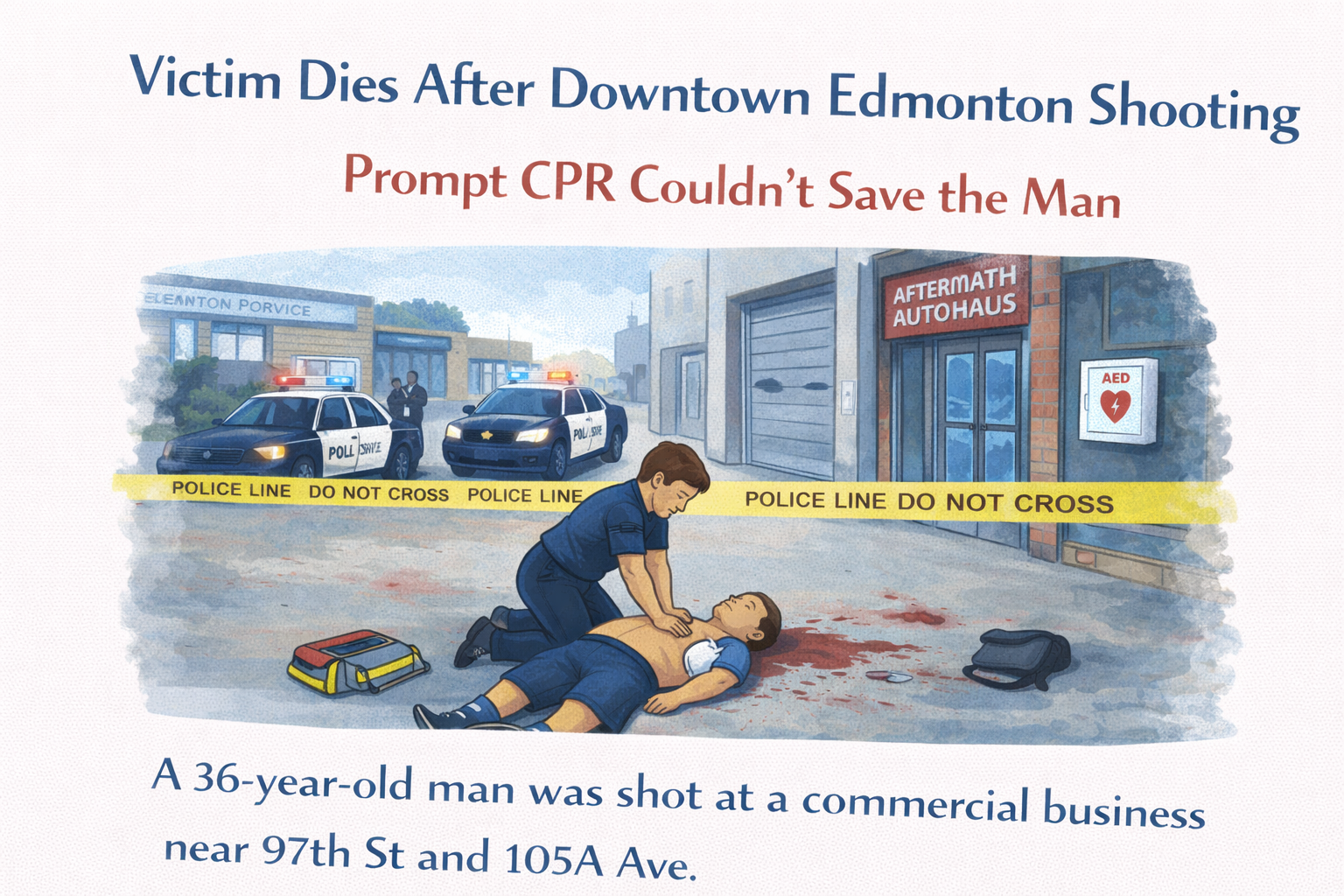
 A shooting in downtown Edmonton highlights how quickly traumatic injuries can escalate into life-threatening emergencies — and how first responders and bystanders play a critical role in those first moments.
While violent incidents are not everyday occurrences, workplaces and public spaces across Canada — including Vancouver and throughout British Columbia — benefit from emergency preparedness, including CPR and bleeding control training.
What Happened in Downtown Edmonton
Police responded to reports of a shooting near 97th Street and 105A Avenue in downtown Edmonton. The incident occurred at a commercial property, with officers seen entering nearby automotive businesses while securing the scene.
Witnesses reported that paramedics arrived quickly and began performing CPR on a 36-year-old man before transporting him to hospital. Despite these efforts, the victim later died.
Investigators sealed off the surrounding area as evidence was gathered. The circumstances of the incident remained under investigation.
Understanding Traumatic Cardiac Arrest
In cases of severe penetrating trauma, such as gunshot wounds, life-threatening complications may include:
-
Major blood loss
-
Damage to vital organs
-
Respiratory compromise
-
Cardiac arrest
When the heart stops beating effectively, CPR is initiated to maintain circulation until advanced care can be provided.
It is important to recognize that even when CPR is started promptly, survival depends on many medical factors, including the severity of injury and speed of advanced surgical intervention.
Recognizing a Life-Threatening Emergency
In public or workplace settings, signs that require immediate action include:
-
Unresponsiveness
-
No normal breathing
-
Severe or uncontrolled bleeding
-
Collapse after injury
Personal safety is always the first priority. Do not approach if there is ongoing danger.
First Aid Response: Public Education Overview
If you encounter a person with a severe injury and the scene is safe:
-
Call 9-1-1 immediately
-
Apply firm, direct pressure to visible bleeding
-
Continue pressure until emergency services arrive
-
Monitor responsiveness and breathing
-
Begin CPR if the person becomes unresponsive and is not breathing normally
-
Use an AED if available and advised
These steps form part of standard first aid and CPR training programs across Canada.
Workplace Preparedness in BC
Although this incident occurred in Alberta, the lessons apply broadly.
Workplaces in Vancouver and throughout BC can strengthen emergency readiness by:
-
Providing Occupational First Aid certification
-
Training staff in CPR and AED use
-
Maintaining accessible first aid kits
-
Developing emergency response plans
-
Conducting periodic safety reviews
Preparedness supports faster, more organized response during unexpected events.
The Role of CPR and AEDs in Trauma
CPR helps circulate oxygenated blood when the heart has stopped. AEDs analyze heart rhythm and deliver a shock only if appropriate.
In traumatic cardiac arrest, outcomes vary based on the nature and severity of injury. Early intervention remains an essential part of emergency care.
Frequently Asked Questions
Should you help in a violent situation?
Only if the scene is safe. Personal safety must always come first.
How do you control severe bleeding?
Apply firm, direct pressure to the wound and maintain it until professional responders arrive.
When should CPR begin?
CPR should begin if the person is unresponsive and not breathing normally.
Can CPR always save someone after a traumatic injury?
No. Survival depends on many factors, including the extent of injury and how quickly advanced care is available.
Is first aid training relevant outside high-risk jobs?
Yes. Emergencies can occur in any workplace or public setting.
Educational Note
This article is intended for general first aid awareness and workplace safety education in Canada. Formal first aid and CPR training helps individuals respond confidently and appropriately during emergencies while waiting for professional medical services.
About The Author

Mark Kascha
First Aid Instructor Trainer with 30+ years of experience in CPR, emergency response, and safety training across Canada.
👉 [View full credentials]🔗 View LinkedIn Profile
Last reviewed: March 2026