
Understanding Near Drowning and Water Emergencies
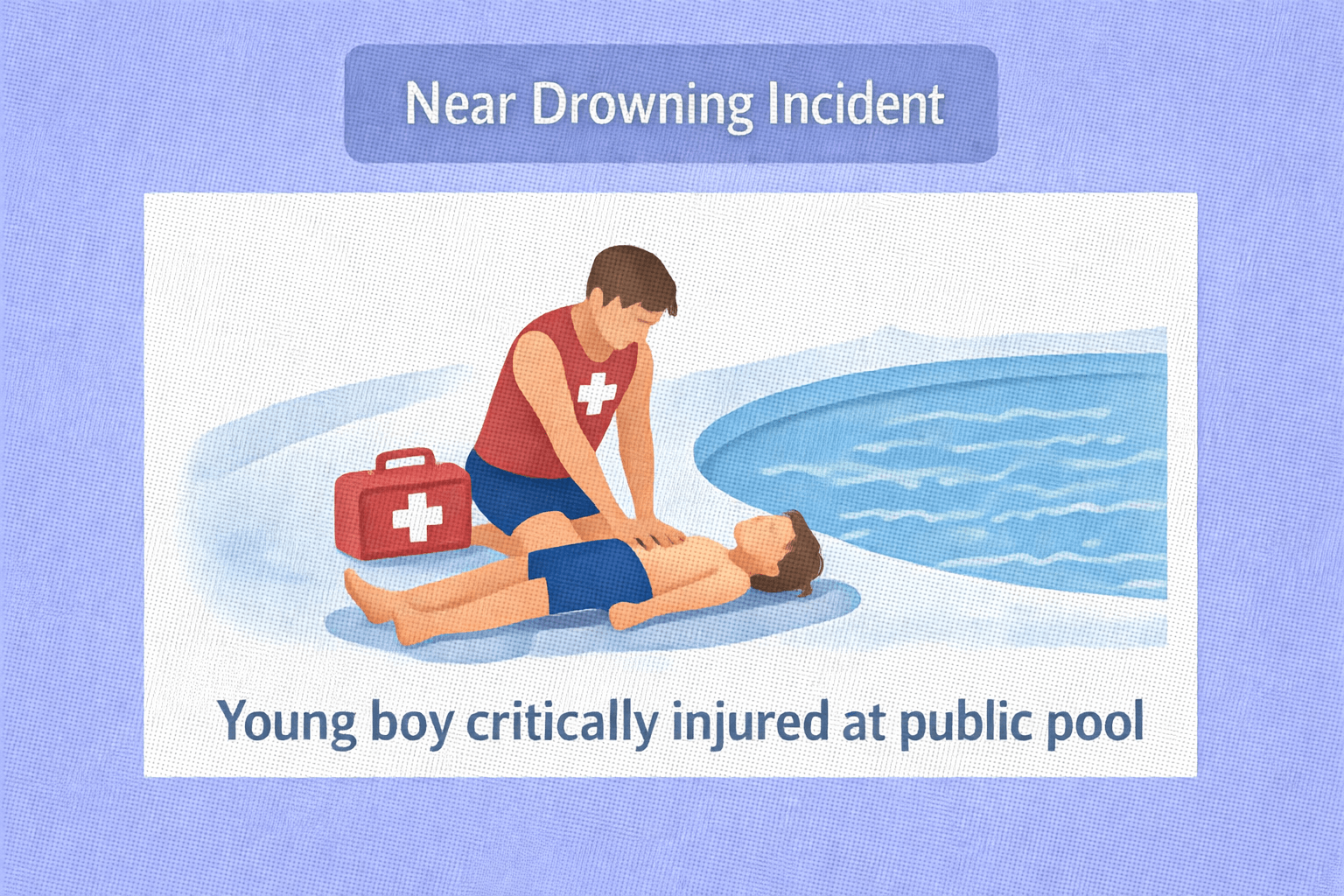 A near drowning occurs when a person is rescued after being unable to breathe in water. Even if breathing is restored, the situation can remain serious due to lack of oxygen. Immediate response—especially rescue from water and CPR if needed—is critical in supporting recovery.
Children are particularly vulnerable, and incidents can happen quickly and quietly, even in supervised environments like public pools.
First Aid & Workplace Relevance in Vancouver and the Lower Mainland
Across Vancouver, Burnaby, Richmond, Surrey, and the Lower Mainland, public pools, recreation centres, schools, and childcare facilities must prioritize water safety and emergency preparedness.
Lifeguards, staff, and even bystanders may be first to respond. Training in CPR and first aid for children is essential for anyone working in or around aquatic environments.
Real Incident Overview
In the St-Michel borough, emergency services responded to a near drowning incident involving a young boy at a public pool on François-Perreault Street.
At approximately 6:35 PM, a 911 call reported that a child had been found unconscious in the water. Lifeguards quickly retrieved the boy—estimated to be around 7 years old—from the pool.
Paramedics arrived and immediately began first aid measures to resuscitate him. They were able to restore his breathing before transporting him to a healthcare facility. At the time of transport, he remained unconscious and in critical condition.
Officials noted that the exact cause of the incident was not immediately known, highlighting how quickly such emergencies can occur even in monitored environments.
Signs of Drowning or Water Distress
Drowning is often silent. Signs may include:
-
Unresponsiveness in water
-
Lack of movement or floating face-down
-
Difficulty breathing or no breathing
-
Weak or ineffective movements
-
Pale or bluish skin in more serious cases
Quick recognition is essential for early rescue.
Common Causes and Risk Factors
Near drowning incidents in children can be linked to:
-
Brief lapses in supervision
-
Fatigue while swimming
-
Slipping or falling into water
-
Limited swimming ability
-
Distractions in busy pool environments
Even with lifeguards present, close supervision remains important.
First Aid Response: Drowning and CPR
If a child is found in water and unresponsive:
-
Ensure the area is safe before assisting
-
Remove the child from the water immediately
-
Call 911 right away
-
Check breathing and responsiveness
-
Begin CPR if the child is not breathing normally
-
Continue CPR until help arrives
Early action can help restore breathing and support circulation.
Prevention and Water Safety Considerations
To reduce risks in pools and aquatic environments:
-
Maintain constant, active supervision of children
-
Follow pool safety rules and guidelines
-
Ensure lifeguards are present and attentive
-
Encourage swimming skills and water awareness
-
Provide CPR and first aid training for staff and caregivers
Preparedness helps create safer aquatic environments.
Frequently Asked Questions
How quickly can a child experience drowning?
It can happen in a short amount of time and often without noticeable noise.
What should I do first if a child is found in water?
Remove them from the water safely, call 911, and check breathing immediately.
Can someone recover after a near drowning?
Recovery is possible, especially with prompt rescue and care, but medical evaluation is always needed.
Why is supervision important even with lifeguards present?
Lifeguards monitor large areas, so direct supervision adds an extra layer of safety.
Is CPR different for children?
Yes, techniques are adapted for children, which is why proper training is important.
Educational Note
This article is intended for general first aid awareness and workplace safety education in Canada. Learning CPR and water safety practices can help individuals respond effectively in emergencies involving children.
About The Author

Mark Kascha
First Aid Instructor Trainer with 30+ years of experience in CPR, emergency response, and safety training across Canada.
👉 [View full credentials]🔗 View LinkedIn Profile
Last reviewed: March 2026
 Support local, Canadian-owned businesses, with no connections to American corporations or partnerships.