Understanding Carbon Monoxide Poisoning
 Carbon monoxide (CO) is a colourless, odourless gas produced when fuels such as wood, propane, charcoal, gasoline, or natural gas burn. Because the gas cannot be seen or smelled, people may not realize they are being exposed. When carbon monoxide builds up in an enclosed area, it can interfere with the body’s ability to deliver oxygen to vital organs.
In British Columbia, including the Vancouver region, outdoor recreation and camping are popular activities, especially during long weekends and summer months. Understanding the risks associated with camp stoves, heaters, and other fuel-burning devices is an important part of outdoor safety education.
First Aid and Outdoor Safety Relevance in British Columbia
Many workplaces and recreational programs in British Columbia promote first aid awareness and outdoor safety training, particularly for people involved in camping, hiking, tourism, or outdoor recreation.
Remote environments may delay access to emergency medical services. Because of this, understanding hazards such as carbon monoxide exposure and knowing how to respond quickly can help improve safety during camping trips and wilderness activities.
Scenario: Camping Incident Near Salmon Arm, B.C.
During a camping trip near Salmon Arm, British Columbia, a woman and a teenager set up a tent at Sandy Point campground for the first night of a long weekend.
The following morning, emergency responders were called to the campground after other campers discovered the pair inside the tent. The woman had died, and nearby individuals were providing first aid to the teenager, who was in critical condition.
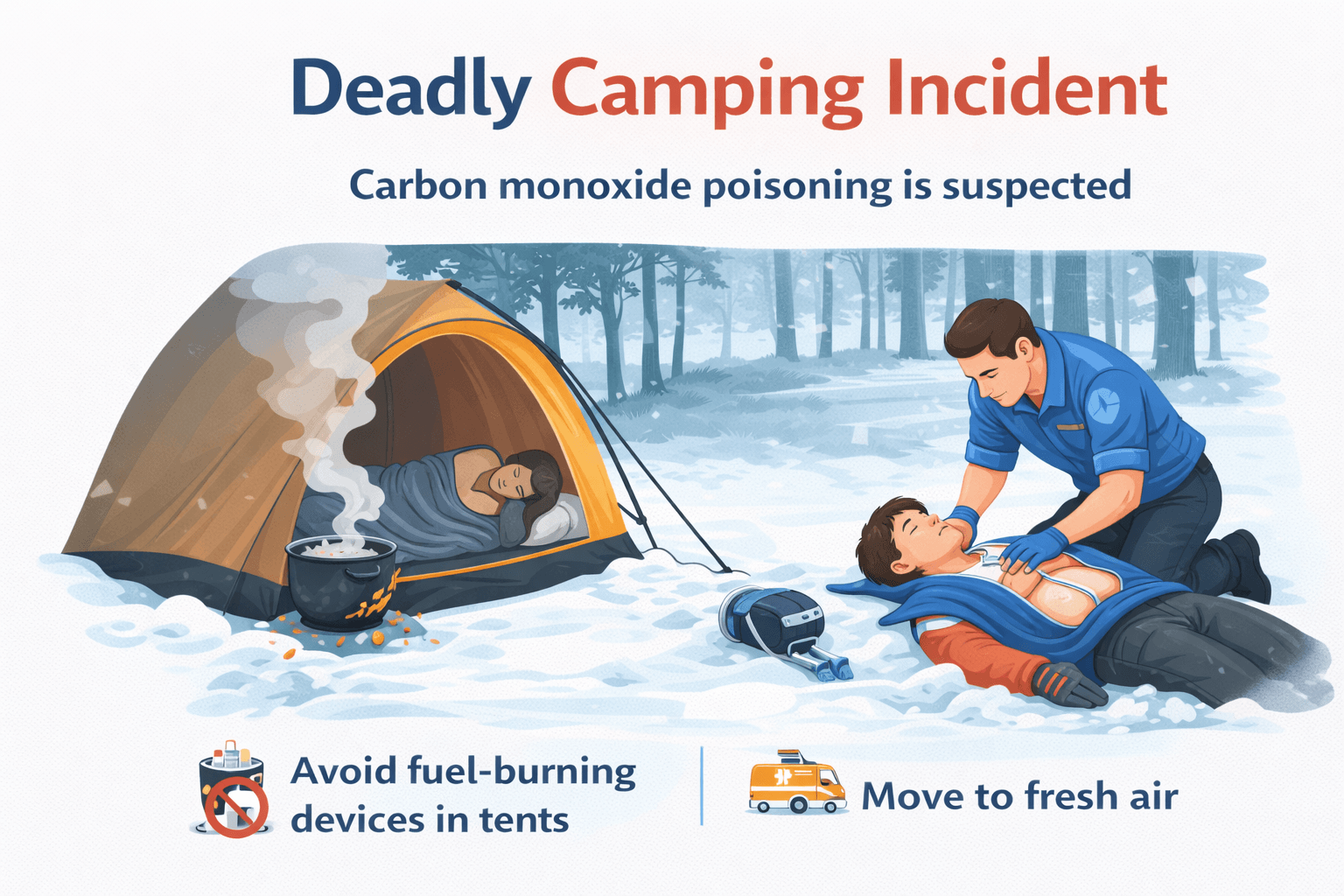
Royal Canadian Mounted Police (RCMP) officers who responded to the scene reported that investigators believed carbon monoxide poisoning may have been involved. Inside the tent, authorities located a cooking pot containing wood ash that appeared to have been used as a heat source.
Fuel-burning devices can produce carbon monoxide when used in enclosed areas such as tents or vehicles. Because the gas builds up quickly without ventilation, it can pose a serious risk.
The teenager was transported to hospital for treatment. The B.C. Coroners Service later began an investigation into the incident.
Campground officials expressed sympathy to the families involved and reminded campers about the importance of safely extinguishing cooking devices and avoiding fuel-burning appliances inside enclosed spaces.
Technical Safety authorities in British Columbia also advise campers to avoid using fuel-burning stoves, heaters, or barbecues inside tents or other enclosed areas, where carbon monoxide may accumulate.
Signs and Symptoms of Carbon Monoxide Exposure
Carbon monoxide exposure may cause several symptoms that can worsen as exposure continues. Common signs may include:
-
Headache
-
Dizziness or light-headedness
-
Nausea or vomiting
-
Fatigue or unusual tiredness
-
Confusion or difficulty concentrating
-
Chest discomfort
-
Loss of consciousness in severe cases
Because the gas cannot be detected without specialized equipment, people may not realize the cause of these symptoms.
How Carbon Monoxide Exposure Occurs While Camping
Carbon monoxide can build up when fuels burn in areas with limited airflow. Situations that may increase risk include:
-
Using camp stoves or fuel heaters inside tents
-
Burning charcoal or wood in enclosed areas
-
Operating fuel-powered devices in vehicles or campers without proper ventilation
-
Using outdoor cooking equipment indoors
These situations can allow carbon monoxide to accumulate quickly in confined spaces.
First Aid and Emergency Response
If carbon monoxide exposure is suspected, the first priority is to move affected individuals to fresh air as quickly and safely as possible.
General emergency response actions may include:
-
Moving the person away from the enclosed space or fuel source
-
Calling emergency services immediately
-
Monitoring breathing and responsiveness
-
Providing basic first aid support while waiting for professional responders
Emergency responders can provide further assessment and transport the person for medical care if necessary.
Prevention and Camping Safety Tips
Many carbon monoxide incidents can be prevented through safe camping practices.
Helpful safety measures include:
-
Using fuel-burning stoves and heaters outdoors only
-
Avoiding any open flame or fuel appliance inside tents or enclosed shelters
-
Ensuring cooking equipment is completely extinguished after use
-
Following campground safety guidelines
-
Learning basic first aid and emergency preparedness skills before outdoor trips
Awareness and preparation can help reduce the risk of carbon monoxide exposure during camping activities.
Frequently Asked Questions
Why is carbon monoxide difficult to detect?
Carbon monoxide has no colour, smell, or taste, which means people cannot detect it without specialized monitoring devices.
Can camp stoves produce carbon monoxide?
Yes. Any device that burns fuel—including camp stoves, charcoal grills, or heaters—can produce carbon monoxide if used in enclosed or poorly ventilated areas.
Why should fuel-burning appliances not be used inside tents?
Tents and other enclosed spaces can trap carbon monoxide gas, allowing it to build up quickly and create a dangerous environment.
What should campers do if someone feels dizzy or nauseous near a stove or heater?
If carbon monoxide exposure is suspected, moving to fresh air and contacting emergency services is an important first step.
Are carbon monoxide incidents common during camping trips?
They are relatively uncommon but can occur when fuel-burning devices are used improperly in enclosed spaces.
Educational Note
This article is intended for general education about carbon monoxide awareness and outdoor safety. Learning first aid and understanding common environmental hazards can help individuals respond more confidently during camping and recreational activities.
About The Author

Mark Kascha
First Aid Instructor Trainer with 30+ years of experience in CPR, emergency response, and safety training across Canada.
Last reviewed: March 2026
 Support local, Canadian-owned businesses, with no connections to American corporations or partnerships.