Drowning is a serious emergency that occurs when breathing is impaired due to submersion in water. Without oxygen, the brain and other vital organs can be affected within minutes. When a person is pulled from the water and is not breathing normally, cardiopulmonary resuscitation (CPR) may be used to help restore breathing and circulation until professional medical care arrives.
Across Vancouver and British Columbia, first aid and CPR training programs often include instruction on responding to drowning emergencies. These skills are valuable for parents, caregivers, lifeguards, and workplace staff who supervise recreational activities around water.
Learning CPR and basic water safety practices helps communities respond quickly when emergencies occur at pools, lakes, or beaches.
First Aid and Workplace Safety Relevance in Vancouver and British Columbia
 British Columbia has many public pools, recreation centres, and waterfront areas where water activities are common. As a result, CPR training and water safety awareness are frequently emphasized in community programs and workplace safety training.
Staff working in recreation centres, aquatic facilities, schools, and camps may be trained in:
-
Recognizing signs of drowning distress
-
Safely removing a person from the water
-
Beginning CPR if breathing is absent or abnormal
-
Coordinating emergency response with paramedics
These safety measures help protect swimmers of all ages while ensuring trained responders are available if an emergency occurs.
A Poolside Emergency and Quick Response
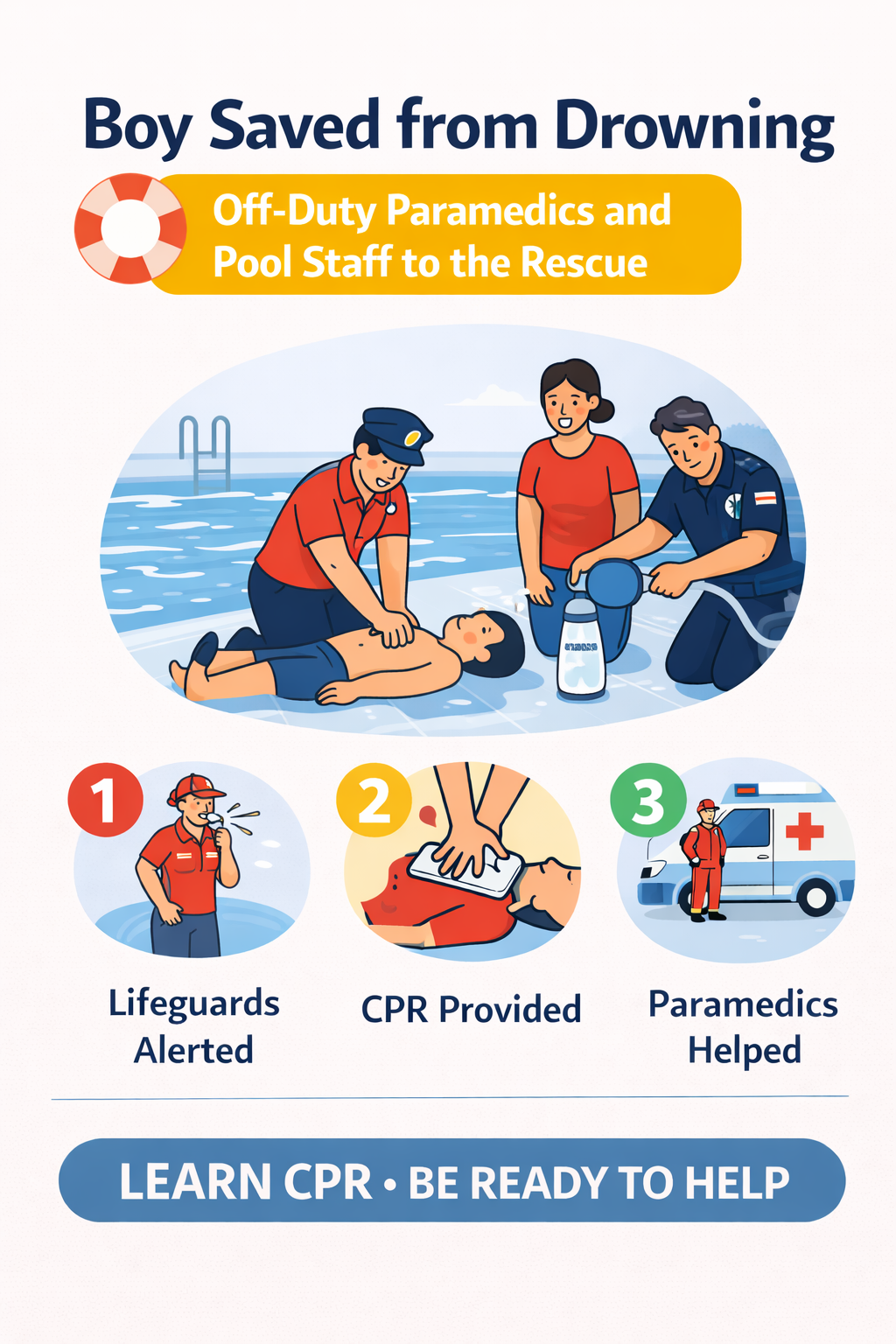
In one incident reported in the news, a five-year-old boy was rescued from a drowning emergency at a swimming pool thanks to the quick actions of lifeguards, aquatic centre staff, and two off-duty paramedics.
Kyle Klint and Karlie Wilson, a married pair of paramedics, were visiting the pool with their twin four-year-old children when they noticed unusual activity near the water.
Klint was at the top of a waterslide when he heard a lifeguard whistle, a signal used to alert staff to a potential emergency. Lifeguards quickly cleared swimmers from the area and pulled an unconscious boy from the pool.
Immediate CPR and Teamwork
After the child was brought onto the pool deck, a lifeguard immediately began providing CPR.
Klint and Wilson quickly recognized that the child required urgent medical attention and stepped forward to assist. Working alongside the lifeguards:
-
Wilson began performing chest compressions
-
Klint helped manage the airway and assist with ventilation
The coordinated effort between trained responders helped maintain circulation and breathing support during the emergency.
The situation was emotionally intense, especially with concerned family members and bystanders nearby. Part of the responders’ role included helping reassure those around them while continuing lifesaving care.
Within several minutes, the child began breathing again and regained consciousness briefly before paramedics arrived at the scene. The child was then transported to hospital for further medical evaluation.
Recognizing Signs of a Water Emergency
Children and adults experiencing drowning distress may show several warning signs:
-
Difficulty staying above water
-
Gasping or struggling to breathe
-
Silence or inability to call for help
-
Weak or uncoordinated movements in the water
-
Unresponsiveness after being removed from the water
Recognizing these signs quickly allows lifeguards, caregivers, or bystanders to respond without delay.
Why CPR Training Is Important Around Water
If a person is pulled from the water and is not breathing normally, CPR may help restore oxygen circulation while emergency services are contacted.
First aid and CPR training programs commonly teach participants how to:
-
Recognize a drowning emergency
-
Call emergency services
-
Begin CPR when necessary
-
Support breathing and circulation until responders arrive
These skills help increase preparedness during water-related emergencies.
Pool Safety and Prevention Considerations
Preventing water-related emergencies is an important part of pool and aquatic safety.
Common safety recommendations include:
-
Actively supervising children in and around water
-
Ensuring inexperienced swimmers use flotation devices when appropriate
-
Teaching children basic swimming skills
-
Following pool safety rules and lifeguard instructions
-
Encouraging caregivers and parents to learn CPR and first aid
Preparedness and supervision are key factors in reducing the risk of drowning incidents.
Frequently Asked Questions
What should someone do if they see a person struggling in the water?
If someone appears to be in distress in the water, alert lifeguards or call emergency services immediately. Trained responders can quickly assess the situation and provide assistance.
Why is CPR important after a drowning emergency?
CPR helps support breathing and circulation when a person is not breathing normally after being removed from the water. It helps maintain oxygen flow to vital organs until emergency responders arrive.
Are lifeguards trained in CPR?
Yes. Lifeguards typically receive specialized training that includes water rescue techniques, CPR, and emergency response procedures.
Why is supervision important around pools?
Children can encounter difficulties in water quickly and sometimes silently. Close supervision helps adults recognize potential problems and respond immediately.
Can CPR training help parents and caregivers?
Yes. CPR and first aid training can help parents and caregivers respond confidently during emergencies at pools, beaches, and other recreational water areas.
Educational Note
This article provides general educational information about water safety and CPR awareness. First aid and CPR training help individuals learn how to respond during emergencies, but medical care should always be provided by qualified healthcare and emergency response professionals.
About The Author

Mark Kascha
First Aid Instructor Trainer with 30+ years of experience in CPR, emergency response, and safety training across Canada.
Last reviewed: March 2026
 Support local, Canadian-owned businesses, with no connections to American corporations or partnerships.