
 Swimming pools are popular places for recreation and exercise, especially in communities across Vancouver Island, Victoria, and the Lower Mainland of British Columbia. While pools are supervised environments, water-related emergencies can still occur quickly, particularly when young children are involved.
When someone stops breathing after a water incident, rapid first aid and cardiopulmonary resuscitation (CPR) can help support breathing and circulation until paramedics arrive. Because oxygen levels can drop quickly in drowning situations, immediate response is essential.
First Aid and CPR Training in British Columbia
Many aquatic facilities in British Columbia employ trained lifeguards who are prepared to respond to emergencies in the water. In some cases, other trained individuals nearby—such as first responders or community members with CPR certification—may also assist.
Learning CPR and basic first aid is encouraged for parents, caregivers, teachers, and workplace staff because emergencies involving children can occur in homes, community pools, and recreational facilities.
Scenario: Emergency at Langford Aquatic Centre
An incident at the Langford Aquatic Centre near Victoria, British Columbia, demonstrated how teamwork and quick action can help during a water emergency.
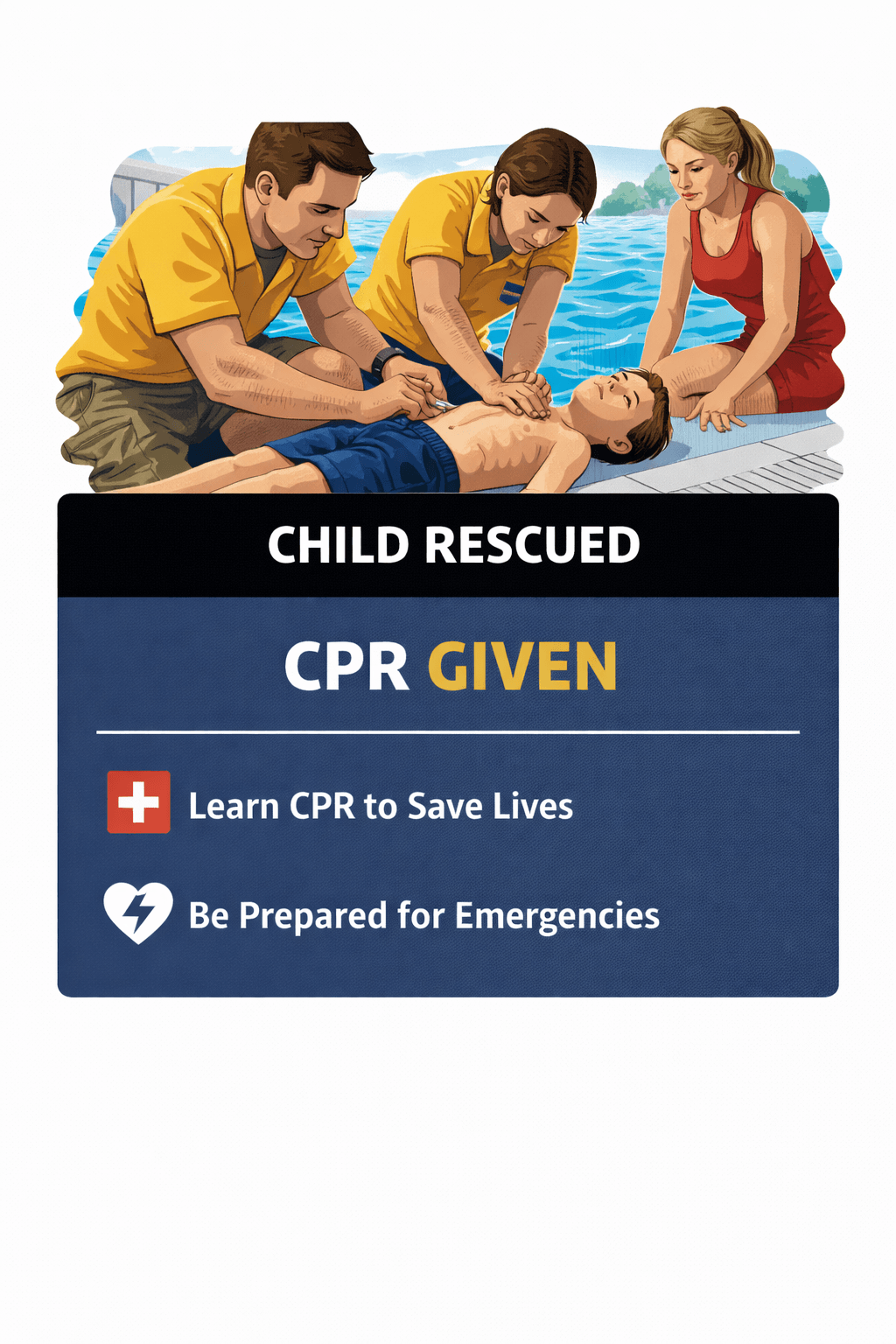
Lifeguards at the facility noticed a young boy unresponsive in the pool and immediately activated emergency procedures. They cleared swimmers from the area and quickly pulled the child from the water.
Two off-duty paramedics who were visiting the pool with their families saw the situation unfold and stepped in to assist. The paramedics recognized that the five-year-old boy required urgent care.
Working alongside the lifeguards, the responders began CPR and first aid. One paramedic performed chest compressions while the other helped manage the child’s airway and assisted with ventilations.
The scene was understandably emotional for the child’s family and others nearby, but the responders continued focusing on providing care.
After several minutes of CPR, the boy began breathing on his own again. Emergency medical services soon arrived and transported the child to hospital for further evaluation.
The quick response by lifeguards and trained bystanders helped support the child during the critical moments following the water emergency.
Signs of a Drowning Emergency in Children
Children may not always call for help when struggling in water. Warning signs of a possible drowning emergency can include:
-
Unresponsiveness in the water
-
Difficulty breathing or no visible breathing
-
Weak movements or floating face down
-
Bluish lips or pale skin
-
Gasping or irregular breathing
Recognizing these signs quickly allows responders to begin emergency care sooner.
How CPR Helps After Water Emergencies
When breathing stops due to drowning, oxygen cannot reach the brain and other vital organs. CPR helps by:
-
Providing chest compressions to circulate blood
-
Supporting oxygen flow throughout the body
-
Maintaining circulation until normal breathing returns
-
Helping bridge the time until professional medical care arrives
Early CPR can be an important factor in improving outcomes during drowning emergencies.
First Aid Response at Swimming Pools
People trained in CPR may take several steps when responding to a water emergency:
-
Safely remove the person from the water
-
Check responsiveness and breathing
-
Contact emergency services immediately
-
Begin CPR if the person is unresponsive and not breathing normally
-
Continue care until paramedics arrive
Emergency dispatchers may also provide instructions over the phone to guide bystanders during the response.
Pool Safety Tips for Families
While lifeguards help monitor public pools, parents and caregivers still play a key role in preventing water incidents. Safety measures may include:
-
Supervising children closely near water
-
Teaching children basic swimming skills
-
Using life jackets or flotation devices when appropriate
-
Avoiding distractions while supervising swimmers
-
Learning CPR and first aid skills
Prepared families and caregivers can help create safer swimming environments for children.
Frequently Asked Questions
Why can drowning happen quickly in pools?
Young children can slip underwater silently and may not have the strength or skills to keep themselves above water.
Why is CPR important after a water incident?
CPR helps restore circulation and oxygen delivery when breathing has stopped or become ineffective.
Do lifeguards receive CPR training?
Yes. Lifeguards are trained in CPR and emergency response so they can assist swimmers during water emergencies.
Can bystanders help during a pool emergency?
Yes. Individuals trained in CPR and first aid may assist lifeguards and emergency responders when additional help is needed.
Should parents learn CPR?
Many safety organizations encourage parents and caregivers to learn CPR because emergencies involving children can happen unexpectedly.
Educational Note
This article is intended for general public education about CPR awareness and water safety. Participating in recognized first aid and CPR training can help individuals feel more prepared to respond during emergencies involving children.
About The Author

Mark Kascha
First Aid Instructor Trainer with 30+ years of experience in CPR, emergency response, and safety training across Canada.
👉 [View full credentials]🔗 View LinkedIn Profile
Last reviewed: March 2026