
Understanding Cardiac Arrest and Emergency Care
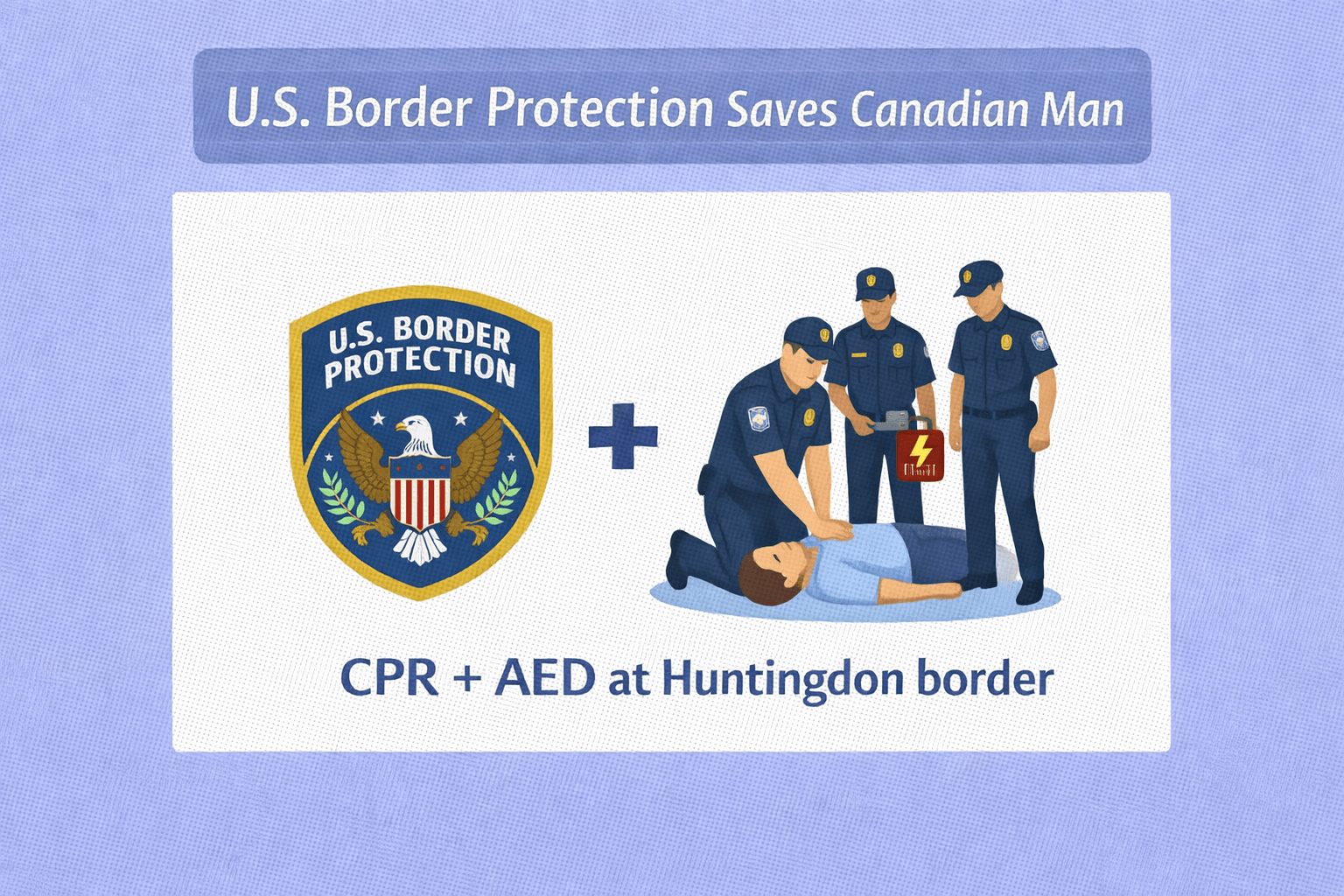 Cardiac arrest occurs when the heart suddenly stops beating due to an electrical problem. This stops blood flow to the brain and vital organs. Immediate action—especially CPR (cardiopulmonary resuscitation) and the use of an automated external defibrillator (AED)—is critical in helping restore circulation and improving survival.
AEDs are designed for public use and provide clear instructions, allowing bystanders and trained personnel to respond quickly.
First Aid & Workplace Relevance in Vancouver and the Lower Mainland
Across Abbotsford, Surrey, Langley, and the Lower Mainland, border crossings, transportation hubs, and workplaces can experience sudden medical emergencies.
Personnel working in these environments—such as security staff, border officers, and employees—are often first on scene. Their ability to perform CPR and use AEDs can make a significant difference before paramedics arrive.
Real Incident Overview
A 56-year-old man from Kamloops and his wife were travelling in a motorhome, preparing for a four-month winter trip to the United States. They arrived at the Huntingdon border crossing in Abbotsford to enter Sumas, Washington.
During a secondary inspection at the border, the man suddenly collapsed and began having difficulty breathing. The situation quickly escalated into a medical emergency.
Supervisory U.S. Customs and Border Protection (CBP) officer Nicholas Sowell, along with officers Douglas Stuit and Randy Mulanax, immediately began CPR when they determined the man was in distress. Another officer, Heather Hentz, contacted 911 to request emergency medical services.
A responding Sumas Police Department officer joined the effort as CPR continued. An AED located at the port of entry was quickly retrieved and used multiple times to assist in restoring the man’s heart rhythm.
When emergency medical technicians (EMTs) arrived, they continued care and transported the man by ambulance to PeaceHealth St. Joseph Medical Center in Bellingham. The coordinated and rapid response by multiple responders was credited with helping save the man’s life.
Signs and Symptoms of Cardiac Arrest
Cardiac arrest may present with:
-
Sudden collapse
-
Unresponsiveness
-
Difficulty or absence of breathing
-
No pulse or signs of circulation
Immediate recognition allows for faster response.
Common Causes of Sudden Collapse
Cardiac arrest can be caused by:
-
Heart attack or heart disease
-
Electrical disturbances in the heart
-
Underlying medical conditions
In many cases, the exact cause may not be immediately known, but early action remains critical.
First Aid Response: CPR and AED Use
If someone collapses and is unresponsive:
-
Call 911 immediately
-
Check breathing and responsiveness
-
Begin CPR (chest compressions) if trained
-
Have someone retrieve an AED nearby
-
Turn on the AED and follow instructions
-
Continue CPR and AED use until emergency responders arrive
AEDs guide users through each step and are safe for public use.
Prevention and Workplace Safety Considerations
To improve emergency readiness:
-
Ensure AEDs are installed in accessible locations
-
Train staff in CPR and AED use
-
Clearly mark AED locations
-
Include emergency response planning in workplace safety programs
Preparedness helps improve outcomes in cardiac emergencies.
Frequently Asked Questions
What should I do if someone collapses in a public place?
Call 911, check for breathing, and begin CPR if needed.
What does an AED do during cardiac arrest?
It analyzes heart rhythm and may deliver a shock to help restore a normal heartbeat.
Can CPR be performed without medical training?
Yes. Basic training helps, and emergency dispatchers can guide you.
Why are AEDs important in public locations?
They allow for faster response before emergency services arrive.
How can workplaces improve emergency preparedness?
By training staff, installing AEDs, and having clear response plans.
Educational Note
This article is intended for general first aid awareness and workplace safety education in Canada. Learning CPR and AED use can help individuals respond more effectively in cardiac emergencies.
About The Author

Mark Kascha
First Aid Instructor Trainer with 30+ years of experience in CPR, emergency response, and safety training across Canada.
👉 [View full credentials]🔗 View LinkedIn Profile
Last reviewed: March 2026