
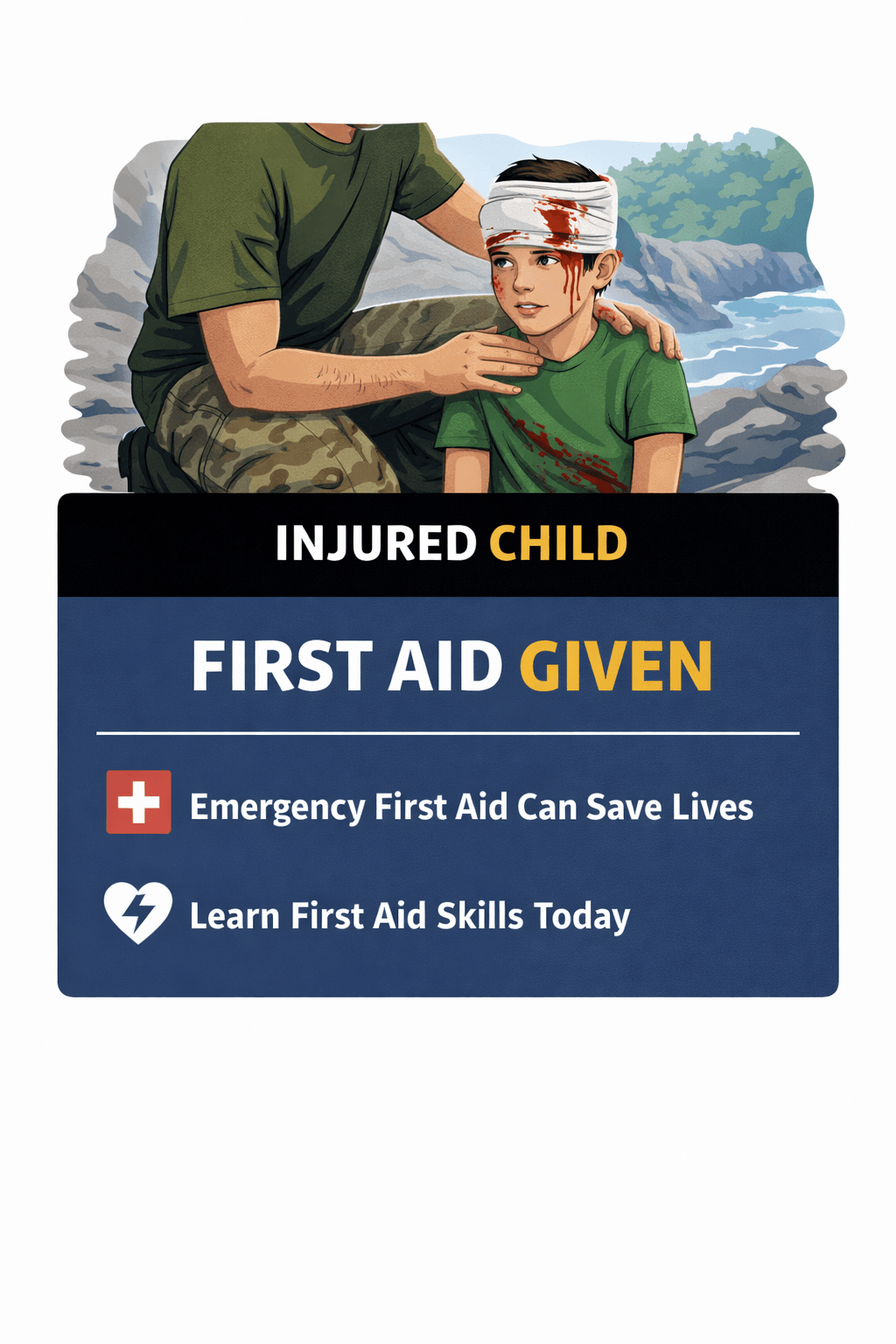
 Head injuries can occur during everyday activities such as hiking, climbing stairs, or exploring outdoor parks. When a person slips or falls and strikes their head, the injury can result in bleeding, swelling, or possible concussion. In these situations, quick recognition and first aid can help stabilize the injured person until professional medical care arrives.
Across Vancouver, Burnaby, Surrey, and communities throughout Canada, parks, trails, and natural attractions are popular places for families to explore. Because accidents can happen unexpectedly, bystanders with first aid knowledge can play an important role in early emergency response.
First Aid Awareness for Families and Outdoor Activities
Many outdoor areas in British Columbia and across Canada include steep trails, rocky surfaces, and stairways that can become slippery. Families visiting these areas often benefit from having basic first aid knowledge and access to emergency services.
First aid training helps individuals recognize injuries, manage bleeding, and keep a person stable while waiting for paramedics.
Scenario: First Aid Response at Elora Gorge
During a Canada Day long weekend, a family visiting Elora Gorge in Ontario experienced a frightening accident involving their 10-year-old son.
While walking down a concrete stairway near the gorge, the boy moved ahead of his family and slipped on the rocky surface. During the fall he struck his head against nearby rocks, causing a serious cut that began bleeding heavily.
His mother quickly rushed to help while keeping him calm and guiding him back up the stairs. At the same time, bystanders nearby stepped in to assist. One person called emergency services while others helped manage the situation.
Among those nearby was a group of individuals wearing rappelling equipment. One member of the group contacted a colleague who had medical training. Within minutes, the responder arrived and assessed the boy’s injury.
Using supplies from a first aid kit, he applied a head bandage to help control the bleeding and stayed with the child while they waited for the ambulance to arrive.
Paramedics later transported the boy to Groves Memorial Community Hospital in Fergus, Ontario for further evaluation and treatment.
After the incident, the boy’s mother wanted to thank the person who helped her son. With the help of community members, she eventually contacted the responder and learned that he preferred to remain anonymous.
The event highlighted how bystanders with first aid knowledge can provide critical assistance during unexpected accidents.
Signs of a Possible Head Injury
Head injuries can vary in severity. Warning signs that someone may need medical attention after a fall or impact can include:
-
Bleeding from the scalp or head
-
Confusion or unusual behaviour
-
Dizziness or balance problems
-
Severe headache
-
Nausea or vomiting
-
Sensitivity to light or noise
Because head injuries can sometimes worsen over time, it is important to seek professional medical evaluation after a significant impact.
First Aid Response for Head Injuries
Individuals trained in first aid may assist someone with a head injury by:
-
Calling emergency services if the injury appears serious
-
Helping the injured person remain still and calm
-
Applying gentle pressure with a bandage or cloth to control bleeding
-
Monitoring the person for changes in consciousness
-
Staying with the injured person until paramedics arrive
These early actions can help support the injured person while waiting for professional medical care.
Prevention and Outdoor Safety
Many outdoor injuries occur because of uneven terrain or slippery surfaces. Safety practices that may reduce risk include:
-
Wearing appropriate footwear for trails or rocky areas
-
Using handrails when available
-
Watching footing on wet or uneven surfaces
-
Supervising children closely near steep areas
-
Carrying a basic first aid kit during outdoor activities
Prepared families and outdoor enthusiasts are better equipped to respond to unexpected accidents.
Frequently Asked Questions
Why do head injuries bleed so much?
The scalp contains many blood vessels, so cuts on the head may bleed heavily even when the injury itself is not severe.
What should someone do first after a head injury?
The person should be kept calm and monitored for symptoms while emergency services are contacted if the injury appears serious.
Can bystanders help someone with a head injury?
Yes. Bystanders may help by calling emergency services, controlling bleeding with gentle pressure, and keeping the injured person stable.
Why is it important to monitor someone after a head injury?
Some symptoms may appear later, so observing the injured person helps ensure they receive appropriate medical care if needed.
Should families learn basic first aid?
Many safety organizations encourage first aid training because accidents can occur in parks, homes, workplaces, and public areas.
Educational Note
This article is intended for general public education about first aid awareness and injury prevention. Learning recognized first aid skills can help individuals respond more confidently when accidents occur during everyday activities.
About The Author

Mark Kascha
First Aid Instructor Trainer with 30+ years of experience in CPR, emergency response, and safety training across Canada.
👉 [View full credentials]🔗 View LinkedIn Profile
Last reviewed: March 2026