
Severe bleeding can occur after accidents, assaults, or other traumatic events. When a person loses a significant amount of blood, the body may struggle to maintain normal circulation, which can lead to serious medical complications if help is delayed.
In emergency situations, basic first aid actions such as controlling bleeding and calling emergency services can help stabilize a person until professional medical care arrives.
Across Canada, including Vancouver and British Columbia, many workplaces encourage employees to learn first aid because injuries can occur unexpectedly in public spaces such as parking lots, retail areas, and worksites. First aid training helps individuals recognize emergencies and respond safely while waiting for paramedics.
A Real-World Scenario
 A serious incident occurred in Calgary, Alberta, when a man was discovered injured in a business parking lot.
Emergency services were called after someone reported seeing a bleeding man in the parking lot of a business located in the 2900 block of Radcliffe Drive in southeast Calgary.
When police arrived, they found the man with significant injuries and visible bleeding. According to reports, he appeared to have suffered trauma and had lacerations to his head.
Investigators initially had limited information about how the injuries occurred or how the man came to be in the parking lot. Authorities indicated that the man may have been involved in an assault, but the circumstances were still under investigation.
Paramedics transported the injured man to a healthcare facility where he received treatment for critical injuries requiring emergency medical care.
Situations like this demonstrate how quickly injuries involving bleeding can become serious and why early first aid awareness can be important when bystanders encounter someone who is injured.
Signs of Severe Bleeding
Severe bleeding can often be recognized by visible signs at the injury site.
Common signs include:
-
Continuous bleeding that does not slow
-
Large amounts of blood on clothing or the ground
-
Deep cuts or visible wounds
-
Pale or clammy skin
-
Weakness, dizziness, or confusion
Head injuries that involve bleeding may also require urgent medical attention.
Causes of Severe Bleeding Injuries
Bleeding injuries can occur in a wide range of situations, including:
-
Physical assaults or altercations
-
Workplace accidents
-
Vehicle collisions
-
Falls onto hard surfaces
-
Injuries involving sharp objects
In public areas such as parking lots or workplaces, bystanders may be the first people to notice an injured person.
First Aid Awareness for Bleeding Emergencies
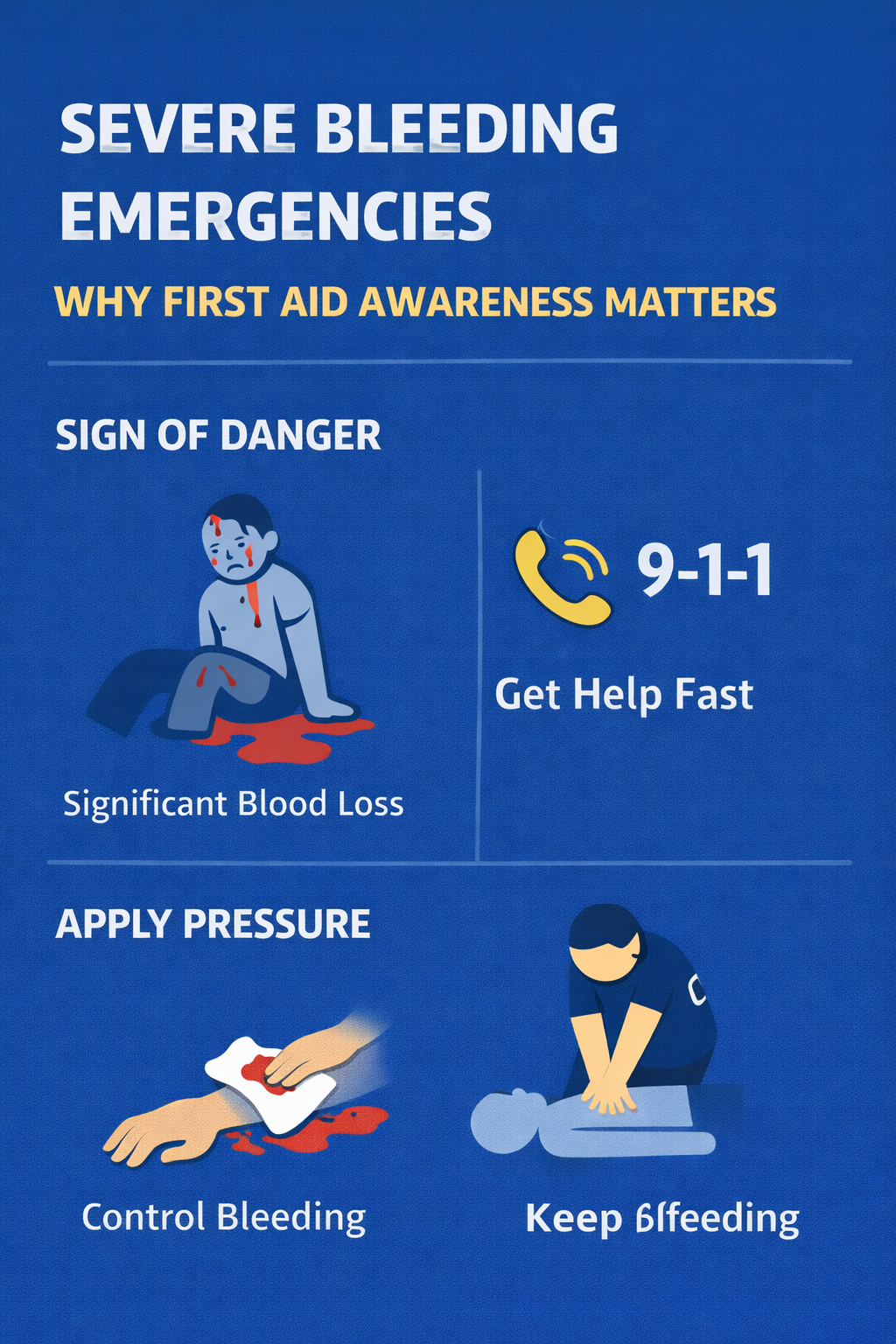
First aid training teaches general steps for helping someone who is bleeding while waiting for emergency responders.
Typical steps include:
-
Call emergency services (9-1-1 in Canada).
-
Ensure the area is safe before approaching the injured person.
-
If possible, apply firm pressure to the wound using clean cloth or bandaging material.
-
Encourage the injured person to remain still and calm until help arrives.
-
Continue applying pressure until emergency responders take over.
These actions may help slow bleeding and support the person until professional care is available.
Prevention and Workplace Safety Awareness
While not all injuries can be prevented, safety awareness in workplaces and public areas can help reduce the risk of serious incidents.
Safety considerations may include:
-
Maintaining well-lit parking areas
-
Workplace safety training for employees
-
Clear procedures for contacting emergency services
-
Awareness of surroundings in public areas
-
Basic first aid and CPR training
In Vancouver and communities across British Columbia, many employers encourage staff to complete first aid training so they can assist coworkers or members of the public during emergencies.
FAQ
Why is controlling bleeding important in first aid?
Severe blood loss can affect the body’s ability to circulate oxygen and nutrients. Applying pressure to a wound may help slow bleeding until emergency responders arrive.
What should someone do if they find an injured person in a parking lot?
The first step is to call emergency services. If the scene is safe, basic first aid measures such as applying pressure to bleeding wounds may be attempted.
Are head injuries with bleeding always serious?
Head injuries can sometimes involve significant bleeding because the scalp has many blood vessels. Medical evaluation is usually important after a head injury.
Why do workplaces encourage first aid training?
Training helps employees recognize injuries and understand how to respond safely while waiting for professional emergency responders.
Can bystanders really help during bleeding emergencies?
Yes. Bystanders who recognize severe bleeding and call for help quickly can play an important role before paramedics arrive.
Educational Note
This article is intended for general first aid awareness and public safety education. Learning first aid and CPR through certified training programs can help individuals recognize injuries and respond safely until professional emergency services arrive.
About The Author

Mark Kascha
First Aid Instructor Trainer with 30+ years of experience in CPR, emergency response, and safety training across Canada.
👉 [View full credentials]🔗 View LinkedIn Profile
Last reviewed: March 2026
 Support local, Canadian-owned businesses, with no connections to American corporations or partnerships.