Understanding CPR and Emergency Response in Public Accidents
 Cardiopulmonary resuscitation (CPR) is a life-saving first aid technique used when a person becomes unresponsive and stops breathing normally. During emergencies such as traffic collisions, quick assistance from bystanders can help support circulation and breathing until emergency medical services arrive.
Across British Columbia and the Lower Mainland—including Abbotsford, Vancouver, Burnaby, and Coquitlam—CPR and first aid training are commonly encouraged in workplaces, schools, and community programs. Because emergencies can occur in public areas such as highways or intersections, trained bystanders are often the first people able to respond.
First Aid Awareness in Vancouver and the Fraser Valley
In many communities throughout Abbotsford and the Fraser Valley, first aid training programs help residents learn how to recognize emergencies and assist safely. These programs emphasize that quick action from nearby individuals can provide important support while paramedics travel to the scene.
Public safety organizations also remind drivers and pedestrians to remain cautious on busy roads, especially during poor weather conditions or nighttime events.
A Collision on Lougheed Highway
An incident near Pitt Meadows on Lougheed Highway highlighted the importance of bystander assistance.
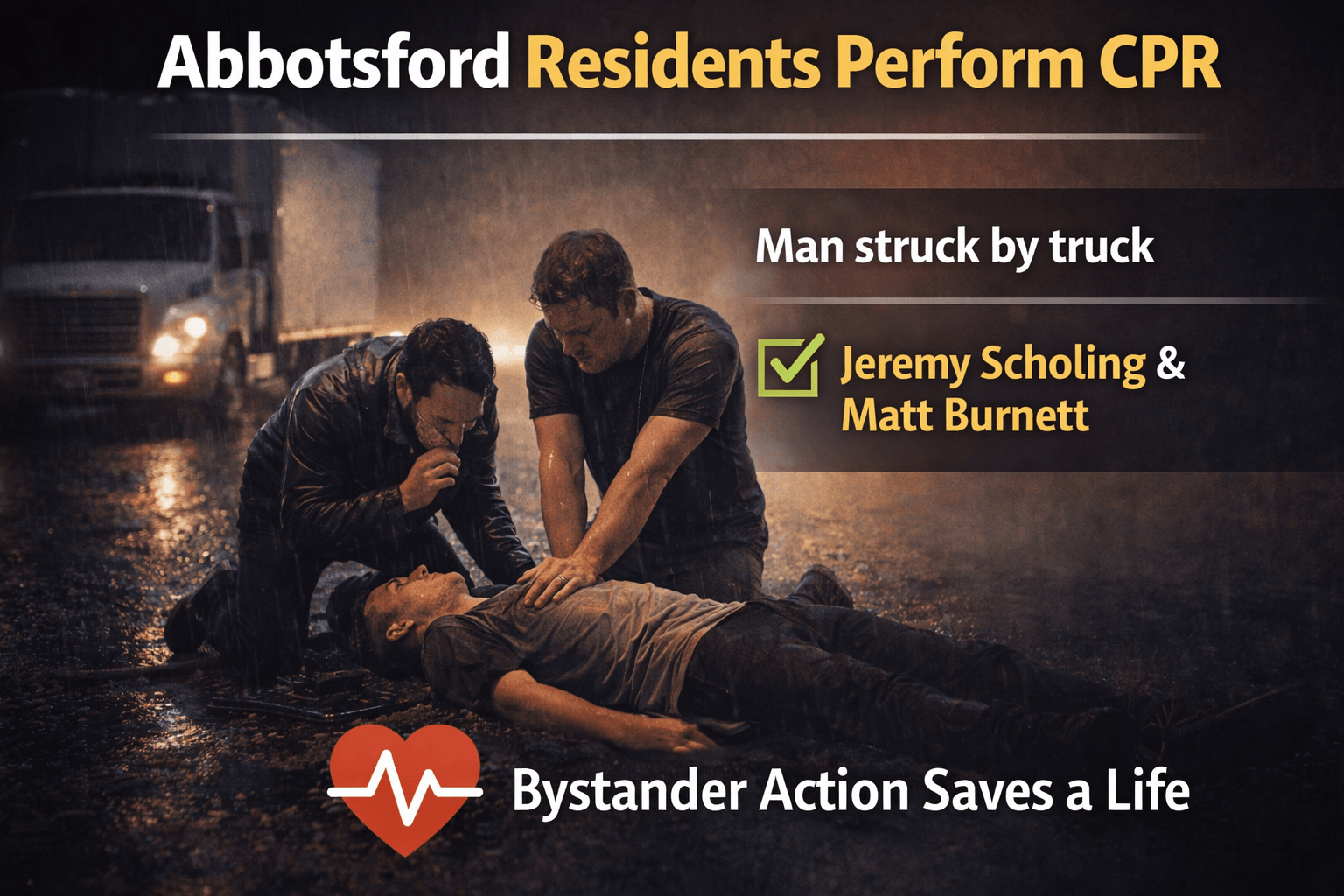
After attending a Halloween event, a 22-year-old man attempted to cross the highway and was struck by a five-ton truck. The collision occurred at night during rainy conditions, making visibility and stopping distances more challenging.
Nearby residents Jeremy Scholing and Matt Burnett, both from Abbotsford, heard the impact and quickly ran toward the scene to help.
Bystanders Provide Immediate Assistance
When they reached the injured man, Burnett checked for signs of breathing and circulation and realized that the individual did not appear to have a pulse.
Recognizing the urgency of the situation, Burnett began CPR chest compressions, while Scholing assisted with rescue breathing. The two worked together to support the injured man while someone contacted emergency services.
Despite the difficult conditions, the bystanders continued providing assistance until the man began showing signs of breathing again.
Guidance From Emergency Dispatch
During many emergencies, 911 dispatchers can guide callers through first aid procedures, including CPR instructions.
Although Scholing had previously completed a beginner-level first aid course several years earlier, he later explained that having a dispatcher on the phone helped provide reassurance and guidance during the stressful situation.
Emergency responders soon arrived and transported the injured man to hospital for further medical care.
Why Immediate CPR Is Important
When someone becomes unresponsive and stops breathing normally, oxygen circulation to the brain and vital organs can quickly decrease. Early CPR from bystanders can help maintain circulation until paramedics arrive.
First aid programs often describe this process as part of the “chain of survival,” which includes:
-
Recognizing a medical emergency
-
Calling emergency services immediately
-
Beginning CPR if trained
-
Continuing care until professional responders arrive
These steps can help support the body during the critical early minutes of an emergency.
Preparedness in Communities and Workplaces
Although accidents can happen unexpectedly, communities can improve preparedness through several safety measures:
-
Encouraging CPR and first aid training for residents and workers
-
Promoting awareness of emergency response procedures
-
Installing AED devices in public spaces where possible
-
Supporting public education on road safety and emergency preparedness
Across Vancouver, Abbotsford, and the Lower Mainland, workplace safety programs often include CPR and first aid training to help ensure trained responders are available when emergencies occur.
Frequently Asked Questions
Why is bystander CPR important after an accident?
Bystanders are often the first people present during emergencies. Providing CPR can help support circulation until emergency responders arrive.
Can emergency dispatchers guide someone through CPR?
Yes. When someone calls emergency services, dispatchers may provide instructions on how to perform CPR or other basic first aid steps until help arrives.
Do people need training to perform CPR?
Training helps individuals learn proper techniques and feel more confident responding during emergencies. Many community programs offer CPR courses for the public.
Why is teamwork helpful during emergencies?
Multiple bystanders can assist by performing different roles such as calling emergency services, performing CPR, directing traffic, or retrieving first aid supplies.
Where can people learn CPR in British Columbia?
CPR and first aid courses are offered by many training organizations across British Columbia, including programs designed for workplaces and community members.
Educational Note
This article is intended for general first aid awareness and public education. Participating in certified first aid and CPR training programs helps individuals learn how to recognize emergencies and respond safely.
About The Author

Mark Kascha
First Aid Instructor Trainer with 30+ years of experience in CPR, emergency response, and safety training across Canada.
Last reviewed: March 2026
 Support local, Canadian-owned businesses, with no connections to American corporations or partnerships.