
Sudden cardiac arrest can happen anywhere — including fitness centres. A widely reported incident at a Toronto gym highlights how quick action by a trained bystander can make a life-saving difference.
Cardiopulmonary resuscitation (CPR) and automated external defibrillators (AEDs) are critical links in the chain of survival. In Vancouver and across British Columbia, many workplaces — including gyms, recreation centres, and office buildings — are equipped with AEDs and have staff trained in CPR.
What Happened at the Toronto Gym
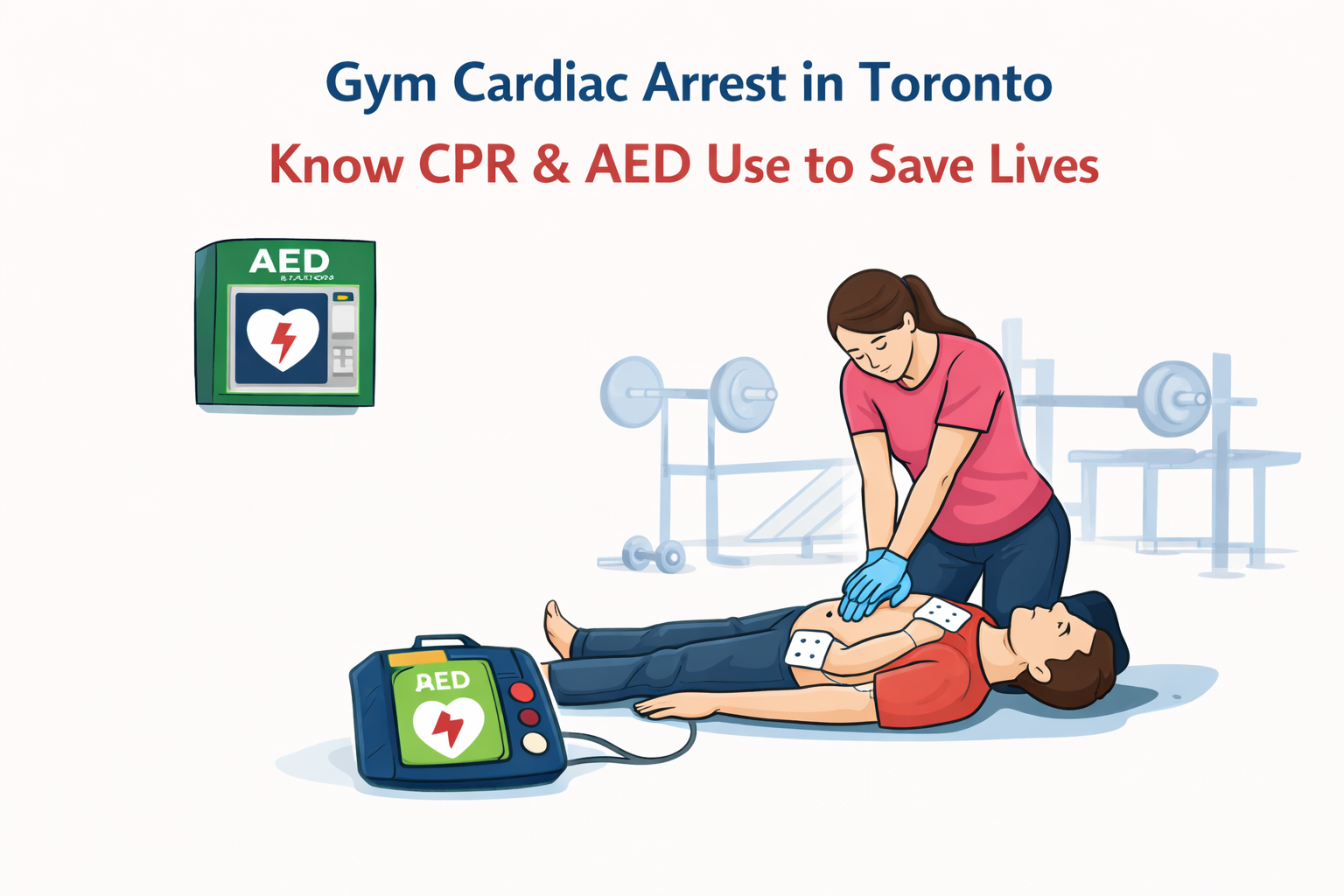 The incident occurred at a GoodLife Fitness location near Bloor Street West in Toronto.
A woman trained in CPR noticed a man collapsed on the gym floor. Reports indicated that an AED had been brought over, but it had not yet been activated. Recognizing the urgency, she turned on the device, applied the electrode pads, and followed the prompts. The AED advised a shock, which was delivered.
She then performed chest compressions for several minutes until paramedics arrived.
The man was transported to hospital, where he later underwent treatment for blocked coronary arteries. Early CPR and defibrillation helped sustain blood flow until advanced medical care could take over.
While investigations and perspectives varied, the central lesson remains clear: early intervention matters.
Understanding Sudden Cardiac Arrest
Sudden cardiac arrest (SCA) occurs when the heart’s electrical system malfunctions, causing it to stop pumping blood effectively.
Without immediate intervention:
-
The person loses consciousness
-
Normal breathing stops
-
Brain injury risk increases within minutes
Cardiac arrest is different from a heart attack. A heart attack involves blocked blood flow to heart muscle. However, a heart attack can trigger cardiac arrest.
Recognizing Cardiac Arrest in Public Settings
In environments such as gyms, workplaces, or community centres, signs may include:
-
Sudden collapse
-
No response to voice or touch
-
No normal breathing
-
Gasping or irregular breathing
Time is critical. Immediate action can significantly improve survival outcomes.
Why CPR and AED Use Are So Important
CPR keeps oxygenated blood circulating to the brain and vital organs. An AED analyzes the heart rhythm and delivers a shock only if a shockable rhythm is detected.
Together, CPR and AED use:
-
Help restore effective heart rhythm
-
Maintain circulation until paramedics arrive
-
Improve survival rates
In Canada, AEDs are designed for public use. They provide clear voice instructions and will not deliver a shock unless needed.
Gym and Workplace Preparedness in BC
Fitness centres, recreation facilities, and many Vancouver workplaces maintain AEDs on-site. Preparedness should include:
-
Clearly marked AED locations
-
Regular equipment checks
-
Staff training in CPR and AED use
-
Emergency action plans
-
Practice drills
Even in staffed facilities, bystanders with CPR training may become the first responders in those crucial first minutes.
Brain Oxygen and Timing
It is commonly taught in CPR courses that brain injury risk increases after several minutes without oxygen. While exact timing varies depending on conditions, early CPR significantly helps maintain circulation and reduce the risk of severe outcomes.
The sooner CPR and defibrillation begin, the better the chances of survival.
Frequently Asked Questions
What should you do if someone collapses at a gym?
Check responsiveness and breathing, call 9-1-1, send someone to retrieve an AED, and begin CPR if the person is not breathing normally.
Can anyone use an AED?
Yes. AEDs are designed for public use and provide step-by-step voice instructions.
Does physical fitness prevent cardiac arrest?
Regular exercise supports heart health, but cardiac arrest can still occur unexpectedly, even in active individuals.
How long should CPR be continued?
CPR should continue until the person shows signs of recovery or emergency medical services take over.
Are AEDs common in Vancouver fitness centres?
Many gyms and recreation facilities in Vancouver are equipped with AEDs and staff trained in CPR.
Educational Note
This article is provided for general first aid awareness and workplace safety education in Canada. Formal CPR and AED training equips individuals with the confidence and knowledge to respond effectively during cardiac emergencies.
About The Author

Mark Kascha
First Aid Instructor Trainer with 30+ years of experience in CPR, emergency response, and safety training across Canada.
👉 [View full credentials]🔗 View LinkedIn Profile
Last reviewed: March 2026