Understanding Sudden Cardiac Arrest in Young Athletes
 Sudden cardiac arrest occurs when the heart unexpectedly stops pumping blood effectively. Without circulation, oxygen cannot reach the brain and vital organs. Immediate response—particularly cardiopulmonary resuscitation (CPR) and the use of an automated external defibrillator (AED)—can help restore heart rhythm and improve survival chances.
Across Canada, including British Columbia and the Vancouver region, CPR and AED awareness are strongly encouraged in schools, recreation centres, and workplaces. Public venues such as sports arenas increasingly keep AED devices accessible so that trained bystanders can respond quickly if someone collapses during physical activity.
First Aid and Workplace Relevance in Vancouver and British Columbia
Sports arenas, gyms, and recreation facilities in Vancouver and throughout British Columbia host thousands of athletes and spectators each year. Because intense physical activity can sometimes trigger medical emergencies, many facilities maintain AED devices and trained staff as part of their safety planning.
Workplace first aid training and community CPR courses often teach participants how to recognize cardiac arrest and operate an AED. These skills can be critical in environments where large groups gather for sports or recreational events.
Scenario: Emergency Response During a Hockey Game
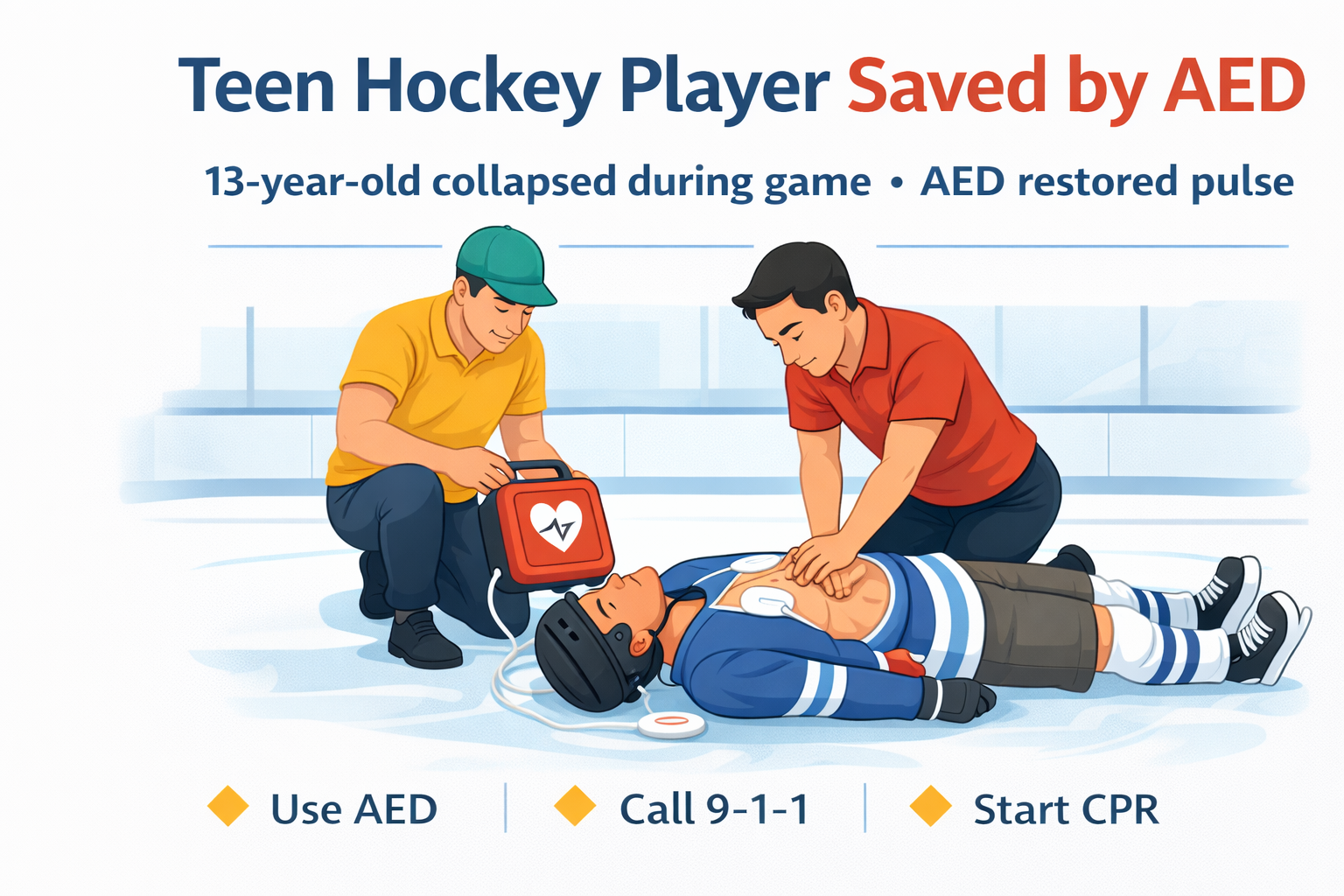
During a youth hockey game at the Herbert H. Carnegie Centennial Centre in North York, a 13-year-old player named Ali Khaleghi suddenly collapsed on the ice. The teen had only been playing for a short time and had just blocked a shot moments before the incident occurred.
Arena operator Doug Jamieson quickly ran onto the ice to assist. An off-duty firefighter and a nurse who were present at the arena also stepped in to help.
The responders checked the teen for breathing and a pulse. When they could not detect vital signs, CPR was started immediately. Someone nearby ran to retrieve the arena’s automated external defibrillator (AED).
Once the AED arrived, the responders attached the pads and allowed the device to analyze the player’s heart rhythm. The AED advised a shock, which was delivered while CPR efforts continued.
Shortly afterward, the teen’s pulse returned and he began breathing again. He was transported to hospital for further care and later reported to be recovering.
Situations like this highlight how quick access to an AED and trained responders can play a critical role during sudden cardiac arrest.
Signs of Sudden Cardiac Arrest
Cardiac arrest can occur suddenly and may include the following warning signs:
-
Sudden collapse
-
Loss of consciousness
-
Absence of normal breathing
-
No detectable pulse
-
Pale or bluish skin colour due to reduced oxygen circulation
These symptoms indicate a medical emergency requiring immediate action.
Possible Causes in Athletes
Although rare, cardiac arrest can occur in young athletes due to several possible factors, including:
-
Undiagnosed heart conditions
-
Abnormal heart rhythms (arrhythmias)
-
Structural heart abnormalities
-
Severe physical stress during intense activity
Medical professionals typically perform further evaluation in hospital to determine possible causes.
First Aid and Emergency Response
When someone collapses and cardiac arrest is suspected, quick action is essential. In public settings such as sports arenas, trained bystanders may begin assisting while emergency services are contacted.
General emergency response steps include:
-
Calling emergency services immediately
-
Beginning CPR if the person is unresponsive and not breathing normally
-
Retrieving and using an AED if available
-
Continuing CPR and AED use until emergency responders arrive
AEDs are designed to guide users through each step with voice prompts, making them easier for trained individuals to use in emergencies.
Prevention and Safety Considerations in Sports Facilities
Sports facilities and workplaces can strengthen emergency preparedness through several safety measures:
-
Ensuring AED devices are easily accessible
-
Training staff in CPR and AED use
-
Posting clear signage identifying AED locations
-
Developing emergency response procedures for sporting events
-
Encouraging community members to learn first aid skills
Prepared facilities and trained bystanders can help improve emergency response during unexpected incidents.
Frequently Asked Questions
What is an automated external defibrillator (AED)?
An AED is a portable device that analyzes heart rhythm and may deliver an electrical shock to help restore a normal heartbeat during cardiac arrest.
Why are AEDs important in sports arenas?
Athletes and spectators may experience sudden cardiac arrest during physical activity or large gatherings. Having an AED nearby allows for faster emergency response.
Can young athletes experience cardiac arrest?
Although uncommon, cardiac arrest can occur in younger individuals, sometimes due to previously undetected heart conditions.
Why is CPR used together with an AED?
CPR helps maintain blood circulation while the AED analyzes the heart rhythm and determines whether a shock may help restore a heartbeat.
Do recreation facilities in Canada commonly have AEDs?
Many sports facilities, schools, and community centres across Canada maintain AED devices as part of emergency preparedness planning.
Educational Note
This article is intended for general education about sudden cardiac arrest awareness and the role of CPR and AEDs in emergency response. Learning these skills can help individuals respond more confidently during emergencies in sports facilities, workplaces, and public environments.
About The Author

Mark Kascha
First Aid Instructor Trainer with 30+ years of experience in CPR, emergency response, and safety training across Canada.
Last reviewed: March 2026
 Support local, Canadian-owned businesses, with no connections to American corporations or partnerships.