Understanding First Aid for Cold-Related Emergencies
 Cold exposure can become a serious medical emergency when a person’s body temperature drops too low. Conditions such as hypothermia may develop when someone is exposed to cold temperatures for extended periods without adequate protection. Early recognition and assistance—such as moving the person to a warmer environment and calling emergency services—can help prevent the situation from becoming more severe.
Across British Columbia and the Lower Mainland—including Vancouver, Burnaby, Richmond, and Abbotsford—first aid training is often encouraged for workers who interact with the public, including transit staff, security personnel, and community service workers. Because these roles involve daily contact with people in public spaces, trained staff may sometimes be the first to notice someone in distress.
First Aid Awareness in Public Transportation and Workplaces
Public transportation operators across Canada frequently encounter a wide range of situations involving passenger health and safety. In Vancouver and surrounding communities, many organizations encourage workers to learn basic first aid so they can recognize medical concerns and contact emergency services when necessary.
Preparedness and awareness can help ensure that individuals receive assistance quickly when emergencies occur in public places.
A Concern at a Bus Stop in Edmonton
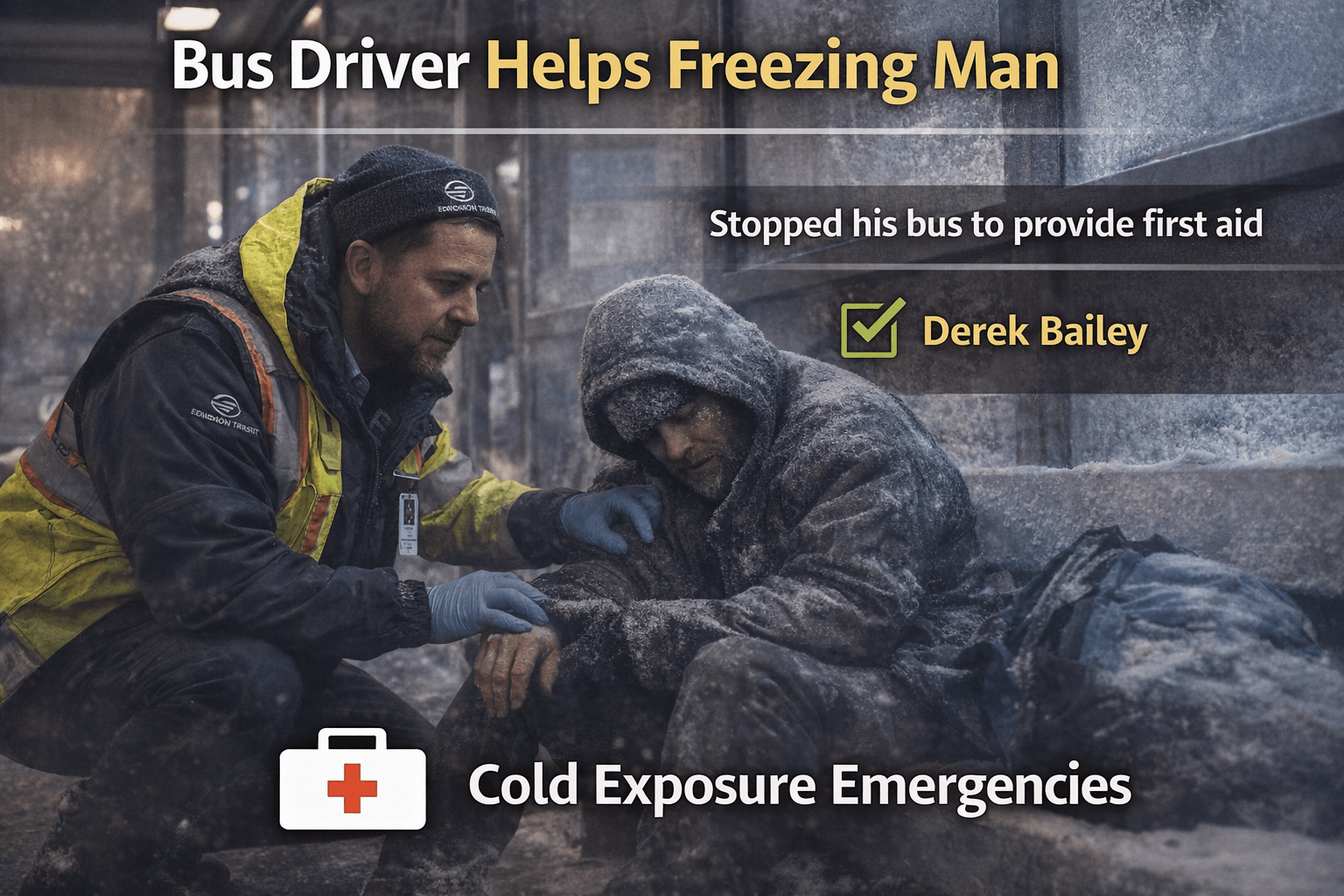
An example of this preparedness occurred when Derek Bailey, a bus driver with Edmonton Transit Service, noticed something unusual during his route.
It was Bailey’s first day driving Route 151 from Castle Downs to King Edward Park. At approximately 9 a.m. on a Sunday morning, he arrived at a bus stop in the Lauderdale neighbourhood and noticed a man slumped over on a bench between two shopping bags.
The man appeared weak and unwell, and Bailey became concerned that he might be suffering from severe cold exposure.
Assessing the Situation
Bailey, who had previously worked as an emergency medical responder, approached the man to check on his condition. The individual was shivering intensely and had difficulty speaking clearly.
According to Bailey, the man struggled to form complete sentences and could not respond normally when asked questions. When Bailey checked his condition, he noticed that the man’s pulse was difficult to detect and his grip strength was very weak.
Recognizing that the situation could be serious, Bailey encouraged the man to seek medical help.
Providing Assistance Until Help Arrived
Although the man initially wanted to travel downtown to a community services centre, Bailey encouraged him to wait while emergency services were contacted.
Bailey remained with the individual and monitored his condition until paramedics arrived. Emergency responders then continued treatment and transported the man to hospital for further care.
Later reports indicated that the individual was recovering.
The Role of First Aid Training
Bailey later reflected that his first aid and emergency response training had helped him recognize that the situation required immediate medical attention.
He explained that transit operators often encounter people experiencing medical concerns during their daily routes. Because of this, he keeps basic protective equipment—such as gloves—available in case he needs to assist someone.
Experiences like this highlight how first aid awareness can help workers respond calmly and responsibly during unexpected situations.
Recognizing Signs of Cold Exposure
Cold-related illnesses may develop gradually, and early warning signs can include:
-
Intense or uncontrolled shivering
-
Slurred or slow speech
-
Weak pulse or reduced coordination
-
Confusion or difficulty communicating
-
Extreme fatigue or unusual behaviour
If these signs appear, emergency medical services should be contacted so that trained responders can provide assistance.
Prevention and Community Preparedness
Cold weather safety is important in many Canadian communities. Several steps can help reduce the risk of cold-related illness:
-
Wearing layered clothing during cold weather
-
Seeking warm shelter during extreme temperatures
-
Checking on vulnerable individuals during cold conditions
-
Learning first aid and emergency response skills
Across Vancouver and the Lower Mainland, many workplaces encourage staff to complete first aid training so they are prepared to assist when emergencies occur.
Frequently Asked Questions
What is hypothermia?
Hypothermia occurs when the body loses heat faster than it can produce it, causing body temperature to drop below normal levels.
What should someone do if they suspect cold exposure?
First aid training generally emphasizes moving the person to a warmer area, contacting emergency services, and monitoring their condition until help arrives.
Why is first aid training useful for public service workers?
Workers who interact with the public may encounter people experiencing medical distress. First aid training helps them recognize emergencies and respond appropriately.
Can cold exposure happen quickly?
Yes. Cold weather, wind, and wet conditions can increase the risk of rapid heat loss, especially if someone lacks proper clothing or shelter.
Where can people learn first aid skills in Canada?
First aid and CPR training courses are widely available through community organizations, workplaces, and certified training providers across Canada.
Educational Note
This article is intended for general first aid awareness and public education. Certified first aid training programs provide practical instruction to help individuals recognize emergencies and respond safely.
About The Author

Mark Kascha
First Aid Instructor Trainer with 30+ years of experience in CPR, emergency response, and safety training across Canada.
Last reviewed: March 2026
 Support local, Canadian-owned businesses, with no connections to American corporations or partnerships.