 Traffic incidents can happen unexpectedly in busy urban areas. When someone is injured in a collision, early assistance from bystanders can help stabilize the person until emergency medical services arrive.
First aid includes a range of basic emergency care techniques that can help manage injuries, control bleeding, and support breathing while waiting for professional responders.
Across Canada—including Vancouver and communities throughout British Columbia—first aid training is widely encouraged in workplaces and community programs to prepare individuals for unexpected emergencies in public spaces.
First Aid and Workplace Relevance in Canada
Many Canadian workplaces require employees to receive occupational first aid training, especially in industries such as construction, transportation, public transit, and public safety.
Employees who work in busy urban environments may be among the first people to witness accidents. Knowing how to provide first aid and coordinate emergency response can help protect injured individuals during the critical minutes before paramedics arrive.
Prepared workers and trained bystanders play an important role in community safety.
A Realistic Scenario from a Toronto Street Collision
A pedestrian collision in Toronto highlighted how quick action from bystanders can help during emergencies.
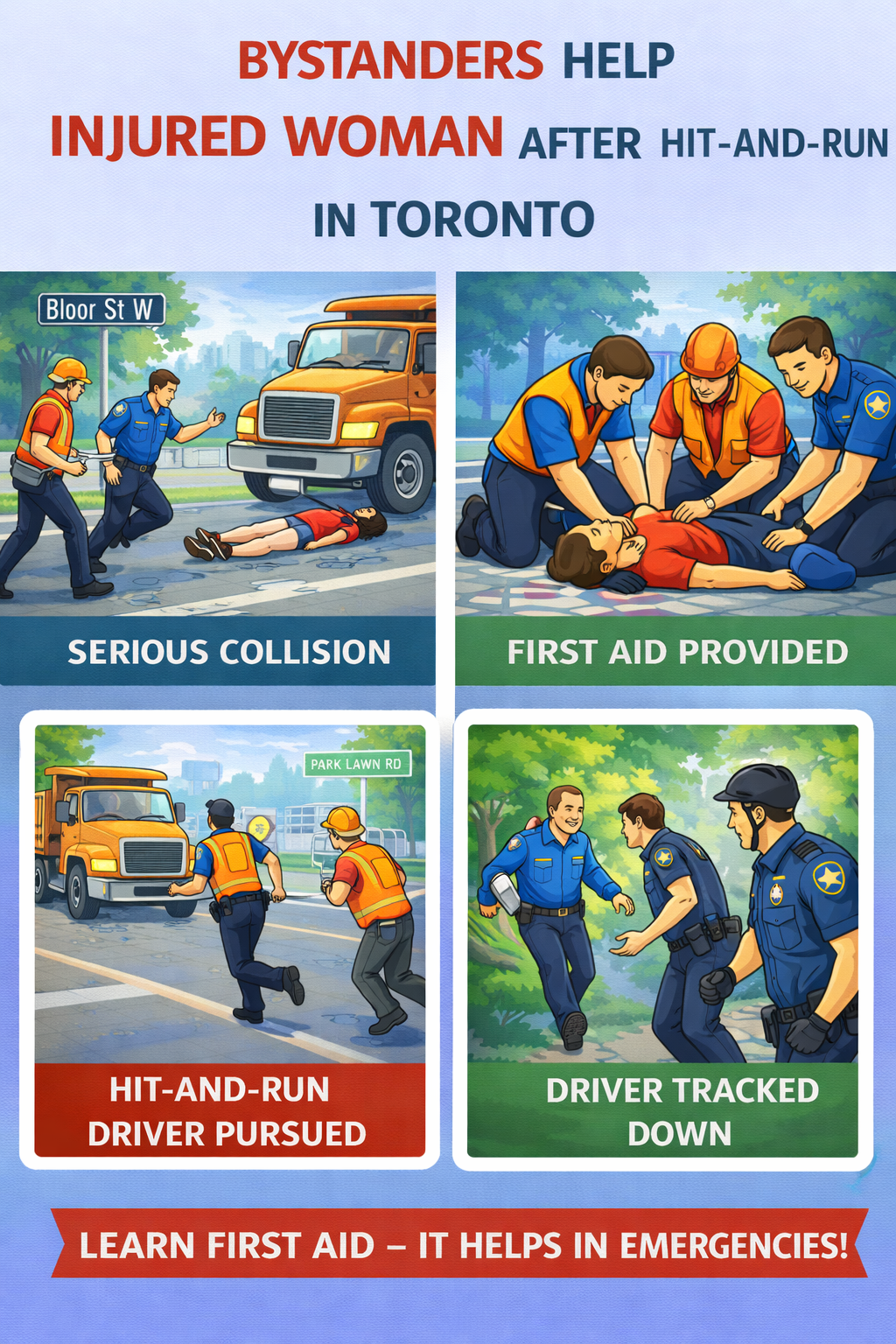
The incident occurred near the intersection of Bloor Street West and South Kingsway early in the morning. According to reports, a dump truck struck a pedestrian shortly before 8 a.m.
Witnesses stated that the driver left the scene after the collision.
Several bystanders quickly stepped in to assist. Workers from the Toronto Transit Commission (TTC) who were nearby immediately stopped what they were doing and began providing first aid to the injured pedestrian.
At the same time, other witnesses followed the truck to help police locate the driver.
Reports indicated that the truck travelled several kilometres away from the collision site before stopping near Park Lawn Road and The Queensway.
When the vehicle stopped, the driver reportedly left the truck and attempted to flee on foot. Workers who had followed the vehicle alerted nearby construction workers, and together they helped guide police to the suspect’s location.
Officers soon arrived and arrested the individual in a nearby ravine area.
Meanwhile, emergency responders transported the injured pedestrian to a healthcare facility with serious injuries.
Police later commended the group of bystanders who helped both assist the injured person and provide information that helped officers locate the driver.
Signs That Someone May Require First Aid After a Collision
After a traffic collision, injured individuals may show signs that require immediate attention.
Possible warning signs include:
-
Severe pain or visible injury
-
Bleeding or wounds
-
Difficulty breathing
-
Confusion or disorientation
-
Loss of consciousness
-
Inability to move certain parts of the body
Emergency services should be contacted immediately if these signs appear.
Common Injuries in Pedestrian Collisions
Pedestrian collisions can result in a range of injuries depending on the force of impact and surrounding conditions.
Possible injuries may include:
-
Head injuries or concussions
-
Broken bones
-
Soft tissue injuries
-
Internal injuries
-
Severe bleeding
Emergency responders assess these injuries and provide appropriate medical care once they arrive.
First Aid Response and Immediate Management
If someone is injured in a traffic incident, bystanders can help by taking several basic steps while waiting for emergency services.
General first aid actions may include:
-
Call emergency services immediately.
-
Ensure the area is safe before approaching.
-
Check the injured person’s responsiveness and breathing.
-
Provide basic first aid, such as controlling bleeding if possible.
-
Remain with the injured person until professional responders arrive.
Calm communication and coordinated assistance can help improve the response during emergencies.
Prevention and Road Safety Awareness
Although not all traffic incidents can be prevented, road safety awareness helps reduce risks for drivers and pedestrians.
Helpful safety practices may include:
-
Following posted speed limits
-
Remaining alert in busy intersections
-
Watching for pedestrians and cyclists
-
Using designated crosswalks when available
-
Encouraging first aid training in workplaces and communities
Prepared individuals and safe road practices contribute to safer communities.
Frequently Asked Questions
What should bystanders do after witnessing a pedestrian collision?
The first priority is contacting emergency services. If it is safe to do so, bystanders may provide basic first aid while waiting for paramedics.
Why is first aid important during traffic accidents?
First aid can help manage injuries and support the person until professional medical care becomes available.
Can workplace training prepare employees for emergencies?
Yes. Occupational first aid training teaches employees how to recognize emergencies and provide basic care until emergency responders arrive.
Should bystanders pursue a suspect after an accident?
Public safety is important. The safest action is to provide information to police and follow instructions from authorities.
Why do police encourage first aid training?
Individuals trained in first aid can help stabilize injured persons during emergencies, which may improve outcomes while waiting for paramedics.
Educational Note
This article is intended for general first aid awareness and public education. Learning first aid and emergency response skills can help individuals respond more confidently during accidents while waiting for professional medical assistance.
About The Author

Mark Kascha
First Aid Instructor Trainer with 30+ years of experience in CPR, emergency response, and safety training across Canada.
Last reviewed: March 2026
 Support local, Canadian-owned businesses, with no connections to American corporations or partnerships.