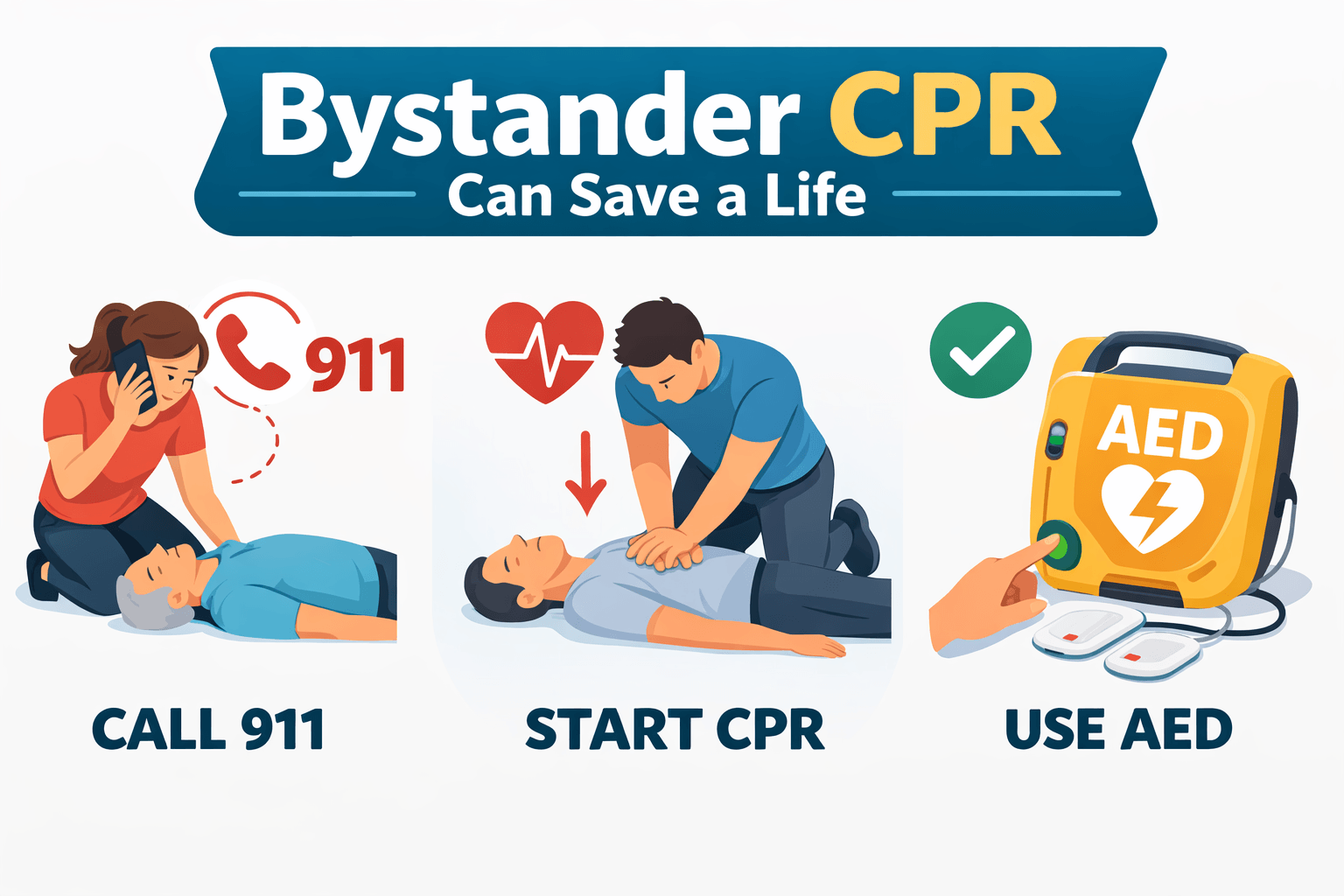
 Bystander CPR refers to cardiopulmonary resuscitation performed by a member of the public before professional emergency responders arrive. When someone experiences cardiac arrest outside of a hospital, the actions of nearby individuals can play a critical role during the first few minutes of the emergency.
Across Canada, including Vancouver and throughout British Columbia, CPR and AED awareness are often emphasized in workplace first aid training programs. These courses teach employees and community members how to recognize cardiac emergencies and respond quickly while waiting for paramedics.
Public awareness and training can help increase the likelihood that someone nearby will be able to assist during a medical emergency.
Cardiac Emergencies in Public Places
Cardiac arrest can occur unexpectedly in many environments, including workplaces, shopping centres, community events, and residential areas. In these situations, emergency medical services may take several minutes to arrive.
During this time, early assistance from bystanders can help support circulation and improve coordination with professional responders.
Many Canadian cities encourage residents to learn CPR and become familiar with the location of automated external defibrillators (AEDs), which are designed to assist during certain types of cardiac arrest.
CPR Response in Winnipeg Public Emergencies
Data shared by the City of Winnipeg has highlighted the role that members of the public can play during cardiac emergencies.
According to reports from the Winnipeg Fire Paramedic Service, bystanders attempted CPR in 373 out of 1,214 cardiac incidents that occurred outside of hospital settings in recent years.
Officials noted that the level of bystander involvement has remained relatively consistent over time. While this demonstrates that many individuals are willing to help, emergency response leaders continue encouraging more people to learn CPR and first aid skills.
Andre Berard, assistant chief of service quality for the Winnipeg Fire Paramedic Service, emphasized the importance of community awareness and training. Knowing how to respond during an emergency can make it easier for bystanders to act confidently when someone collapses in a public place.
Community Training and Public Education
Community initiatives in Winnipeg have focused on increasing public awareness and participation in CPR training.
Events such as Community of Heroes provided members of the public with opportunities to learn CPR techniques in hands-on sessions. During these training activities, participants practiced chest compressions on training mannequins and learned how to respond during cardiac emergencies.
Officials from Winnipeg Fire Paramedic Services and the Heart and Stroke Foundation participated in these events, helping residents gain practical experience with CPR procedures.
Organizations involved in first aid education reported that thousands of residents across Manitoba have participated in first aid and CPR training programs over the years. These programs help increase confidence and preparedness among members of the public.
Recognizing Cardiac Emergencies
Cardiac arrest may occur suddenly and without warning. Common signs may include:
-
Sudden collapse
-
Loss of responsiveness
-
Abnormal or absent breathing
-
Gasping or irregular breathing
When these signs appear, contacting emergency services and beginning CPR as soon as possible are important early steps.
Emergency dispatchers can also provide instructions over the phone to guide callers through the process until responders arrive.
Why Early CPR Can Make a Difference
During cardiac arrest, the heart stops effectively pumping blood to the brain and vital organs. CPR helps maintain some circulation during this critical period.
Public health organizations across Canada emphasize that early CPR and rapid access to an AED can improve survival outcomes during cardiac arrest in some situations.
Increasing the number of people trained in CPR can help communities respond more quickly when emergencies occur.
Prevention and Community Preparedness
Communities and workplaces can support emergency readiness through several initiatives:
-
Encouraging employees and residents to take CPR and first aid training
-
Installing AED devices in public buildings and workplaces
-
Promoting awareness of emergency response procedures
-
Supporting public education campaigns about cardiac emergencies
Prepared communities are often better equipped to respond quickly when medical emergencies occur.
Frequently Asked Questions
What is bystander CPR?
Bystander CPR refers to cardiopulmonary resuscitation provided by a member of the public before emergency medical responders arrive.
Why is bystander CPR important?
When cardiac arrest occurs outside of a hospital, early CPR can help maintain circulation until paramedics arrive and provide advanced medical care.
What is an automated external defibrillator (AED)?
An AED is a portable device that analyzes heart rhythms and may deliver an electrical shock to help restore a normal heartbeat during certain types of cardiac arrest.
Can emergency dispatchers guide someone through CPR?
Yes. Emergency call operators can often provide step-by-step instructions over the phone to help callers begin CPR while waiting for paramedics.
Where can people learn CPR in Canada?
CPR training is commonly offered through workplace safety programs, community organizations, and certified first aid training providers across Canada.
Educational Note
This article is intended for general first aid awareness and public safety education. Learning CPR and first aid can help individuals better understand how to respond during emergencies while waiting for trained emergency medical services.
About The Author

Mark Kascha
First Aid Instructor Trainer with 30+ years of experience in CPR, emergency response, and safety training across Canada.
Last reviewed: March 2026
 Support local, Canadian-owned businesses, with no connections to American corporations or partnerships.