
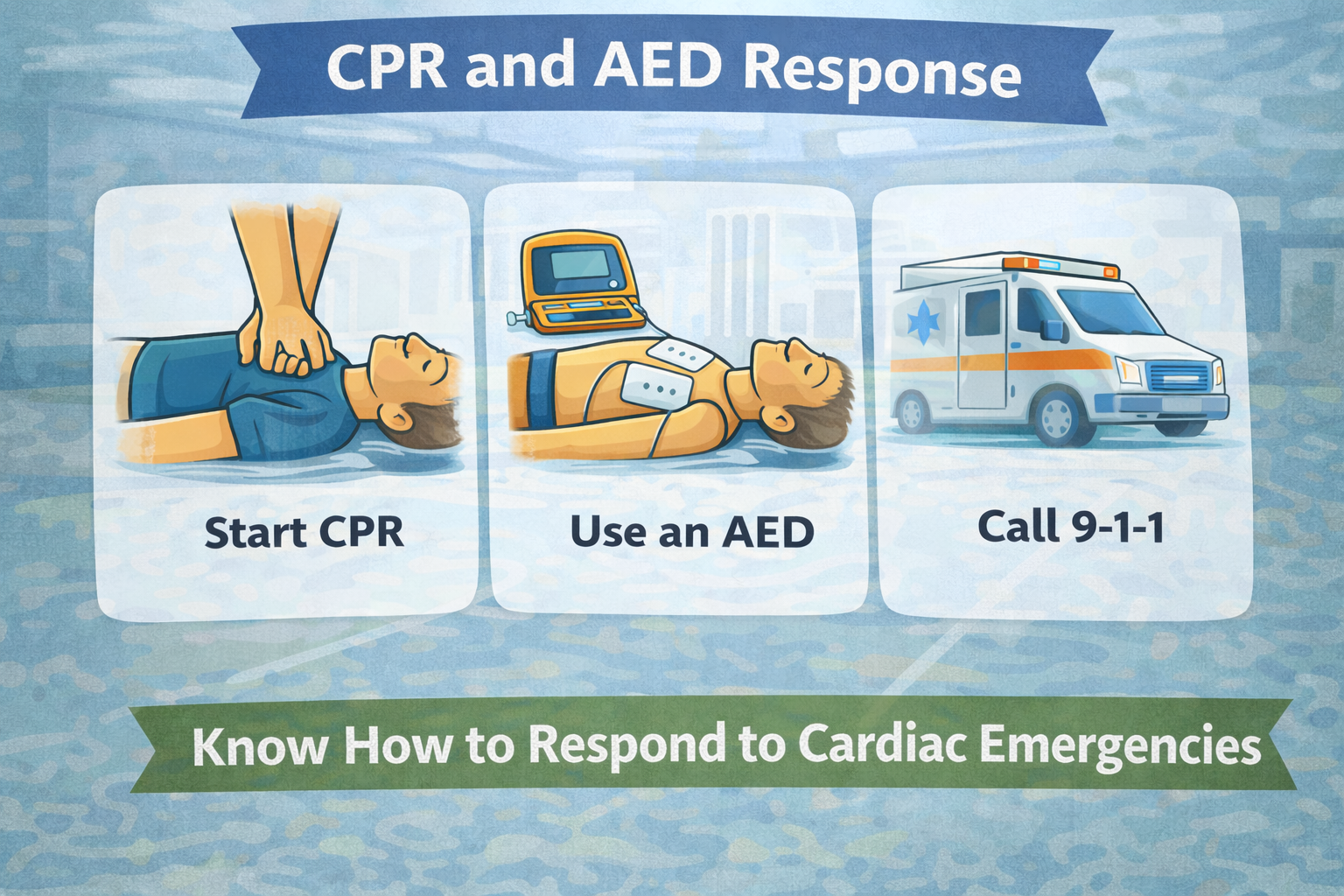
 Physical activity such as squash, basketball, or gym workouts is common in recreation centres across Canada, including Vancouver and communities throughout British Columbia. While exercise supports overall health, sudden medical emergencies such as cardiac arrest can occur unexpectedly—even during routine activities.
Public recreation facilities increasingly prepare for these situations by ensuring staff are trained in CPR (cardiopulmonary resuscitation) and automated external defibrillator (AED) use. Quick action from trained bystanders can help support a person experiencing cardiac arrest until emergency medical services arrive.
First Aid and Workplace Safety Relevance in Vancouver and British Columbia
Many recreation centres, universities, and community facilities in Vancouver and across BC require staff to maintain first aid and CPR certification. These environments often host large numbers of visitors, making emergency preparedness an important safety measure.
Training programs help staff and volunteers recognize medical emergencies, begin CPR if necessary, and retrieve an AED while emergency services are contacted.
Public access to AED devices in recreation facilities has become an important part of community emergency readiness across Canada.
Scenario: Cardiac Emergency at a University Recreation Centre
In a reported incident at the Mount Royal University recreation centre in Calgary, a 53-year-old man named Ayaz Kara was playing squash when he suddenly began to feel dizzy and short of breath.
Kara later recalled collapsing during the game. Witnesses quickly realized that he was unresponsive and not breathing normally.
A student named Michael Dubnyk was among the first to respond. He immediately began performing CPR, starting chest compressions while others called for help.
As the situation unfolded, additional individuals rushed to assist. Paul Hunka, a first aid instructor who was nearby, joined the effort and helped continue chest compressions.
At the same time, a supervisor retrieved an automated external defibrillator (AED) from the facility. The device was attached, and two shocks were delivered in an effort to restore a normal heart rhythm.
Emergency medical services soon arrived and took over care. Several additional bystanders assisted during the response.
After receiving treatment at a healthcare facility, Kara later recovered and returned to personally thank the individuals who helped during the emergency.
Recognizing Signs of Sudden Cardiac Arrest
Sudden cardiac arrest can occur quickly and often without warning. Signs that someone may be experiencing cardiac arrest include:
-
Sudden collapse
-
Unresponsiveness
-
Absence of normal breathing
-
Gasping or irregular breathing
-
Skin appearing pale or bluish in colour
Recognizing these symptoms quickly allows responders to begin emergency procedures immediately.
First Aid Awareness: CPR and AED Use
When cardiac arrest occurs, rapid action is essential while waiting for emergency services.
First aid training programs commonly teach responders to:
-
Call emergency services immediately
-
Check responsiveness and breathing
-
Begin chest compressions if the person is unresponsive and not breathing normally
-
Retrieve and use an AED as soon as possible
-
Continue CPR until professional responders arrive
AED devices are designed with voice prompts that guide users through the process, allowing trained staff and bystanders to assist during emergencies.
Prevention and Emergency Preparedness in Recreation Facilities
Recreation centres and sports facilities often take steps to improve emergency readiness for participants and visitors.
Safety practices commonly include:
-
Maintaining accessible AED devices within the facility
-
Providing CPR and first aid training for staff and volunteers
-
Establishing emergency response procedures for medical incidents
-
Clearly marking emergency equipment locations
-
Encouraging public awareness of first aid training opportunities
Across Canadian recreation facilities, these measures help improve response time during unexpected medical emergencies.
Frequently Asked Questions
What is sudden cardiac arrest?
Sudden cardiac arrest occurs when the heart unexpectedly stops pumping blood effectively. Without immediate assistance, the body and brain do not receive enough oxygen.
Why is CPR important during cardiac arrest?
CPR helps circulate oxygenated blood to vital organs until a normal heart rhythm can be restored or emergency responders arrive.
What role does an AED play during cardiac arrest?
An AED analyzes heart rhythm and may deliver an electrical shock if needed to help restore a more normal rhythm.
Why are AEDs placed in recreation centres and public facilities?
Cardiac emergencies can occur anywhere. Having AEDs available in public spaces allows trained staff or bystanders to respond quickly.
How can people learn CPR and AED skills?
Many organizations across Canada offer community training programs that teach CPR, AED use, and basic first aid awareness.
Educational Note
This article is intended for general first aid awareness and emergency preparedness education. Cardiac emergencies involve complex medical conditions, and trained emergency responders provide advanced care. Learning CPR and AED awareness can help individuals respond more effectively when unexpected emergencies occur.
About The Author

Mark Kascha
First Aid Instructor Trainer with 30+ years of experience in CPR, emergency response, and safety training across Canada.
👉 [View full credentials]🔗 View LinkedIn Profile
Last reviewed: March 2026