
Understanding Emergency Response in Institutional Settings
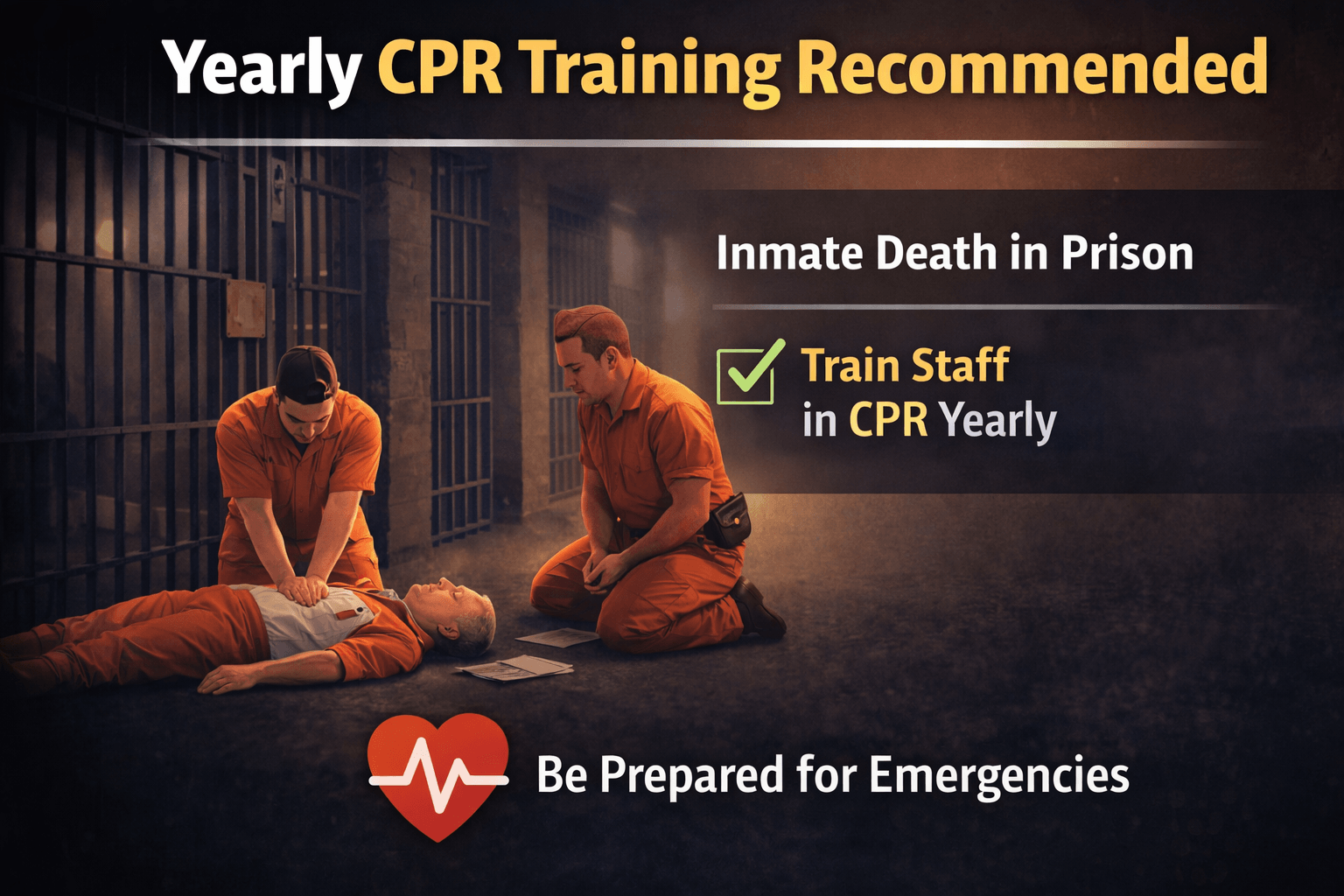 Medical emergencies can occur in many environments, including workplaces, public facilities, and institutional settings such as correctional centres. When someone becomes unresponsive, staff members are often responsible for recognizing the emergency and providing immediate assistance until paramedics arrive.
Across British Columbia and the Lower Mainland—including Abbotsford, Vancouver, and Surrey—first aid training and CPR awareness are widely encouraged in workplaces and public institutions. Regular training helps ensure staff members are prepared to respond quickly and safely during unexpected medical situations.
First Aid Preparedness in Workplaces and Public Facilities
Many organizations across Canada emphasize ongoing emergency preparedness through CPR certification, refresher training, and scenario-based safety exercises. These programs help staff maintain confidence in recognizing emergencies and providing first aid when necessary.
In environments where staff supervise or care for others—such as healthcare facilities, schools, and correctional institutions—regular first aid training and emergency response planning are particularly important.
An Incident at a Federal Correctional Facility
An inquest in British Columbia examined the death of Roman William Rezanowicz, a 57-year-old inmate, who was found unresponsive in his cell at the Regional Treatment Centre at Pacific Institution, a federal correctional facility located on King Road in Abbotsford.
According to reports, staff discovered the inmate in medical distress and immediately began emergency response procedures.
Emergency Response by Staff
Correctional staff quickly initiated CPR and contacted emergency services in an effort to assist the individual.
Despite the response efforts, the inmate could not be revived. Reports indicated that the death resulted from severe blood loss.
Following the incident, an inquest reviewed the circumstances and evaluated emergency response procedures within the facility.
Recommendations From the Inquest
After examining the case, the jury issued several recommendations focused on improving safety and emergency preparedness within correctional institutions.
Some of the recommendations included:
-
Conducting random wellness checks on inmates at varying intervals
-
Enhancing monitoring procedures within facilities
-
Providing practical, scenario-based first aid training for staff
-
Ensuring annual CPR and first aid refresher training
These recommendations emphasized the importance of ongoing staff preparedness and training in responding to emergencies.
The Importance of Regular CPR Training
First aid and CPR skills can fade over time without practice. Many organizations encourage annual refresher training so staff remain familiar with emergency procedures and life-saving techniques.
Training programs often include:
-
Recognizing when someone is unresponsive
-
Calling emergency medical services
-
Performing CPR when appropriate
-
Using emergency equipment such as AED devices
Regular training helps ensure that responders remain confident and capable when faced with real-life emergencies.
Preparedness in British Columbia Workplaces
Across Vancouver, Abbotsford, and the Lower Mainland, workplace safety programs commonly require trained first aid attendants and regular safety reviews.
Preparedness strategies may include:
-
Scheduled CPR refresher training
-
Scenario-based emergency drills
-
Accessible first aid equipment
-
Clear emergency communication procedures
These measures help organizations maintain readiness and respond effectively when emergencies occur.
Frequently Asked Questions
Why is CPR training recommended for staff in many workplaces?
CPR training helps employees recognize medical emergencies and respond safely until professional medical help arrives.
Why are refresher courses important for CPR training?
Regular refresher training helps people maintain confidence and familiarity with life-saving techniques that may not be used frequently.
What is scenario-based first aid training?
Scenario-based training uses realistic practice situations to help participants understand how to respond during emergencies.
Do many workplaces in Canada require CPR-trained staff?
Many workplaces follow occupational health and safety guidelines that require trained first aid attendants to be present.
Why is emergency preparedness important in institutional environments?
Facilities where staff supervise large groups of people must ensure that responders are prepared to recognize emergencies and provide assistance quickly.
Educational Note
This article is intended for general first aid awareness and public education. Certified first aid and CPR training programs provide practical instruction that helps individuals learn how to recognize emergencies and respond safely.
About The Author

Mark Kascha
First Aid Instructor Trainer with 30+ years of experience in CPR, emergency response, and safety training across Canada.
👉 [View full credentials]🔗 View LinkedIn Profile
Last reviewed: March 2026