
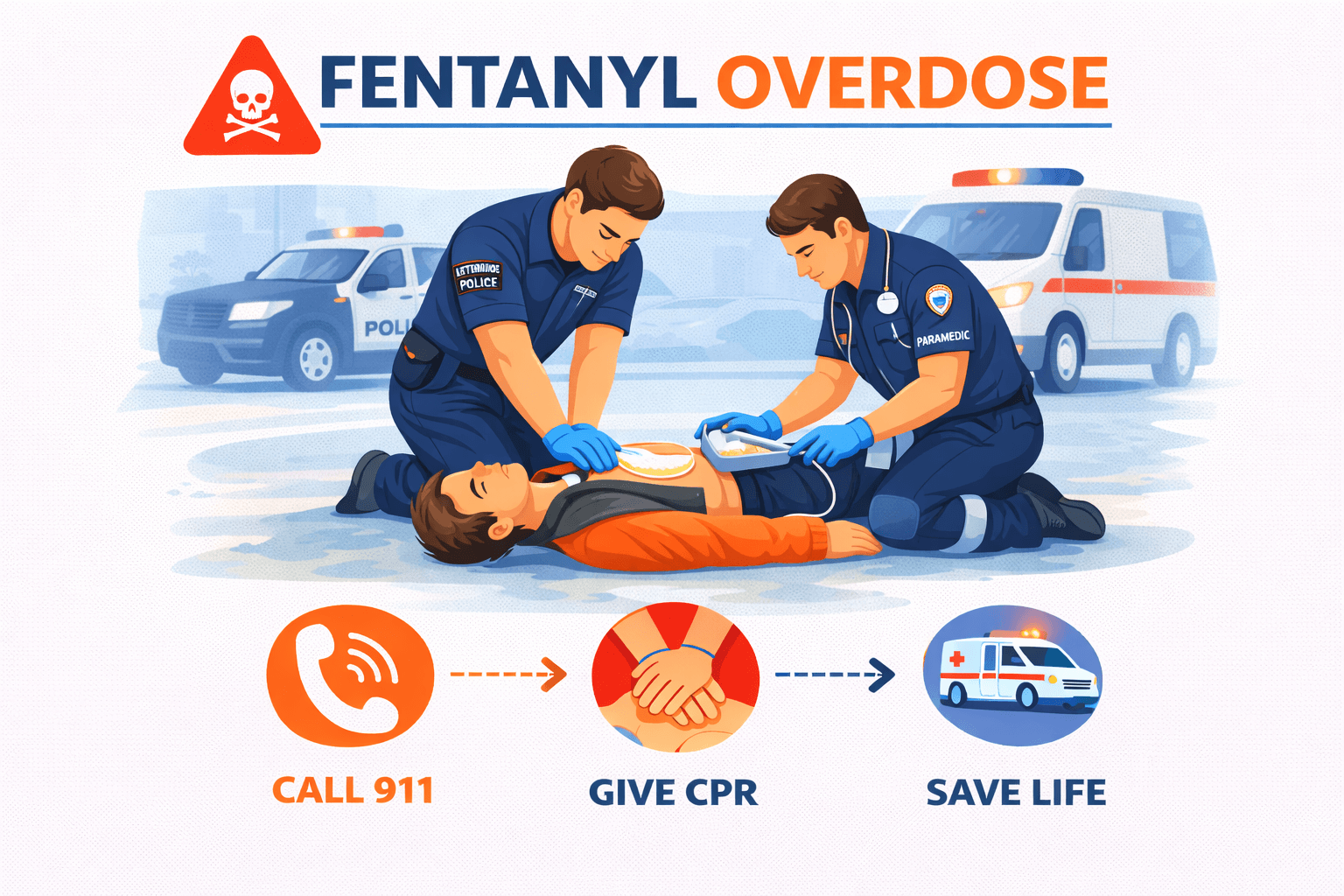
 Opioid overdoses can quickly become life-threatening if breathing slows or stops. Drugs such as fentanyl affect the part of the brain that controls breathing, which can cause a person to lose consciousness and stop breathing normally.
Cardiopulmonary resuscitation (CPR) is a first aid technique used when someone becomes unresponsive and is not breathing normally. Across Canada, including Vancouver and British Columbia, CPR and first aid training are taught in many workplace safety and community programs to help people respond during emergencies.
When breathing stops, early intervention by bystanders or first responders can help maintain circulation until advanced medical care becomes available.
Opioid Awareness in Canadian Communities
Communities across Canada continue to address the risks associated with opioid use, including fentanyl. Public safety agencies often emphasize education, prevention, and emergency response awareness.
First aid programs commonly teach people to:
-
Recognize signs of overdose or medical distress
-
Call emergency services immediately
-
Provide basic life-support assistance such as CPR if breathing stops
-
Stay with the individual until emergency responders arrive
Prepared individuals may be able to provide assistance during the first critical minutes of an emergency.
A Medical Emergency in Lethbridge, Alberta
Police and paramedics in Lethbridge responded to a report of a suspicious person in the 500 block of 6th Avenue South.
When officers arrived at the scene, they discovered a 19-year-old man who was unconscious and not breathing. According to police, the individual had no detectable pulse when first responders assessed his condition.
Officers immediately began performing CPR while waiting for paramedics to arrive.
Emergency medical responders soon reached the scene and continued providing treatment before transporting the man to Chinook Regional Hospital.
Following medical care at the hospital, the individual was successfully revived.
Authorities later indicated that the medical emergency was linked to a fentanyl overdose. Police also used the incident to remind the public about the serious risks associated with opioid substances.
Recognizing Signs of an Opioid Overdose
An opioid overdose may involve symptoms such as:
-
Unresponsiveness or difficulty waking the person
-
Slow, irregular, or stopped breathing
-
Pale, bluish, or grey skin tone
-
Unusual snoring or choking sounds
Recognizing these warning signs quickly allows bystanders to contact emergency services and begin assistance if appropriate.
Why CPR May Be Used During Overdose Emergencies
When breathing stops or becomes extremely slow, oxygen levels in the body can drop rapidly.
CPR helps maintain circulation of oxygenated blood to the brain and other organs while waiting for emergency medical care.
Emergency response organizations across Canada emphasize that rapid emergency response and early life-support assistance can improve outcomes during certain overdose emergencies.
Prevention and Community Preparedness
Communities and public safety organizations often promote awareness to help reduce overdose risks.
Important steps include:
-
Recognizing signs of overdose
-
Calling emergency services immediately during medical emergencies
-
Learning CPR and first aid skills
-
Supporting community education programs on drug safety
Prepared individuals may feel more confident responding if they encounter a medical emergency.
Frequently Asked Questions
What is cardiopulmonary resuscitation (CPR)?
CPR is a first aid technique used when a person becomes unresponsive and stops breathing normally. It helps maintain blood circulation until professional medical care arrives.
Can CPR be used during an overdose emergency?
If a person is unresponsive and not breathing normally, CPR may be performed while emergency services are on the way.
Why are opioids such as fentanyl dangerous?
Opioids can affect the brain’s breathing control centre, which can cause breathing to slow or stop in severe cases.
Who usually provides help during overdose emergencies?
Help may come from bystanders, police officers, firefighters, paramedics, or trained workplace first aid attendants.
Where can people learn CPR in Canada?
CPR training is available through workplace safety providers, community organizations, and certified first aid training centres across Canada.
Educational Note
This article is intended for general first aid awareness and community safety education. Learning CPR and first aid can help individuals better understand how to respond during emergencies while waiting for trained emergency medical services.
About The Author

Mark Kascha
First Aid Instructor Trainer with 30+ years of experience in CPR, emergency response, and safety training across Canada.
👉 [View full credentials]🔗 View LinkedIn Profile
Last reviewed: March 2026