
 Serious motor vehicle collisions can lead to life-threatening injuries that require immediate emergency response. In some situations, individuals involved in crashes may stop breathing normally or experience cardiac arrest due to severe trauma.
Cardiopulmonary resuscitation (CPR) is an emergency first aid technique used to help maintain blood flow and oxygen circulation when the heart is not beating effectively. Across Vancouver and British Columbia, CPR and first aid training are widely promoted through workplace safety programs and community education initiatives.
Learning these skills helps bystanders and responders provide support during emergencies while waiting for paramedics and other emergency crews to arrive.
First Aid and Workplace Safety Relevance in Vancouver and British Columbia
Traffic collisions can occur anywhere—from busy highways to local roads. Because of this, first aid and CPR training are commonly encouraged in workplaces and communities across Vancouver and BC.
Training programs often teach participants how to:
-
Call emergency services quickly
-
Begin CPR when a person is unresponsive and not breathing normally
-
Assist injured individuals until emergency responders arrive
These skills can help improve emergency response readiness in public settings where accidents may occur unexpectedly.
A Head-On Collision in Lake Country
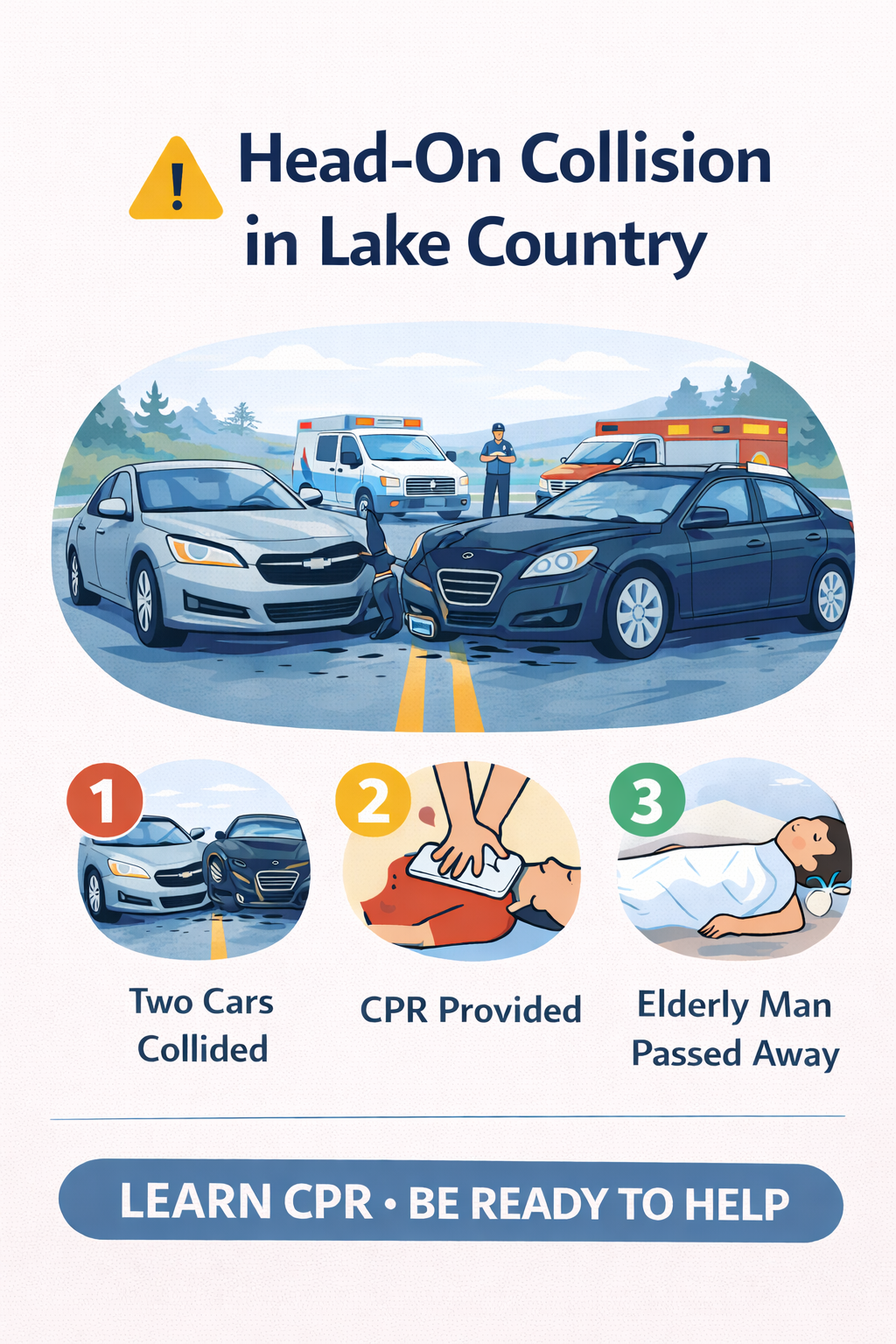
A serious traffic incident occurred in Lake Country, British Columbia, at approximately 7:35 a.m. when two vehicles were involved in a head-on collision.
According to reports, a gray Chevrolet Impala travelling along the highway crossed the centre line and collided with a northbound black Chrysler 300 driven by a man from Alberta.
Emergency responders—including the Lake Country Fire Department, BC Ambulance Service, and RCMP—were dispatched to the scene after receiving reports of the crash.
Witnesses remained at the scene and described the collision as severe.
Emergency Response and CPR
Emergency medical crews worked quickly to assist those involved in the crash. During the response, the driver of the Chevrolet—an 87-year-old man from the Upper Fraser Valley—experienced cardiac arrest.
First responders began CPR at the scene in an effort to support circulation and breathing while preparing the patient for transport.
The driver was transported from the crash site in serious condition but later passed away while en route to a healthcare facility.
The second driver, a 52-year-old man from central Alberta, was also transported to hospital with serious but non-life-threatening injuries.
Ongoing Investigation
Following the collision, authorities began an investigation to determine the circumstances surrounding the crash.
The RCMP and BC Coroners Service worked together to examine the incident. Both vehicles involved in the collision were scheduled for mechanical inspection as part of the investigation process.
Traffic investigations help authorities understand what occurred and identify potential safety factors related to road conditions, vehicle operation, or other circumstances.
Why CPR Awareness Matters in Emergencies
While CPR cannot always change the outcome in severe trauma situations, it remains an essential emergency response skill. When someone experiences cardiac arrest, CPR helps maintain blood circulation to the brain and other vital organs until advanced medical care is available.
First aid and CPR training programs commonly teach participants how to:
-
Recognize cardiac arrest
-
Contact emergency services
-
Begin chest compressions
-
Continue assistance until professional responders arrive
Having more people trained in CPR helps communities respond quickly during unexpected emergencies.
Road Safety and Prevention Considerations
Motor vehicle collisions can happen for many reasons, and maintaining safe driving practices helps reduce risk.
Important safety measures include:
-
Staying attentive and alert while driving
-
Maintaining safe speeds and following traffic laws
-
Avoiding distractions behind the wheel
-
Ensuring vehicles are properly maintained
-
Remaining cautious on highways and rural roads
Road safety awareness is an important part of protecting drivers, passengers, cyclists, and pedestrians.
Frequently Asked Questions
What is CPR and why is it used during emergencies?
CPR is an emergency procedure that uses chest compressions to help circulate blood when a person’s heart stops beating effectively.
Why might CPR be attempted after a serious car crash?
If someone involved in a collision becomes unresponsive and is not breathing normally, emergency responders may attempt CPR to help support circulation.
Can bystanders perform CPR before paramedics arrive?
Yes. CPR training programs teach simple techniques that allow bystanders to assist during emergencies until professional responders arrive.
Why are crash investigations conducted after serious collisions?
Investigations help authorities determine the factors involved in a collision and may support improvements in road safety.
Why is first aid training encouraged in communities?
First aid training helps individuals recognize emergencies and respond appropriately until professional medical care becomes available.
Educational Note
This article provides general educational information about CPR awareness and road safety. First aid and CPR training help individuals learn how to respond during emergencies, but medical care should always be provided by qualified healthcare and emergency response professionals.
About The Author

Mark Kascha
First Aid Instructor Trainer with 30+ years of experience in CPR, emergency response, and safety training across Canada.
👉 [View full credentials]🔗 View LinkedIn Profile
Last reviewed: March 2026