
Choking First Aid in Public Settings: How Quick Action Can Save Lives
Understanding Choking and Airway Emergencies
Choking occurs when an object—commonly food—blocks the airway and prevents normal breathing. It can develop quickly and requires immediate attention. Without timely assistance, a lack of oxygen can become life-threatening within minutes.
Knowing how to recognize and respond to choking is an important part of basic first aid and workplace safety awareness.
First Aid & Workplace Relevance in Vancouver and the Lower Mainland
Across Vancouver, Burnaby, Richmond, Surrey, and the Lower Mainland, choking incidents can happen in restaurants, lunchrooms, events, and workplace break areas.
Staff and bystanders are often the first to respond. Having individuals trained in first aid and choking response techniques helps ensure fast, effective assistance while waiting for emergency services.
Real Incident Overview
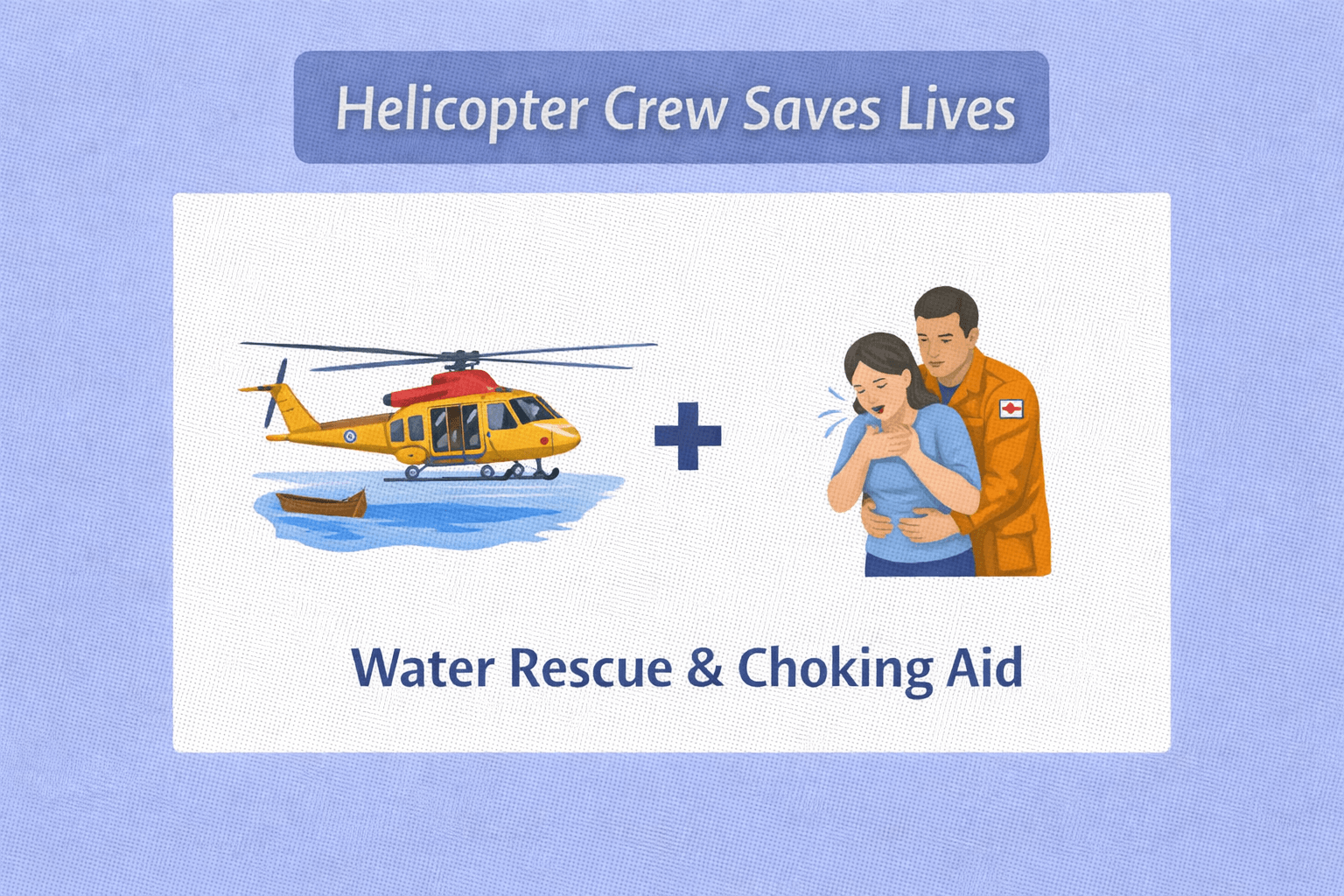 A Canadian Forces rescue helicopter crew based out of Greenwood, Nova Scotia, was involved in two separate life-saving situations in a short period of time.
Earlier in the day, the crew responded to a water rescue in Malpeque Bay, where a man from Lennox Island had fallen from his boat (dory) and required assistance. After completing the rescue and standing down from the mission, the crew landed in Summerside and went to a local restaurant.
While they were eating, an unexpected emergency unfolded nearby. A woman at another table began choking on her food. A search and rescue (SAR) technician from the crew quickly recognized the situation and immediately provided first aid.
The same technician who had just participated in the water rescue stepped in to assist the woman, demonstrating how trained individuals can respond effectively in everyday environments—not just during official emergencies.
Signs and Symptoms of Choking
A person who is choking may:
-
Be unable to speak or breathe
-
Make little or no sound
-
Clutch their throat
-
Show signs of panic or distress
-
Develop bluish lips or skin in more serious cases
Quick recognition allows for faster response.
Common Causes of Choking
Choking can result from:
-
Food not fully chewed
-
Eating too quickly
-
Talking or laughing while eating
-
Small objects entering the airway
These incidents can occur in both public and workplace settings.
First Aid Response for Choking
If someone appears to be choking:
-
Ask if they can cough or speak
-
Encourage coughing if they are able
-
If they cannot breathe or speak, call 911 immediately
-
Provide back blows and abdominal thrusts (if trained)
-
Continue until the object is cleared or help arrives
-
If the person becomes unresponsive, begin CPR
Acting quickly and calmly is key during choking emergencies.
Prevention and Workplace Safety Considerations
To reduce choking risks:
-
Encourage slow, mindful eating
-
Avoid talking or laughing while chewing
-
Ensure proper food preparation in workplaces
-
Provide first aid training for staff
-
Maintain awareness in dining and break areas
Preparedness helps improve response in everyday situations.
Frequently Asked Questions
What is the first sign that someone is choking?
They may be unable to speak or breathe and could clutch their throat in distress.
Should I give water to someone who is choking?
No. Focus on helping them clear the airway instead.
What if the person can still cough?
Encourage coughing, as it may help remove the obstruction.
When should CPR be started in a choking emergency?
If the person becomes unresponsive and is not breathing normally.
Why is choking response training important in workplaces?
It prepares individuals to act quickly in common situations like meals or breaks.
Educational Note
This article is intended for general first aid awareness and workplace safety education in Canada. Learning first aid skills can help individuals respond more effectively during everyday emergencies.
About The Author

Mark Kascha
First Aid Instructor Trainer with 30+ years of experience in CPR, emergency response, and safety training across Canada.
👉 [View full credentials]🔗 View LinkedIn Profile
Last reviewed: March 2026