
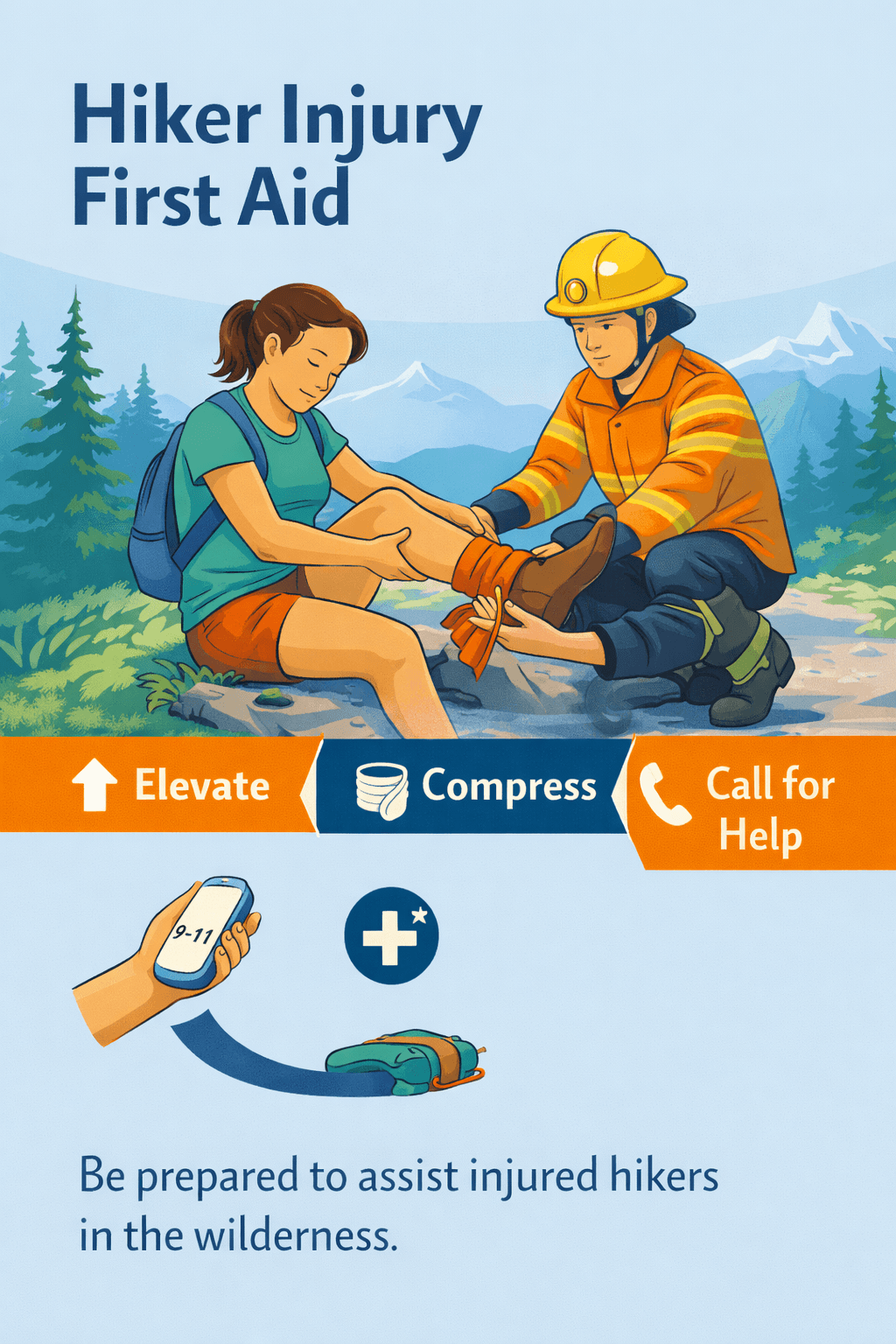
 An ankle injury can occur when the ligaments, bones, or surrounding tissues in the ankle are stressed or damaged. This often happens when the foot twists unexpectedly, especially on uneven surfaces such as hiking trails. Ankle injuries can range from mild sprains to more serious fractures.
In Vancouver, North Vancouver, and across the Lower Mainland of British Columbia, hiking is a popular recreational activity. Trails in areas such as Mount Seymour, Grouse Mountain, and the North Shore mountains attract thousands of visitors each year. Because of the terrain, hikers may occasionally experience slips, falls, or twisting injuries that require basic first aid and assistance until professional responders arrive.
First Aid and Outdoor Safety in British Columbia
Outdoor environments present unique challenges for emergency response. In remote or mountainous areas, bystanders and fellow hikers may be the first people available to provide assistance while waiting for rescue teams or paramedics.
For this reason, many outdoor enthusiasts in Vancouver and surrounding communities choose to learn first aid skills. Training helps individuals recognize injuries, provide initial care, and support injured hikers until trained responders can safely reach the location.
Scenario: A Hiker Assisted on a North Shore Trail
A hiking trip on Dog Mountain in the Mount Seymour area of North Vancouver became an unexpected emergency for one local hiker.
While walking along the trail, the 57-year-old hiker suddenly heard a snapping sound in her ankle and realized she could no longer continue walking. The injury made it difficult to move, and it quickly became clear she would need assistance.
Other hikers in the area stepped in to help before emergency responders arrived. Some offered practical suggestions, such as elevating the injured foot and applying gentle compression. Using a scarf she had with her, the injured hiker wrapped her ankle to provide support.
Another passerby who had first aid training provided a tensor bandage, while others offered additional items to help keep her comfortable while waiting for rescue crews. A nearby hiker also allowed the group to use a cellphone so that emergency services could be contacted.
The injured hiker’s stepson spoke with the emergency dispatcher, who provided guidance while North Vancouver District firefighters and paramedics made their way to the trail location.
When responders arrived, they provided further first aid care and safely transported the hiker to Lions Gate Hospital for evaluation and treatment. The hiker later expressed gratitude for both the emergency responders and the strangers who offered assistance on the trail.
Signs of a Possible Ankle Fracture or Serious Injury
An ankle injury can sometimes appear similar to a sprain, but certain signs may indicate a more serious problem. These signs may include:
-
Sudden pain after twisting or falling
-
Difficulty standing or putting weight on the foot
-
Swelling around the ankle joint
-
Bruising or visible changes in the shape of the ankle
-
Limited movement or instability
-
A snapping or popping sensation at the time of injury
When an ankle injury occurs in remote locations such as hiking trails, it is important to avoid unnecessary movement until the injury can be properly assessed.
First Aid Response for Ankle Injuries
People trained in first aid may take several steps to support someone with a suspected ankle injury. These may include:
-
Helping the injured person sit or lie comfortably
-
Elevating the injured ankle if possible
-
Applying gentle compression using a bandage or cloth
-
Avoiding weight-bearing on the injured leg
-
Monitoring for increasing swelling or discomfort
-
Contacting emergency services if the person cannot walk or the injury appears serious
In outdoor settings, improvised materials such as scarves, jackets, or bandages may sometimes be used to provide temporary support until trained responders arrive.
Prevention Tips for Hiking Safety
Many ankle injuries occur due to uneven terrain or loss of footing. While not all accidents can be prevented, several safety practices may help reduce risk when hiking in the North Shore mountains and other BC trails:
-
Wear proper hiking footwear with ankle support
-
Walk carefully on uneven or rocky surfaces
-
Use caution when trails are wet or slippery
-
Stay on marked paths and avoid rushing
-
Carry basic supplies such as a first aid kit and communication device
-
Hike with companions when possible
Preparation and awareness can help make outdoor activities safer for hikers of all experience levels.
Frequently Asked Questions
Why are ankle injuries common while hiking?
Hiking trails often include uneven surfaces, loose rocks, roots, and slopes. These conditions can cause the foot to twist unexpectedly, placing stress on the ankle joint.
What should someone do if they cannot walk after an ankle injury?
If a person cannot bear weight on the injured ankle or experiences severe pain, it may be safest to remain in place and contact emergency services for assistance.
Can bystanders help someone injured on a hiking trail?
Yes. Bystanders may help by ensuring the injured person is comfortable, limiting movement, and contacting emergency services while waiting for trained responders.
Why is elevation and compression sometimes suggested for ankle injuries?
Elevation and gentle compression may help reduce swelling and provide temporary support until the injury can be evaluated by medical professionals.
Why is it helpful for hikers to learn first aid?
First aid training helps hikers recognize injuries, provide immediate assistance, and respond calmly in outdoor emergencies where professional help may take time to arrive.
Educational Note
This article is intended for general first aid awareness and outdoor safety education. Learning recognized first aid skills can help individuals respond more confidently when injuries occur during recreational activities such as hiking.
About The Author

Mark Kascha
First Aid Instructor Trainer with 30+ years of experience in CPR, emergency response, and safety training across Canada.
Last reviewed: March 2026
 Support local, Canadian-owned businesses, with no connections to American corporations or partnerships.