
Understanding Near Drowning in Infants
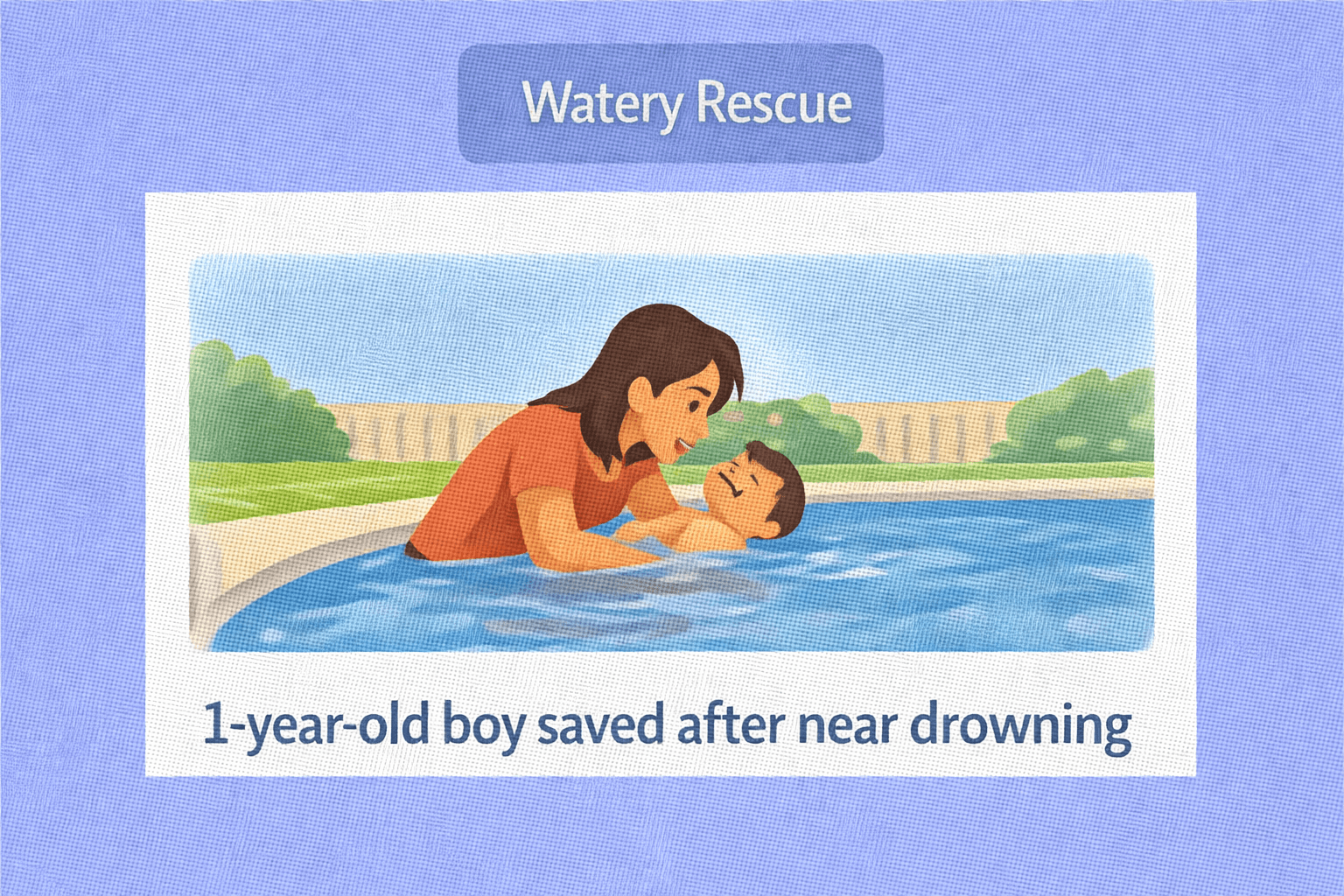 Near drowning occurs when a person is rescued after being unable to breathe in water. For infants and young children, even a brief submersion can be serious because their airways are small and they cannot protect themselves.
Immediate rescue and early first aid, including CPR if needed, are critical in supporting breathing and circulation until professional care arrives.
First Aid & Workplace Relevance in Vancouver and the Lower Mainland
Across Vancouver, Surrey, Burnaby, Richmond, and the Lower Mainland, many homes and childcare settings have access to pools, hot tubs, or water features.
For parents, caregivers, and childcare workers, water safety awareness and infant first aid training are essential. Emergencies involving young children can happen quickly, even in familiar environments.
Real Incident Overview
In Longueuil, Quebec, a one-year-old boy was rescued after a near drowning incident in his family’s swimming pool.
According to police reports, the child fell into the pool and struck his head. A family member later found the baby unconscious in the water. Emergency services were contacted at approximately 8:50 PM.
A relative immediately began providing first aid before paramedics from Urgence-Santé arrived and took over care. The child was transported to Sainte-Justine Hospital, where he was reported to be in stable condition.
Authorities later confirmed that the incident was accidental, highlighting how quickly such situations can occur in a home setting.
Signs of Drowning or Water Distress in Infants
Infants may not show obvious signs. Watch for:
-
Unresponsiveness
-
Lack of normal breathing
-
Limp or weak body movement
-
Pale or bluish skin
-
Silence (no crying or splashing)
Quick recognition is essential for early response.
Common Causes and Risk Factors
Near drowning incidents in infants are often linked to:
-
Unsupervised access to pools or water
-
Brief lapses in attention
-
Lack of barriers around water
-
Slips or falls near pool edges
Even a few moments can be enough for an incident to occur.
First Aid Response: Infant Water Emergency
If an infant is found in water and unresponsive:
-
Remove the child from the water immediately
-
Call 911 right away
-
Check breathing and responsiveness
-
Begin CPR for infants if not breathing normally
-
Keep the child warm and monitor closely
-
Continue care until emergency responders arrive
Prompt action can help restore breathing and support recovery.
Prevention and Home Safety Considerations
To reduce risks at home:
-
Never leave infants unattended near water
-
Install secure fencing and locked gates around pools
-
Use pool covers and alarms where appropriate
-
Keep doors and access points secured
-
Ensure caregivers are trained in infant CPR and first aid
Prevention is the most effective way to reduce water-related incidents.
Frequently Asked Questions
How quickly can a drowning incident occur in infants?
It can happen in a very short time, often silently and without warning.
What should I do first if a baby is found in water?
Remove them from the water, call 911, and check breathing immediately.
Is CPR different for infants?
Yes. Infant CPR uses gentler techniques, which is why training is important.
Do home pools pose a risk even with supervision?
Yes. Constant, direct supervision is essential at all times.
Why is first aid training important for caregivers?
It helps caregivers respond quickly and effectively during emergencies.
Educational Note
This article is intended for general first aid awareness and workplace safety education in Canada. Learning infant first aid and water safety can help caregivers respond more effectively in emergencies.
About The Author

Mark Kascha
First Aid Instructor Trainer with 30+ years of experience in CPR, emergency response, and safety training across Canada.
👉 [View full credentials]🔗 View LinkedIn Profile
Last reviewed: March 2026
 Support local, Canadian-owned businesses, with no connections to American corporations or partnerships.