
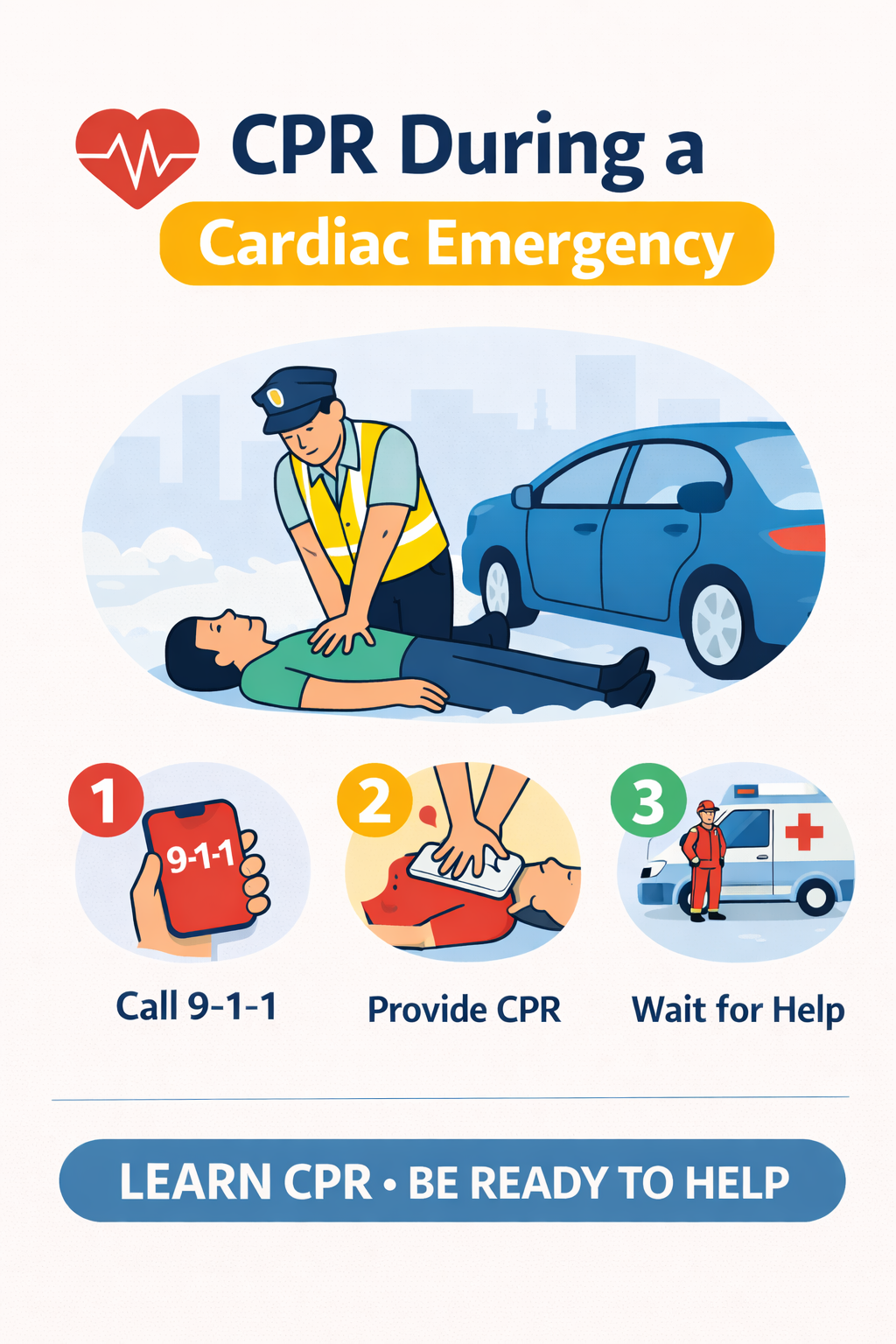
 Cardiac emergencies such as heart attacks and sudden cardiac arrest can occur unexpectedly in everyday situations. When the heart stops pumping effectively, oxygen-rich blood cannot circulate to vital organs, including the brain.
Cardiopulmonary resuscitation (CPR) is a first aid technique designed to help maintain blood flow during these emergencies until professional medical help arrives. Across Vancouver and British Columbia, CPR training is widely included in workplace safety programs and community first aid courses so more people can respond when emergencies occur in public places.
Learning CPR helps individuals recognize warning signs and take action quickly while waiting for paramedics.
First Aid and Workplace Safety Relevance in Vancouver and British Columbia
In many workplaces throughout Vancouver, Burnaby, and the wider BC region, first aid and CPR training are encouraged as part of emergency preparedness. Employees who work outdoors or interact with the public—such as security personnel, parking enforcement officers, and transit staff—may encounter medical emergencies during their daily duties.
Workplace safety training often teaches participants how to:
-
Recognize cardiac emergencies
-
Call emergency services immediately
-
Perform chest compressions
-
Assist until paramedics arrive
Having trained individuals present in public areas helps communities respond more quickly when unexpected medical emergencies occur.
A Cardiac Emergency on a Burnaby Street
One example of quick action occurred in Burnaby, British Columbia, when parking enforcement officer Jason Vickers encountered a driver in distress while on patrol.
Vickers noticed a vehicle that appeared to be stopped or stuck. When he approached the car to check the situation, he realized the driver inside was experiencing a medical emergency and showing signs of a possible heart attack.
Recognizing the seriousness of the situation, Vickers immediately called 911 and began providing assistance.
Rapid Action and CPR
After assessing the situation, Vickers and others nearby helped remove the driver from the vehicle so that first aid could be provided safely.
Vickers then began performing CPR while waiting for emergency responders to arrive. The quick response helped maintain circulation during the emergency.
According to reports, Burnaby firefighters arrived approximately five minutes later and took over medical care at the scene. The driver was stabilized and transported to a healthcare facility for further treatment.
Incidents like this highlight how bystander CPR can play an important role in supporting someone during a cardiac emergency until professional responders arrive.
Recognizing Possible Heart Attack Symptoms
Heart attacks can present with several warning signs. Common symptoms may include:
-
Chest pressure, tightness, or discomfort
-
Pain spreading to the arm, shoulder, neck, or jaw
-
Shortness of breath
-
Nausea or dizziness
-
Sudden fatigue or weakness
Symptoms can appear suddenly or gradually. Recognizing these signs and contacting emergency services quickly is important.
Why Early CPR Matters
During cardiac arrest, the heart stops pumping blood effectively. CPR helps maintain circulation to the brain and vital organs until advanced medical care becomes available.
First aid and CPR training programs commonly teach participants how to:
-
Recognize cardiac arrest
-
Call emergency services
-
Begin chest compressions
-
Use an automated external defibrillator (AED) if available
Even simple bystander actions during the first few minutes can help support the person experiencing the emergency.
Prevention and Workplace Safety Considerations
While cardiac emergencies cannot always be predicted, safety awareness and preparedness can improve emergency response.
Workplaces and communities often support cardiac emergency preparedness through:
-
First aid and CPR training programs
-
Public access to AEDs
-
Emergency response planning
-
Staff training for public-facing roles
These measures help increase the likelihood that someone nearby can respond quickly when emergencies occur.
Frequently Asked Questions
What is CPR and why is it important?
CPR is an emergency procedure that uses chest compressions to help circulate blood when the heart stops beating effectively. It helps support vital organs until medical professionals arrive.
What should someone do if they suspect a heart attack?
If someone shows signs of a heart attack, emergency services should be contacted immediately. Early medical care can improve outcomes during cardiac emergencies.
Can CPR be performed by bystanders?
Yes. CPR training programs teach simple techniques that allow bystanders to assist during emergencies. Emergency dispatchers can also provide instructions over the phone.
How quickly should CPR begin during cardiac arrest?
CPR should begin as soon as possible when a person is unresponsive and not breathing normally. Early action helps support circulation until emergency responders arrive.
Why do workplaces encourage CPR training?
Workplace CPR training helps employees respond during emergencies that may occur on the job or in public areas. Preparedness helps improve overall community safety.
Educational Note
This article provides general educational information about cardiac emergencies and CPR awareness. First aid and CPR training help individuals learn how to respond during emergencies, but medical care should always be provided by qualified healthcare and emergency response professionals.
About The Author

Mark Kascha
First Aid Instructor Trainer with 30+ years of experience in CPR, emergency response, and safety training across Canada.
👉 [View full credentials]🔗 View LinkedIn Profile
Last reviewed: March 2026