
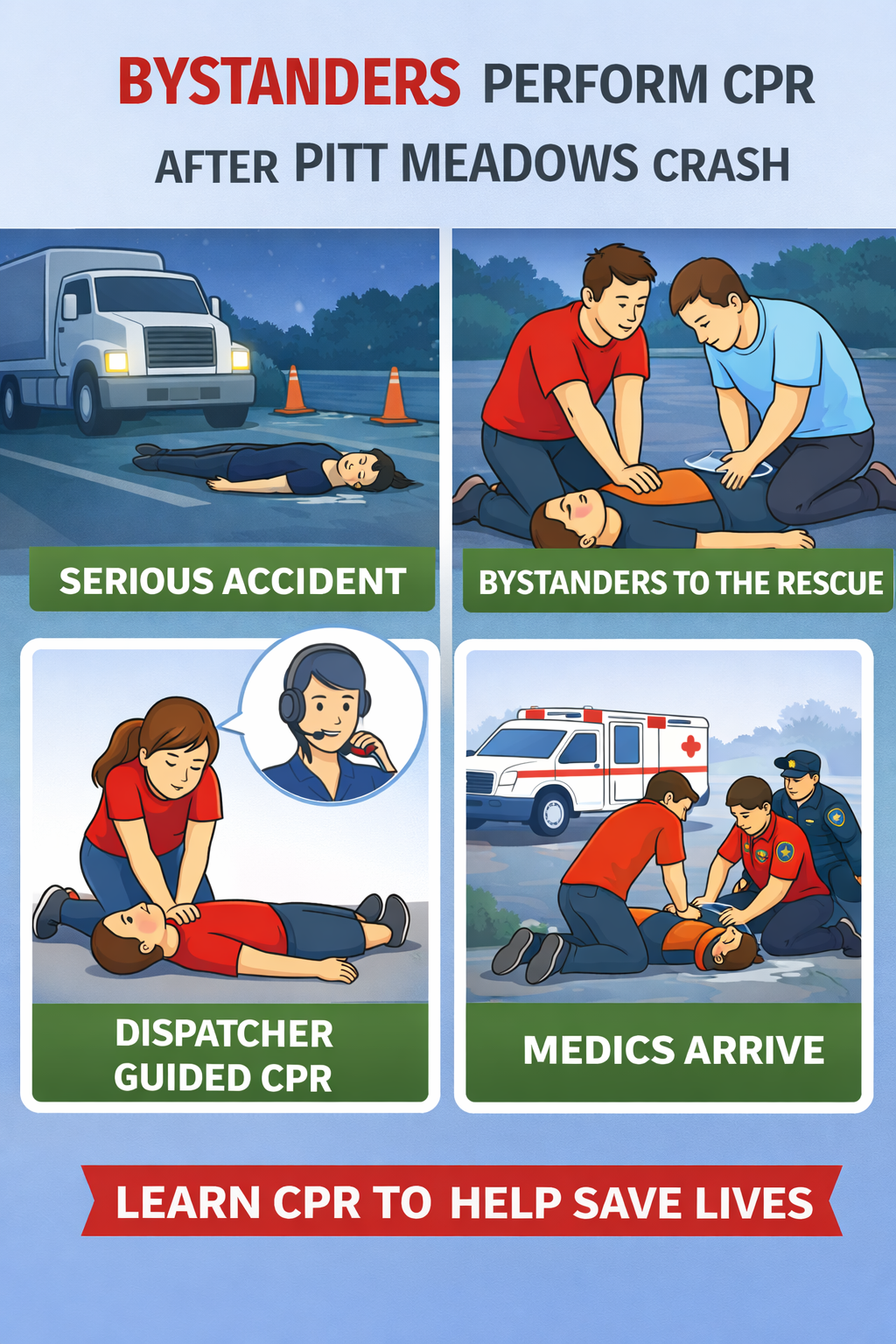
 Serious traffic incidents can occur suddenly on busy roadways. In some situations, victims may become unresponsive or stop breathing due to trauma, shock, or cardiac arrest. When this happens, immediate assistance from bystanders can help support breathing and circulation until emergency responders arrive.
Cardiopulmonary resuscitation (CPR) is a life-support technique used when someone is not breathing normally or has no pulse. Early CPR helps maintain blood flow to the brain and vital organs during the critical minutes before paramedics reach the scene.
Across Canada—including Vancouver, Pitt Meadows, and communities throughout British Columbia—CPR and first aid training are widely promoted in workplaces and community programs to help people respond during unexpected emergencies.
First Aid and Workplace Safety Relevance in British Columbia
Motor vehicle collisions are one of the most common emergency situations encountered by bystanders and first responders. In many Canadian workplaces, particularly those involving driving, transportation, or outdoor work, employees are encouraged to complete first aid and CPR certification.
Having people nearby who understand how to recognize medical distress and begin CPR can improve emergency response while waiting for paramedics and firefighters to arrive.
Prepared communities and trained individuals often play an important role during the early stages of roadside emergencies.
A Realistic Scenario from Pitt Meadows
Two young men travelling along Lougheed Highway near Pitt Meadows became unexpected first responders after witnessing a serious collision.
Matt Burnett and Jeremy Scholing, both 23, were driving home toward Abbotsford when they heard a loud impact nearby. Concerned that an accident had occurred, they pulled over and ran toward the scene.
They found a man lying on the ground who appeared to have been struck by a truck. The man was not breathing normally and was unresponsive.
Another passerby contacted emergency services while Burnett and Scholing stayed with the injured man. Although neither had previously performed CPR, they were guided by emergency dispatchers over the phone.
Following the instructions, they began CPR while waiting for paramedics to arrive.
After several minutes of continuous effort, the injured man began to cough and show signs of breathing again. Shortly afterward, paramedics reached the scene and transported the individual to a healthcare facility for further care.
The two bystanders later described feeling shaken by the experience but hopeful that their actions helped support the injured man until professional responders arrived.
Situations like this demonstrate how quick action and dispatcher guidance can help bystanders assist during emergencies.
Signs That Someone May Require CPR After an Accident
Following a serious collision or injury, a person may show signs that indicate the need for immediate medical assistance.
Possible warning signs include:
-
Unresponsiveness
-
No normal breathing
-
Gasping or irregular breathing
-
Weak or absent pulse
-
Pale or bluish skin tone
-
Loss of consciousness
When these signs appear, emergency services should be contacted immediately.
Causes of Sudden Medical Collapse After Trauma
In traffic collisions or other traumatic incidents, a person may become unresponsive for several reasons, including:
-
Severe injury to the body or head
-
Cardiac arrest triggered by trauma
-
Lack of oxygen due to breathing problems
-
Significant blood loss
-
Shock or internal injuries
Emergency responders are trained to assess these situations quickly and provide advanced medical care.
First Aid Response and Immediate Management
If someone becomes unresponsive after an accident, early action from bystanders can help support vital functions until emergency responders arrive.
General first aid response steps may include:
-
Call emergency services immediately.
-
Ensure the scene is safe before approaching.
-
Check responsiveness and breathing.
-
Begin CPR if the person is unresponsive and not breathing normally.
-
Follow instructions provided by emergency dispatchers.
-
Continue CPR until professional responders arrive.
Emergency dispatchers often provide guidance to callers, helping bystanders perform CPR even if they have never done it before.
Prevention and Road Safety Considerations
While accidents cannot always be prevented, road safety awareness helps reduce risks.
Important safety practices may include:
-
Staying alert while driving
-
Following posted speed limits
-
Being cautious near pedestrians and cyclists
-
Improving visibility at night or during poor weather conditions
-
Encouraging first aid and CPR training in workplaces and communities
Prepared drivers and trained bystanders can help improve emergency response during roadside incidents.
Frequently Asked Questions
Can someone perform CPR without formal training?
Emergency dispatchers can guide callers through CPR instructions over the phone. While formal training is recommended, dispatcher-assisted CPR allows bystanders to begin life-saving actions during emergencies.
Why is CPR important after a serious accident?
CPR helps maintain circulation and oxygen flow to the brain and organs when a person is not breathing normally or has no detectable pulse.
What is dispatcher-assisted CPR?
Dispatcher-assisted CPR occurs when emergency call operators provide step-by-step guidance to a caller on how to perform CPR while waiting for paramedics.
Should bystanders help at accident scenes?
Bystanders can assist by calling emergency services, ensuring scene safety, and following dispatcher instructions if someone requires CPR or first aid.
Why is CPR training encouraged in workplaces?
First aid and CPR training prepare employees to respond to emergencies, helping support injured individuals until professional medical responders arrive.
Educational Note
This article is intended for general first aid awareness and public education. Learning CPR and basic emergency response skills can help individuals respond more confidently during unexpected emergencies while waiting for professional medical assistance.
About The Author

Mark Kascha
First Aid Instructor Trainer with 30+ years of experience in CPR, emergency response, and safety training across Canada.
👉 [View full credentials]🔗 View LinkedIn Profile
Last reviewed: March 2026