 An opioid overdose occurs when a person consumes a substance that slows or stops breathing and affects the body’s ability to maintain normal heart and lung function. Without prompt assistance, oxygen levels can drop quickly, creating a life-threatening situation.
Across Vancouver and throughout British Columbia, opioid overdose response has become an important part of public health education and workplace safety awareness. First aid training programs often include information about recognizing overdose symptoms and responding appropriately until paramedics arrive.
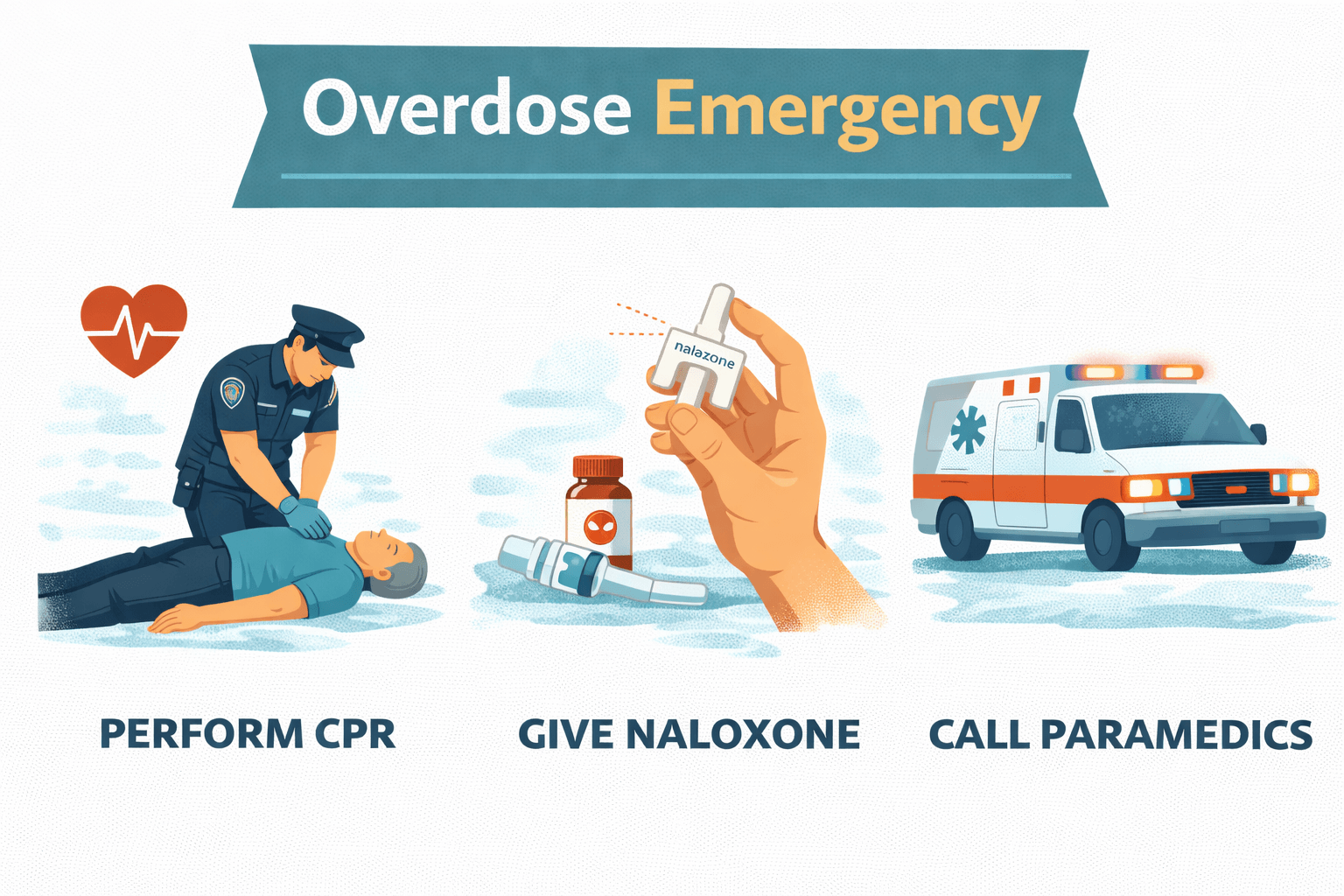
Basic emergency actions—such as contacting emergency services, performing CPR if breathing stops, and administering overdose-reversal medication when available—can help stabilize someone during a critical emergency.
Public Health and Overdose Awareness in British Columbia
British Columbia has implemented numerous initiatives focused on overdose prevention and response education. Many community programs provide training on recognizing overdose symptoms and using naloxone kits, which are designed to help reverse the effects of certain opioid overdoses.
Workplace and community safety training programs in Vancouver also emphasize general first aid skills such as CPR, because breathing emergencies can occur in many different situations.
Preparedness and awareness can help bystanders or responders provide assistance quickly when a person loses consciousness or stops breathing.
A Vancouver Incident Involving an Overdose Emergency
A police investigation in Vancouver highlighted the importance of rapid emergency response during suspected overdose incidents.
According to reports, police were responding to a vehicle collision involving a police cruiser and a driver who was believed to be impaired by opioids.
After officers stopped the vehicle, the driver was asked to exit and was placed in handcuffs. Shortly afterward, the man began to lose consciousness.
Officers quickly recognized that the driver appeared to be experiencing a medical emergency. One officer began performing CPR while others administered naloxone, a medication used to counter the effects of opioid overdoses.
The driver received multiple doses of naloxone before regaining consciousness. Paramedics later administered an additional dose and transported the man to hospital for further medical care.
A passenger in the vehicle also appeared to be experiencing symptoms of an overdose. Officers administered naloxone in that situation as well, although the passenger later declined further medical treatment.
Incidents like this demonstrate how first responders may provide immediate life-saving care while emergency medical services take over.
Recognizing Possible Signs of Opioid Overdose
An opioid overdose may present several warning signs, including:
-
Slow or irregular breathing
-
Unresponsiveness or inability to wake the person
-
Blue or grey lips and fingernails
-
Extremely small pupils
-
Unusual snoring or choking sounds
Recognizing these signs quickly allows emergency services to be contacted and assistance to begin as soon as possible.
Why CPR May Be Needed During Overdose Emergencies
Opioids can slow or stop breathing. When breathing stops, oxygen levels in the body drop rapidly.
CPR may be used if a person becomes unresponsive and stops breathing normally. The technique helps circulate oxygenated blood to the brain and organs while waiting for advanced medical care.
In overdose emergencies, first responders or trained bystanders may also use naloxone if available, as it can help restore breathing in certain situations.
Prevention and Community Preparedness
Communities and workplaces can support overdose response preparedness through several initiatives:
-
Learning basic first aid and CPR skills
-
Becoming familiar with the signs of overdose
-
Understanding how emergency services can assist during medical emergencies
-
Supporting public education programs related to overdose awareness
Prepared individuals are often better equipped to recognize emergencies and respond appropriately until professional medical care arrives.
Frequently Asked Questions
What is an opioid overdose?
An opioid overdose occurs when opioid drugs slow or stop breathing and affect the body’s normal functioning, creating a medical emergency.
What is naloxone?
Naloxone is a medication used to reverse the effects of certain opioid overdoses by helping restore normal breathing.
When might CPR be used during an overdose?
CPR may be performed if a person becomes unresponsive and stops breathing normally during an overdose emergency.
Who can provide CPR during an emergency?
CPR may be performed by trained bystanders, police officers, firefighters, workplace first aid attendants, or paramedics depending on who reaches the scene first.
Where can people learn CPR in British Columbia?
CPR training is widely available through workplace safety programs, community organizations, and certified first aid training providers across British Columbia.
Educational Note
This article is intended for general first aid awareness and public safety education. Learning CPR and first aid can help individuals better understand how to respond during emergencies while waiting for trained emergency medical services.
About The Author

Mark Kascha
First Aid Instructor Trainer with 30+ years of experience in CPR, emergency response, and safety training across Canada.
Last reviewed: March 2026
 Support local, Canadian-owned businesses, with no connections to American corporations or partnerships.