
Understanding Cardiac Arrest and Workplace Emergency Response
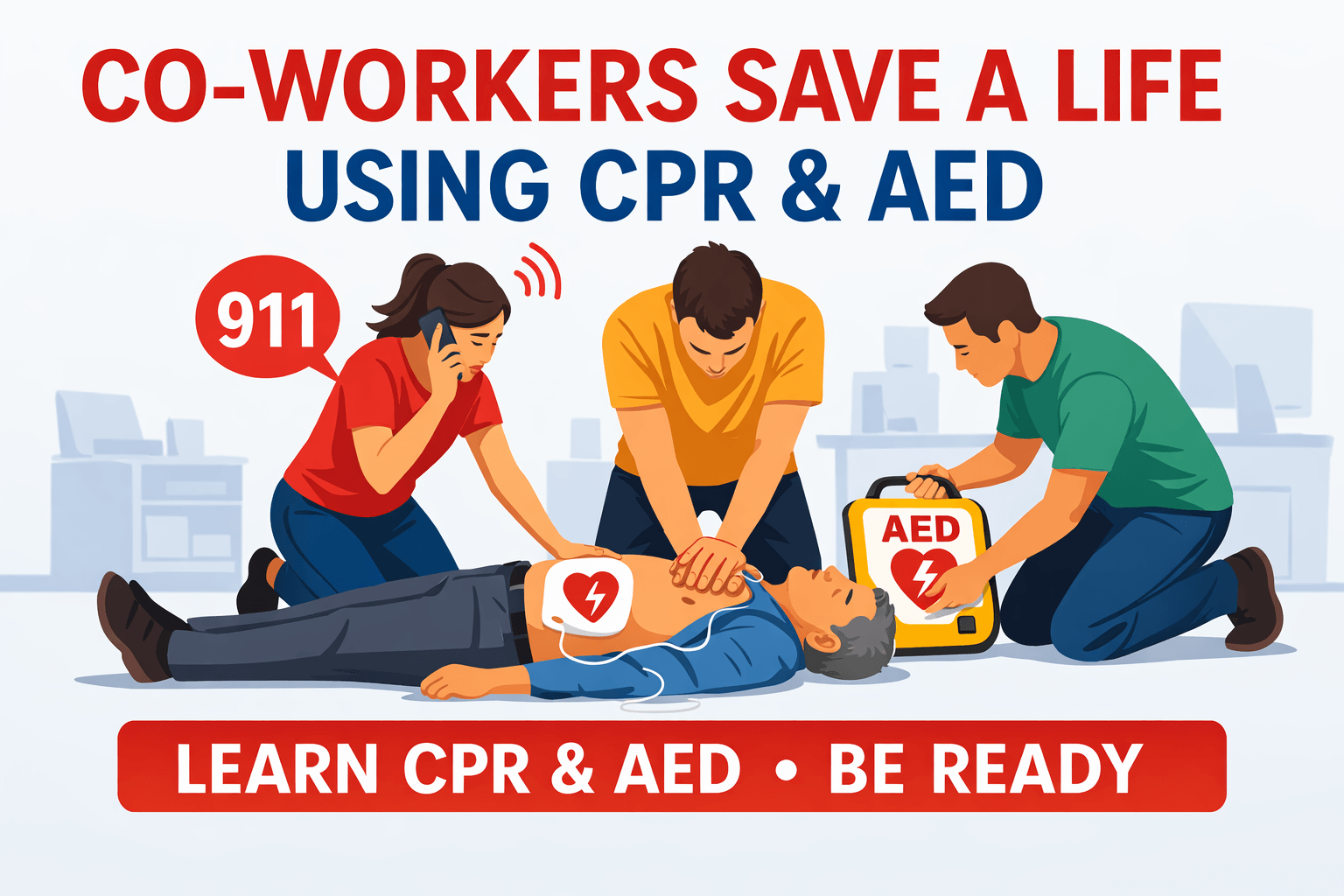 Sudden cardiac arrest occurs when the heart stops pumping blood effectively. When this happens, oxygen circulation to the brain and other vital organs quickly decreases. Immediate action—such as calling emergency services, starting CPR (cardiopulmonary resuscitation), and using an automated external defibrillator (AED)—can help support the body until paramedics arrive.
Across British Columbia and the Lower Mainland—including Vancouver, Burnaby, Richmond, and Surrey—many workplaces include CPR and AED training as part of their safety programs. Because medical emergencies can happen unexpectedly on the job, trained co-workers are often the first people able to respond.
First Aid Preparedness in Canadian Workplaces
Workplaces across Canada increasingly recognize the importance of emergency preparedness. Many organizations install AED devices and train employees in first aid response so they can assist during serious medical situations.
In Vancouver and throughout British Columbia, workplace safety programs often include:
-
CPR and AED training for designated first aid attendants
-
Accessible emergency medical equipment
-
Clear emergency response procedures
Preparedness helps ensure that employees know how to respond calmly and effectively during emergencies.
A Medical Emergency at Work
An example of workplace preparedness occurred in Edmonton, when Manuel Rodriguez, age 53, experienced a sudden cardiac emergency shortly after arriving for his shift at All Weather Windows.
According to reports, Rodriguez collapsed at work and quickly became unresponsive. Several co-workers immediately recognized that something was wrong and rushed to assist.
Co-Workers Act Quickly
Four employees worked together to respond to the emergency.
-
One group called 911 and helped coordinate emergency access.
-
Others retrieved the company’s emergency medical kit containing an AED.
-
Two employees began assisting Rodriguez while waiting for paramedics.
The co-workers applied the AED and delivered two defibrillation shocks, which are used to help restore a normal heart rhythm during cardiac arrest.
Meanwhile, two staff members waited outside to help guide the ambulance team to the correct location inside the facility.
Emergency Responders Continue Care
Paramedics soon arrived and continued providing advanced medical treatment. Rodriguez was transported to hospital, where he remained under care for several weeks while recovering.
Later, he expressed gratitude to his co-workers, crediting their quick thinking and teamwork with helping to save his life.
Why Early CPR and AED Use Matter
Health experts often describe emergency cardiac care as a “chain of survival.” This concept highlights several key steps that improve the chances of survival during cardiac arrest:
-
Early recognition of the emergency
-
Immediate CPR to support circulation
-
Rapid use of an AED when available
-
Continued care by paramedics and healthcare professionals
When bystanders act quickly, they can help maintain circulation and support the body until professional medical help arrives.
The Importance of Workplace Teamwork
Many successful emergency responses involve teamwork among several people. During workplace incidents, individuals may assist in different ways, including:
-
Calling emergency services
-
Performing CPR if trained
-
Retrieving emergency equipment
-
Guiding responders to the scene
-
Helping maintain a safe environment
Across Vancouver and the Lower Mainland, workplace first aid programs encourage employees to become familiar with emergency procedures so they can assist if an incident occurs.
Prevention and Emergency Preparedness
Although cardiac arrest cannot always be predicted, organizations can strengthen preparedness by:
-
Providing CPR and AED training for employees
-
Installing AED devices in accessible locations
-
Practicing workplace emergency response procedures
-
Encouraging health and safety awareness among staff
Preparedness and training help workplaces respond more effectively when emergencies occur.
Frequently Asked Questions
What is an AED and why is it used during cardiac arrest?
An automated external defibrillator (AED) is a portable device that analyzes the heart’s rhythm and can deliver an electrical shock if needed. The device provides instructions to guide trained users during emergencies.
Why is CPR important during cardiac arrest?
CPR helps circulate blood to the brain and vital organs when the heart is not pumping effectively. This support helps maintain oxygen flow until advanced medical care arrives.
Do workplaces in Canada provide CPR training?
Many workplaces provide CPR and first aid training as part of occupational health and safety programs to prepare employees for potential emergencies.
Can bystanders safely use an AED?
AED devices are designed to guide users with voice prompts, helping trained responders apply the device safely during cardiac emergencies.
Why is teamwork important during emergencies?
During many emergencies, several people can assist by performing different roles such as calling for help, performing CPR, retrieving equipment, or guiding responders.
Educational Note
This article is intended for general first aid awareness and public education. Participating in certified CPR and AED training helps individuals learn how to recognize emergencies and respond safely.
About The Author

Mark Kascha
First Aid Instructor Trainer with 30+ years of experience in CPR, emergency response, and safety training across Canada.
👉 [View full credentials]🔗 View LinkedIn Profile
Last reviewed: March 2026