Understanding CPR and the Role of Bystanders in Emergencies
 Cardiopulmonary resuscitation (CPR) is a first aid technique used when a person becomes unresponsive and stops breathing normally due to cardiac arrest. CPR helps circulate blood to vital organs until emergency medical services arrive. In many cases, bystanders who begin CPR before paramedics arrive play a critical role in the early stages of emergency care.
Across British Columbia and the Lower Mainland—including Abbotsford, Vancouver, Burnaby, and Surrey—CPR and AED training are encouraged in workplaces, community centres, schools, and public facilities. Because cardiac emergencies can occur anywhere, trained bystanders are often the first people able to respond.
First Aid Awareness in Communities Across the Lower Mainland
Many communities throughout Abbotsford and the Fraser Valley promote first aid education so residents feel prepared to help during emergencies. CPR training programs teach individuals how to recognize cardiac arrest and begin assistance safely while emergency responders travel to the scene.
Community readiness can be especially important in public places such as churches, recreation centres, and parking areas where large numbers of people gather.
A Cardiac Emergency in an Abbotsford Parking Lot
An example of quick community response occurred when emergency crews were called to the Sevenoaks Alliance Church in Abbotsford following a report of a cardiac arrest.
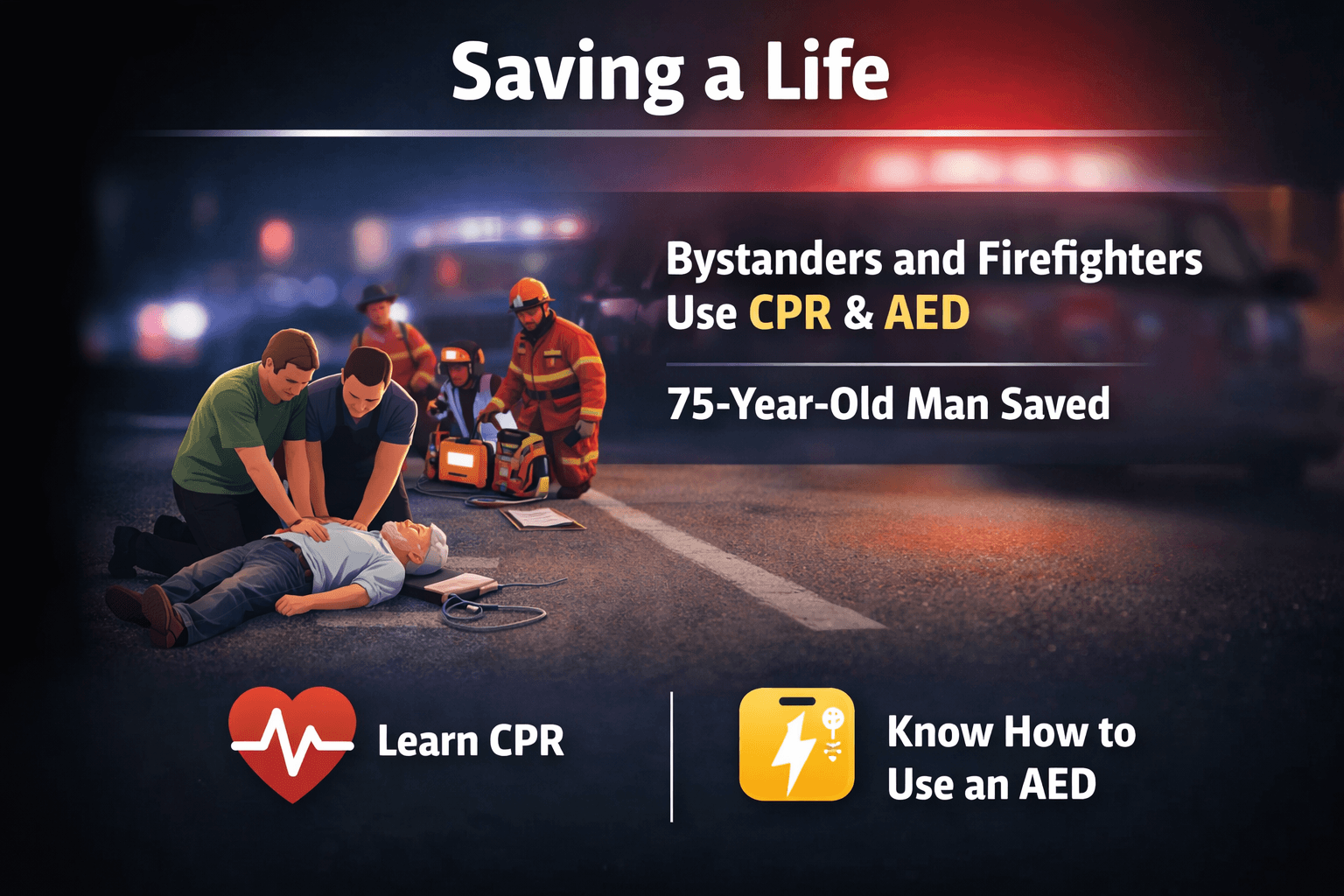
When firefighters arrived at the church parking lot, they found a man lying unconscious on the ground. Two bystanders, Steve Stewart and Steve Parks, had already begun performing CPR while waiting for emergency responders.
Bystanders Take Immediate Action
Recognizing the seriousness of the situation, Stewart and Parks started chest compressions to support the man’s circulation.
Firefighters soon arrived and continued the resuscitation effort. Emergency responders used a defibrillator (AED) to deliver two controlled electrical shocks designed to help restore a normal heart rhythm.
Shortly afterward, the man began showing signs of recovery.
Emergency Care Continues at the Hospital
The individual, later identified as Colin James Lewis, a 75-year-old resident of White Rock, regained consciousness and asked responders what had happened.
Paramedics transported him to Abbotsford Regional Hospital, where he received further treatment, including emergency heart bypass surgery.
Lewis later participated in a commendation ceremony, where certificates were presented to the two bystanders and the Abbotsford firefighters in recognition of their actions.
Medical teams indicated that he was expected to make a full recovery.
Why Early CPR Makes a Difference
During cardiac arrest, the heart stops pumping blood effectively. Without assistance, oxygen circulation to the brain and vital organs can quickly decrease.
First aid training programs often describe the “chain of survival,” which includes:
-
Early recognition of cardiac arrest
-
Immediate CPR from bystanders
-
Rapid use of an AED
-
Continued care by paramedics and hospital teams
When these steps occur quickly, the chances of recovery can improve.
Preparedness in Communities and Workplaces
Although cardiac emergencies can happen unexpectedly, communities can strengthen preparedness through several measures:
-
Encouraging CPR and AED training
-
Installing AED devices in public places
-
Promoting emergency awareness programs
-
Practicing emergency response procedures in workplaces and community facilities
Across Vancouver, Abbotsford, and the Lower Mainland, many organizations offer CPR and first aid training programs designed to help individuals feel more confident responding to emergencies.
Frequently Asked Questions
Why is bystander CPR important?
Bystanders are often the first people present when a cardiac emergency occurs. Starting CPR quickly can help maintain circulation until professional responders arrive.
What does an AED do during a cardiac emergency?
An automated external defibrillator (AED) analyzes the heart’s rhythm and may deliver an electrical shock if needed to help restore a normal heartbeat.
Can anyone learn CPR?
Yes. CPR training courses are available for the general public and are commonly offered through community programs, workplaces, and training organizations.
Why do communities install AED devices in public spaces?
Public access AEDs allow trained responders to assist quickly during cardiac emergencies in places such as recreation centres, schools, offices, and churches.
How does teamwork help during emergencies?
During many emergencies, several people may assist by performing different roles such as calling emergency services, performing CPR, retrieving equipment, or guiding responders.
Educational Note
This article is intended for general first aid awareness and public education. Participating in certified CPR and first aid training programs helps individuals learn how to recognize emergencies and respond safely.
About The Author

Mark Kascha
First Aid Instructor Trainer with 30+ years of experience in CPR, emergency response, and safety training across Canada.
Last reviewed: March 2026
 Support local, Canadian-owned businesses, with no connections to American corporations or partnerships.