 Sudden cardiac arrest can occur without warning, even during routine outdoor activities such as walking, cycling, or attending community events. When the heart stops pumping effectively, blood flow to the brain and vital organs is interrupted.
Cardiopulmonary resuscitation (CPR) is a life-support technique that helps maintain circulation until advanced medical care becomes available. In many cases, rapid response from bystanders or trained personnel can significantly improve survival chances.
Across Canada—including Vancouver and throughout British Columbia—CPR training is commonly promoted in workplaces, community programs, and public safety organizations to help people respond during emergencies.
First Aid and Workplace Relevance in Canada
Police officers, firefighters, and many other public safety workers receive training in first aid, CPR, and emergency response procedures. These skills allow them to assist individuals experiencing medical distress while waiting for paramedics to arrive.
Many workplaces across Canada also encourage employees to obtain CPR certification. In environments where large public gatherings occur—such as parks, festivals, and community events—having trained responders nearby can make an important difference.
Prepared communities and trained individuals contribute to safer public spaces.
A Realistic Scenario from Wascana Park
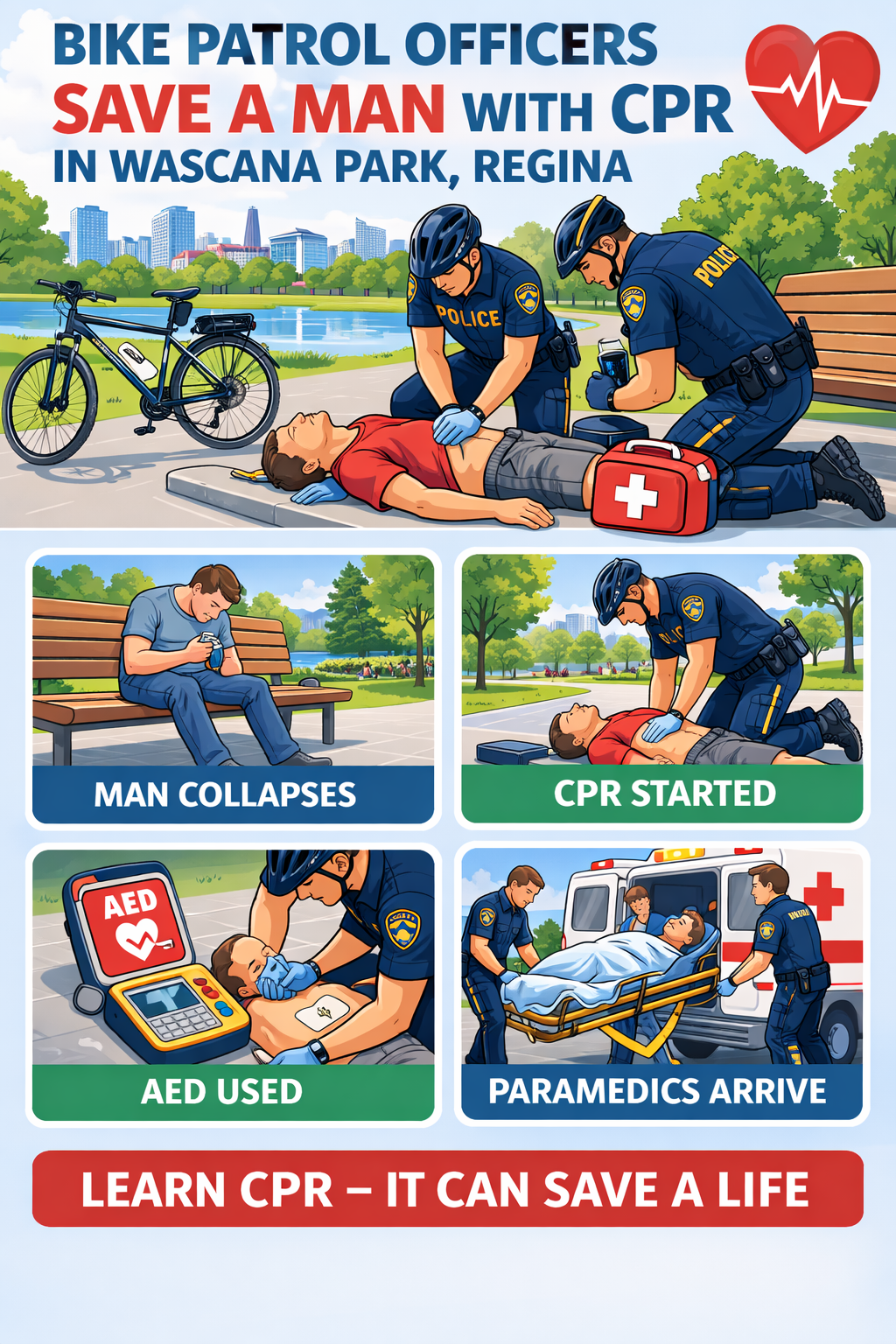
During Canada Day celebrations in Regina, a man experienced a medical emergency while cycling through Wascana Park.
John Klein, a 34-year-old cyclist, was riding his bike in the park when he began to feel unwell. According to reports, he became disoriented and eventually stopped riding, sitting down on a nearby park bench.
For several minutes he remained there, unable to respond normally as his condition worsened.
Two Regina police officers assigned to bike patrol—Constable Anthony Rodier and Constable Aaron Robertson—were riding through the park when they noticed that Klein appeared to be in serious distress.
After quickly assessing the situation, the officers recognized signs of a medical emergency and began providing CPR.
Paramedics arrived shortly afterward and took over medical care before transporting Klein to a healthcare facility for further treatment.
Following the incident, Klein later reflected on how the quick actions of the officers likely played an important role in the outcome.
Situations like this demonstrate how rapid recognition of cardiac arrest and immediate CPR can help support survival during emergencies in public spaces.
Signs of Sudden Cardiac Arrest
Sudden cardiac arrest often occurs without warning, but several symptoms may appear immediately before or during the event.
Possible warning signs include:
-
Sudden collapse
-
Unresponsiveness
-
No normal breathing
-
Gasping or irregular breathing
-
Weak or absent pulse
-
Sudden confusion or disorientation before collapse
Emergency services should be contacted immediately if these signs appear.
Causes of Cardiac Arrest During Activity
Cardiac arrest may occur during physical activity for several reasons, including underlying heart conditions that may not have been previously diagnosed.
Possible causes may include:
-
Heart rhythm disturbances (arrhythmias)
-
Coronary artery disease
-
Structural heart conditions
-
Severe stress on the cardiovascular system
-
Underlying medical conditions affecting the heart
Medical evaluation is usually required to determine the specific cause.
First Aid Response and Immediate Management
When someone collapses and appears unresponsive, early action from bystanders or trained responders may help maintain vital circulation.
General emergency response steps may include:
-
Call emergency services immediately.
-
Check responsiveness and breathing.
-
Begin CPR if the person is unresponsive and not breathing normally.
-
Use an AED if one becomes available nearby.
-
Continue CPR until paramedics arrive.
Automated external defibrillators (AEDs) are increasingly available in public spaces and workplaces to assist during cardiac emergencies.
Prevention and Community Safety Considerations
Although cardiac arrest cannot always be prevented, communities can improve emergency preparedness through awareness and training.
Helpful safety practices may include:
-
Encouraging CPR and AED training in workplaces and community programs
-
Installing AEDs in public spaces and recreation areas
-
Supporting emergency response planning at large public events
-
Promoting awareness of cardiac arrest symptoms
Prepared responders and quick action can improve emergency outcomes.
Frequently Asked Questions
What is sudden cardiac arrest?
Sudden cardiac arrest occurs when the heart suddenly stops pumping blood effectively due to an electrical disturbance in the heart.
Why is CPR important during cardiac arrest?
CPR helps circulate oxygen-rich blood to the brain and organs while waiting for advanced medical treatment.
Can cardiac arrest occur during exercise?
Although uncommon, cardiac arrest can occur during physical activity, particularly if an underlying heart condition is present.
Why do police officers receive CPR training?
Police officers often arrive quickly at emergency scenes, allowing them to provide immediate assistance until paramedics arrive.
What role do AEDs play in cardiac emergencies?
AEDs analyze heart rhythms and can deliver a shock to restore a normal rhythm in certain cardiac arrest situations.
Educational Note
This article is intended for general first aid awareness and public education. Learning CPR and emergency response skills can help individuals respond quickly during cardiac emergencies while waiting for professional medical assistance.
About The Author

Mark Kascha
First Aid Instructor Trainer with 30+ years of experience in CPR, emergency response, and safety training across Canada.
Last reviewed: March 2026
 Support local, Canadian-owned businesses, with no connections to American corporations or partnerships.