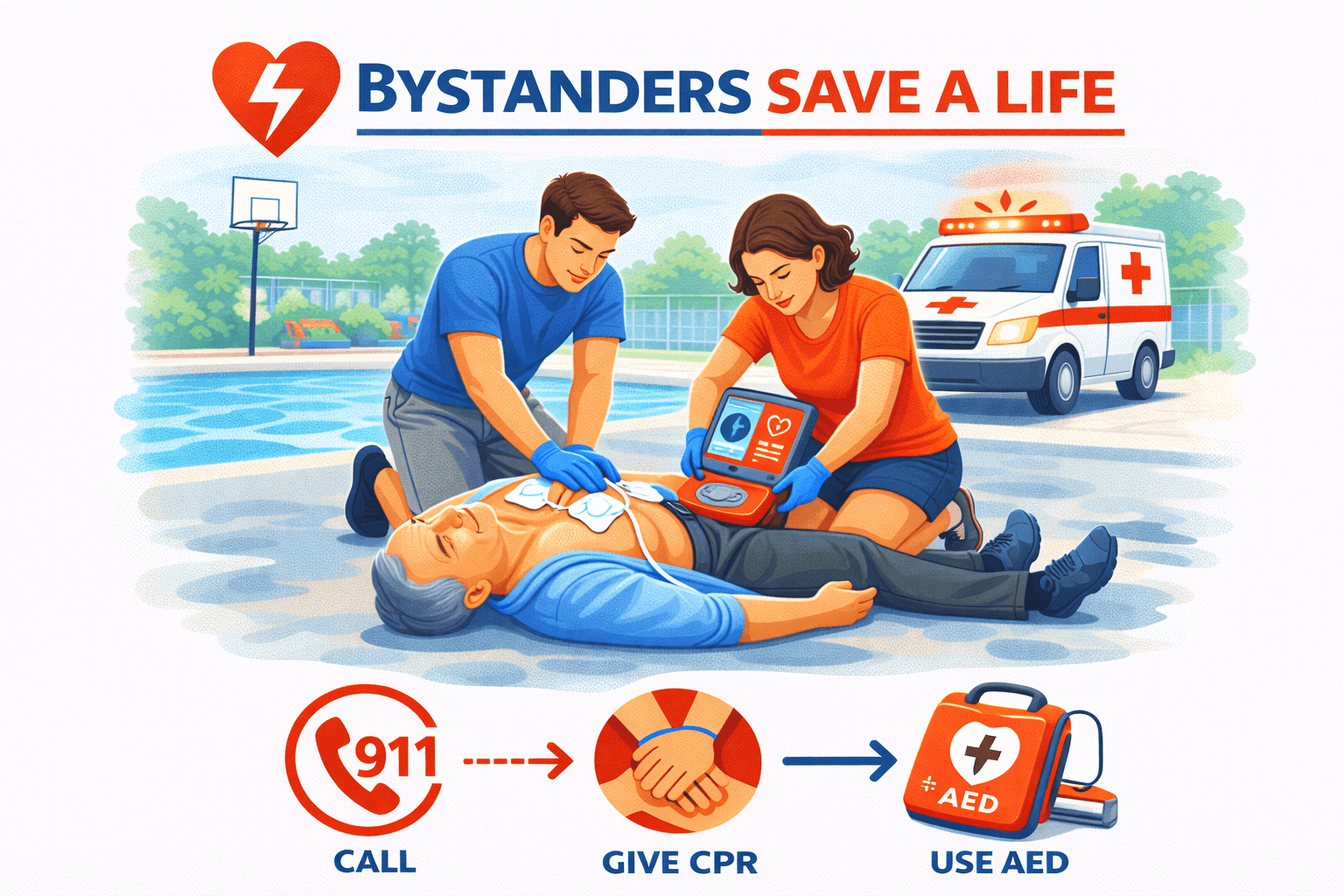
 Sudden cardiac arrest occurs when the heart unexpectedly stops beating effectively, preventing blood from circulating to the brain and other vital organs. Without immediate assistance, this medical emergency can quickly become life-threatening.
Two important emergency responses often used together are cardiopulmonary resuscitation (CPR) and an automated external defibrillator (AED).
Across Canada, including Vancouver and British Columbia, CPR and AED training are commonly included in workplace first aid courses, aquatic facility training, and community emergency preparedness programs. These courses help people recognize cardiac emergencies and understand how to respond while waiting for paramedics.
Quick recognition and immediate action can make a significant difference in the outcome of certain cardiac emergencies.
Why AED Access Matters in Communities
Automated external defibrillators are portable devices designed to analyze heart rhythms and determine whether an electrical shock may help restore a normal heartbeat.
AED devices are commonly found in places such as:
-
Recreation centres and swimming pools
-
Schools and sports facilities
-
Airports and shopping centres
-
Office buildings and workplaces
-
Community centres
Most AED units provide clear voice instructions that guide users step-by-step through the emergency response process.
Increasing access to these devices allows bystanders to respond quickly before emergency medical services arrive.
Two Cardiac Emergencies in Saskatoon
Two men in Saskatoon, Saskatchewan had a special reason to celebrate the holiday season after surviving cardiac emergencies thanks to rapid bystander response.
One of the incidents involved Richard Gryshchuk, 54, who experienced sudden cardiac arrest while at a local swimming pool.
Two lifeguards and another city employee quickly responded to the emergency. They began CPR and used an automated external defibrillator available at the facility.
The AED helped restore his heart rhythm before paramedics arrived.
In a separate incident just weeks earlier, Vincent Bitusis, 38, went into cardiac arrest while playing basketball.
Two nearby bystanders immediately stepped in to assist. They began emergency response actions and used an AED to help revive him.
In both situations, the availability of AED devices and the quick response of nearby individuals helped support emergency care until medical responders arrived.
Community Access to AED Devices
City officials noted that more than 900 businesses and facilities in Saskatoon have AED devices available.
Public access defibrillator programs aim to place AEDs in areas where large numbers of people gather. These programs help ensure that life-saving equipment is accessible during emergencies.
Many communities across Canada continue expanding AED availability in public spaces.
Why CPR and AED Use Are Important
When cardiac arrest occurs, oxygen supply to the brain can begin to decrease within minutes.
CPR helps maintain circulation of oxygen-rich blood, while an AED may restore a normal heart rhythm if certain abnormal rhythms are detected.
Emergency response organizations often emphasize that early CPR combined with rapid defibrillation can significantly improve survival outcomes in certain cardiac emergencies.
Building Community Emergency Preparedness
Community awareness plays an important role in responding to emergencies. Individuals who learn CPR and AED use may feel more confident assisting during critical situations.
Prepared communities often benefit from:
-
Public access AED programs
-
Workplace first aid training
-
CPR education in community centres and schools
-
Increased awareness of cardiac arrest symptoms
These initiatives help ensure that help can begin quickly while paramedics are on the way.
Frequently Asked Questions
What is an automated external defibrillator (AED)?
An AED is a portable device that analyzes heart rhythms and may deliver an electrical shock to help restore a normal heartbeat during certain cardiac emergencies.
Why are AEDs placed in public locations?
Public access AEDs allow bystanders to respond quickly when cardiac emergencies occur in community spaces.
Can someone without medical training use an AED?
Yes. AED devices provide step-by-step voice instructions designed to guide users during an emergency.
Why is CPR often used with an AED?
CPR helps maintain circulation while the AED analyzes heart rhythm and prepares to deliver a shock if needed.
Where can people learn CPR and AED skills in Canada?
Training programs are widely available through certified first aid training providers, workplace safety programs, and community organizations across Canada.
Educational Note
This article is intended for general first aid awareness and community safety education. Learning CPR and AED use can help individuals better understand how to respond during emergencies while waiting for trained emergency medical services.
About The Author

Mark Kascha
First Aid Instructor Trainer with 30+ years of experience in CPR, emergency response, and safety training across Canada.
Last reviewed: March 2026
 Support local, Canadian-owned businesses, with no connections to American corporations or partnerships.