
Sudden cardiac arrest occurs when the heart unexpectedly stops pumping blood effectively. When this happens, a person may collapse, lose consciousness, and stop breathing normally. Without rapid intervention, the brain and other vital organs are deprived of oxygen.
Two important emergency responses are cardiopulmonary resuscitation (CPR) and the use of an automated external defibrillator (AED). CPR helps circulate oxygenated blood, while an AED can analyze the heart’s rhythm and deliver a controlled shock if needed to help restore a normal heartbeat.
Across Canada, including Vancouver and British Columbia, many workplaces and public venues such as casinos, recreation centres, and shopping facilities train staff in CPR and AED use so they can respond quickly during medical emergencies.
A Real-World Scenario
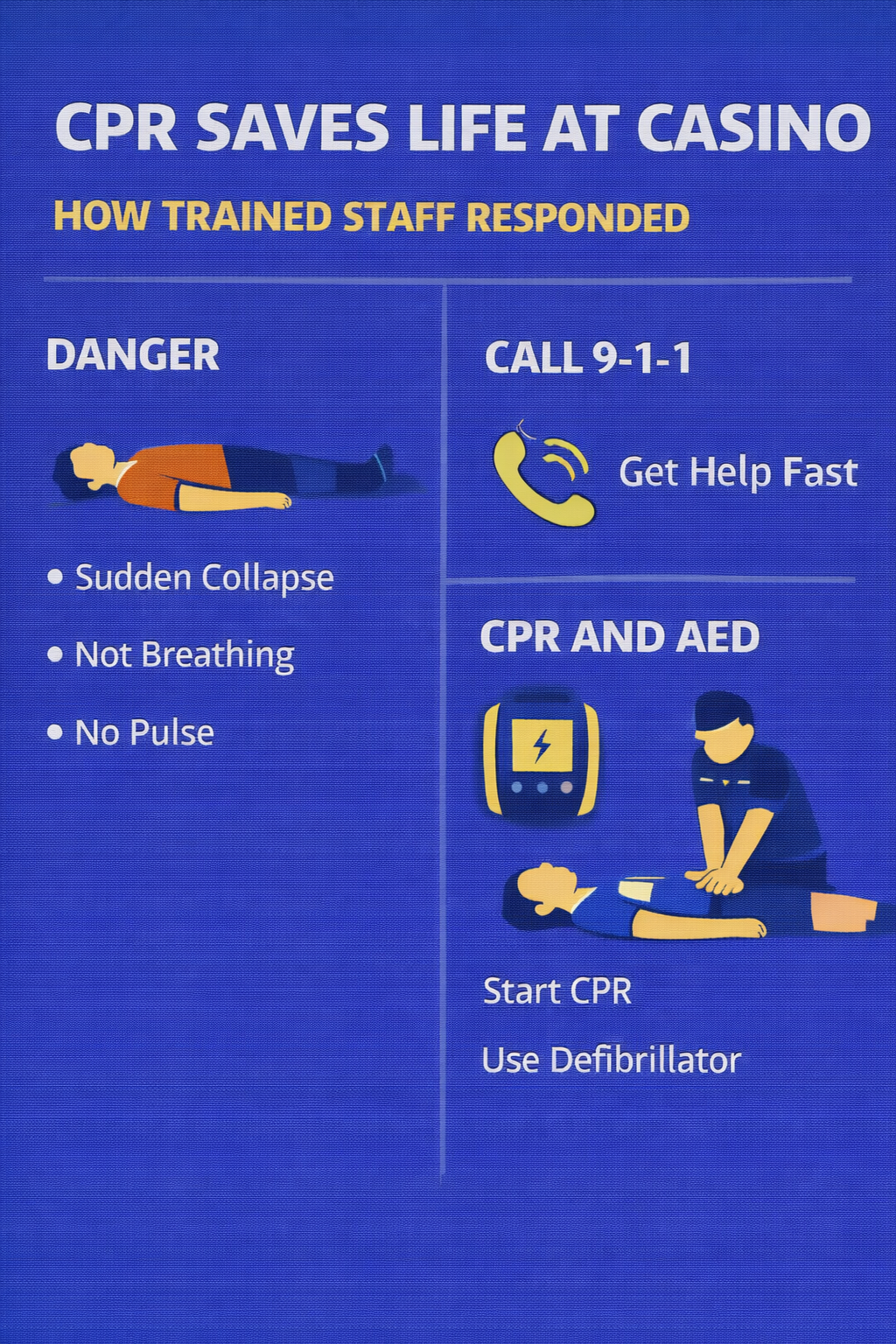 A medical emergency at Casino Nova Scotia demonstrates how workplace training can make a critical difference during sudden cardiac arrest.
At approximately 12:30 p.m., a man named Bill Jamael stood up from a game he had been playing on the casino floor. After taking only a few steps, he suddenly collapsed to the ground.
A nearby slot attendant witnessed the fall and quickly radioed Ian Flynn, the casino’s security chief and CPR instructor.
Flynn arrived at the scene in less than a minute along with other members of the security team. When they assessed Jamael, they found that he had no pulse and was not breathing.
Flynn immediately began CPR, delivering chest compressions while another staff member assisted with rescue breaths. Meanwhile, another security employee ran to retrieve the casino’s AED.
Once the defibrillator arrived, the team used it to analyze the man’s heart rhythm and deliver a shock as directed by the device. Paramedics arrived shortly afterward and continued care before transporting the man to the hospital.
For Flynn, who had trained employees in CPR for more than 35 years, the incident marked the first time he personally used those skills to help save someone’s life.
The quick teamwork among casino staff demonstrates how regular CPR training and accessible AED equipment can help staff respond effectively during unexpected medical emergencies.
Signs of Sudden Cardiac Arrest
Cardiac arrest often occurs suddenly, but certain signs may indicate that a person is experiencing a life-threatening emergency.
Possible signs include:
-
Sudden collapse
-
Unresponsiveness
-
No normal breathing or only gasping
-
Absence of pulse
-
Unusual sounds such as abnormal breathing or gurgling
When these signs are present, immediate emergency response is critical.
Why CPR and AED Use Are Important
CPR and AED use work together during cardiac emergencies.
CPR helps:
-
Maintain blood circulation to the brain and heart
-
Deliver oxygen to vital organs
-
Provide support until advanced medical care arrives
AEDs help by:
-
Analyzing the heart rhythm
-
Delivering an electrical shock when appropriate
-
Providing voice prompts to guide rescuers
Many AEDs are designed so that bystanders can follow simple instructions during emergencies.
First Aid Awareness During Cardiac Emergencies
First aid training teaches general steps that may help during sudden cardiac arrest.
Typical response steps include:
-
Call emergency services (9-1-1 in Canada).
-
Check responsiveness and breathing.
-
If the person is not breathing normally, begin CPR if trained and if it is safe to do so.
-
Retrieve and use an AED if available.
-
Continue CPR until emergency responders arrive.
Quick action during the first minutes of cardiac arrest can improve the chances of survival.
Workplace Preparedness and Prevention
Cardiac emergencies can occur in many public locations, including workplaces, casinos, and entertainment venues.
Preparedness measures may include:
-
CPR and AED training for staff
-
Easily accessible AED devices
-
Regular safety drills and emergency planning
-
Clear procedures for contacting emergency services
Across Vancouver and British Columbia, many workplaces incorporate first aid training into safety programs to help employees respond effectively during emergencies.
FAQ
What is sudden cardiac arrest?
Sudden cardiac arrest occurs when the heart stops pumping blood effectively, leading to loss of consciousness and breathing.
How does CPR help during cardiac arrest?
CPR provides chest compressions that help circulate oxygenated blood to the brain and vital organs until advanced medical care arrives.
What does an AED do?
An AED analyzes the heart’s rhythm and may deliver a controlled electrical shock to help restore a normal heartbeat.
Why do many workplaces train staff in CPR?
Training helps employees recognize medical emergencies and respond quickly until emergency responders arrive.
Can bystanders really help during cardiac emergencies?
Yes. Quick recognition of cardiac arrest, calling emergency services, and starting CPR can provide critical support during the first moments of an emergency.
Educational Note
This article is intended for general first aid awareness and public safety education. Learning CPR and AED use through certified training programs can help individuals recognize cardiac emergencies and respond safely until emergency services arrive.
About The Author

Mark Kascha
First Aid Instructor Trainer with 30+ years of experience in CPR, emergency response, and safety training across Canada.
👉 [View full credentials]🔗 View LinkedIn Profile
Last reviewed: March 2026