
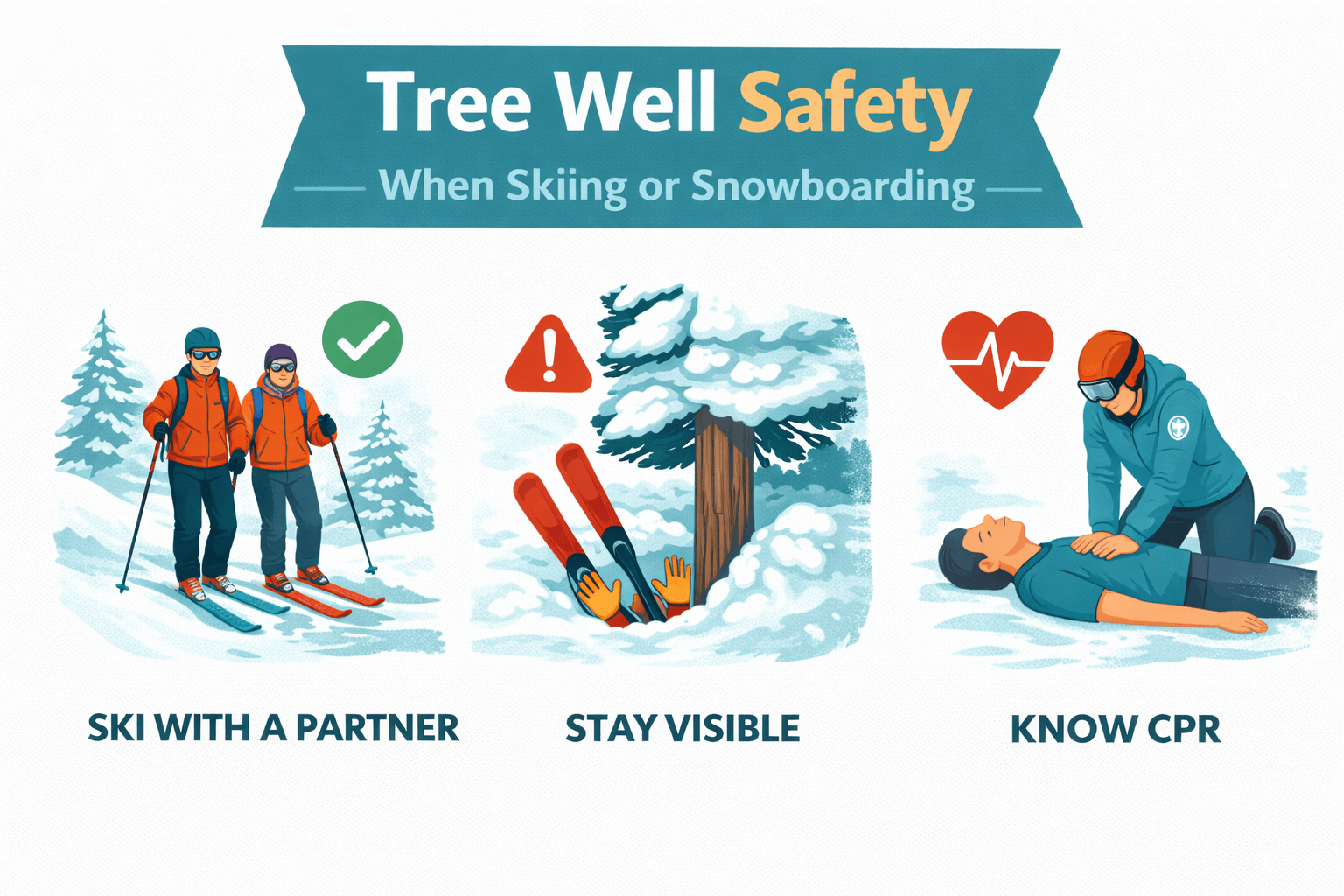
 Tree wells are deep pockets or depressions that form around the base of trees in snowy environments. Branches prevent snow from packing tightly near the trunk, leaving a hidden cavity of loose snow beneath. When skiers or snowboarders fall into these areas, they may become trapped in deep powder.
In British Columbia, including popular ski destinations near Vancouver such as Whistler Blackcomb, tree wells are a recognized hazard during winter recreation. Although they are relatively uncommon, falls into deep snow near trees can create dangerous situations where a person may become stuck or unable to breathe properly.
Understanding these risks and knowing basic first aid skills, including CPR, can be important when spending time on mountain slopes.
Winter Recreation and Safety in British Columbia
British Columbia attracts thousands of skiers and snowboarders each winter. Resorts such as Whistler Blackcomb and surrounding backcountry areas provide extensive terrain for winter sports.
Resort safety programs and outdoor training organizations often encourage participants to learn wilderness safety and basic first aid skills. In remote or mountainous environments, immediate assistance may need to come from nearby skiers, riders, or ski patrol members before paramedics arrive.
Preparedness, awareness of terrain hazards, and travelling with companions are commonly recommended safety practices.
A Tree Well Incident on Whistler Mountain
A tragic incident on Whistler Mountain illustrates the dangers associated with tree wells.
A 63-year-old skier was riding near the Ratfink run when he fell into a tree well. According to Whistler Blackcomb safety manager Brian Leighton, the man was an experienced skier who had spent many years skiing in the area and was familiar with the terrain.
When the incident occurred, members of the public nearby began attempting to assist the skier and initiated CPR in an effort to revive him.
Whistler Mountain Ski Patrol, along with a paramedic and a mountain doctor, responded quickly to the scene. The skier was transported by ambulance to the Whistler Health Care Centre for further medical care but was later declared deceased.
Events like this highlight how quickly conditions can change in mountainous environments, even for experienced skiers.
Recognizing the Risks of Tree Wells
Tree wells are difficult to detect because they may be hidden beneath deep powder snow. Skiers or snowboarders who fall head-first into these areas can become disoriented or trapped.
Potential warning signs and risks include:
-
Deep powder snow near tree bases
-
Riding or skiing close to heavily forested areas
-
Sudden falls into soft snow pockets
-
Limited visibility of the ground around trees after heavy snowfall
Because the snow inside a tree well is often loose and deep, it can be difficult for someone to escape without assistance.
Why CPR May Be Attempted in Snow Emergencies
If someone becomes trapped in deep snow and cannot breathe properly, oxygen deprivation may occur. When a person is unresponsive and not breathing normally, CPR may be attempted while emergency responders are contacted.
CPR training programs across Canada teach individuals how to recognize these signs and how to provide assistance until professional medical care becomes available.
On ski slopes, early assistance from nearby skiers, riders, or ski patrol members can be especially important.
Prevention and Ski Safety Recommendations
Mountain safety teams often encourage several precautions to reduce the risk of tree well incidents:
-
Ski or ride with a partner whenever possible
-
Stay within sight of companions in wooded areas
-
Avoid riding directly beside large tree trunks in deep snow
-
Maintain awareness of snow conditions after heavy snowfall
Skiing with a partner can be especially helpful because companions may be able to assist quickly if someone becomes trapped in deep snow.
Frequently Asked Questions
What is a tree well?
A tree well is a deep pocket of loose snow that forms around the base of a tree where branches prevent snow from packing tightly near the trunk.
Why are tree wells dangerous?
If someone falls into a tree well, they may become trapped in deep snow and may have difficulty moving or breathing without assistance.
Are tree well incidents common on ski slopes?
They are relatively rare but are recognized hazards in areas with deep powder snow and forested terrain, including some ski areas in British Columbia.
What should skiers do if a friend falls into a tree well?
Companions should call for help and attempt to assist while maintaining their own safety. Ski patrol or emergency services should be contacted if the situation appears serious.
Is CPR training useful for outdoor recreation?
Yes. CPR and first aid training can help individuals respond to emergencies that may occur during outdoor activities such as skiing, snowboarding, or hiking.
Educational Note
This article is intended for general first aid awareness and outdoor safety education. Learning CPR and first aid can help individuals better understand how to respond during emergencies while waiting for trained emergency medical services.
About The Author

Mark Kascha
First Aid Instructor Trainer with 30+ years of experience in CPR, emergency response, and safety training across Canada.
👉 [View full credentials]🔗 View LinkedIn Profile
Last reviewed: March 2026