
A stabbing incident on public transit in Richmond, BC highlights how quickly a medical emergency can unfold — and why first aid training is essential in community and workplace settings.
Severe bleeding and traumatic injuries require immediate emergency response. In Vancouver and across British Columbia, first aid and CPR training prepare individuals to respond safely while waiting for paramedics.
What Happened in Richmond
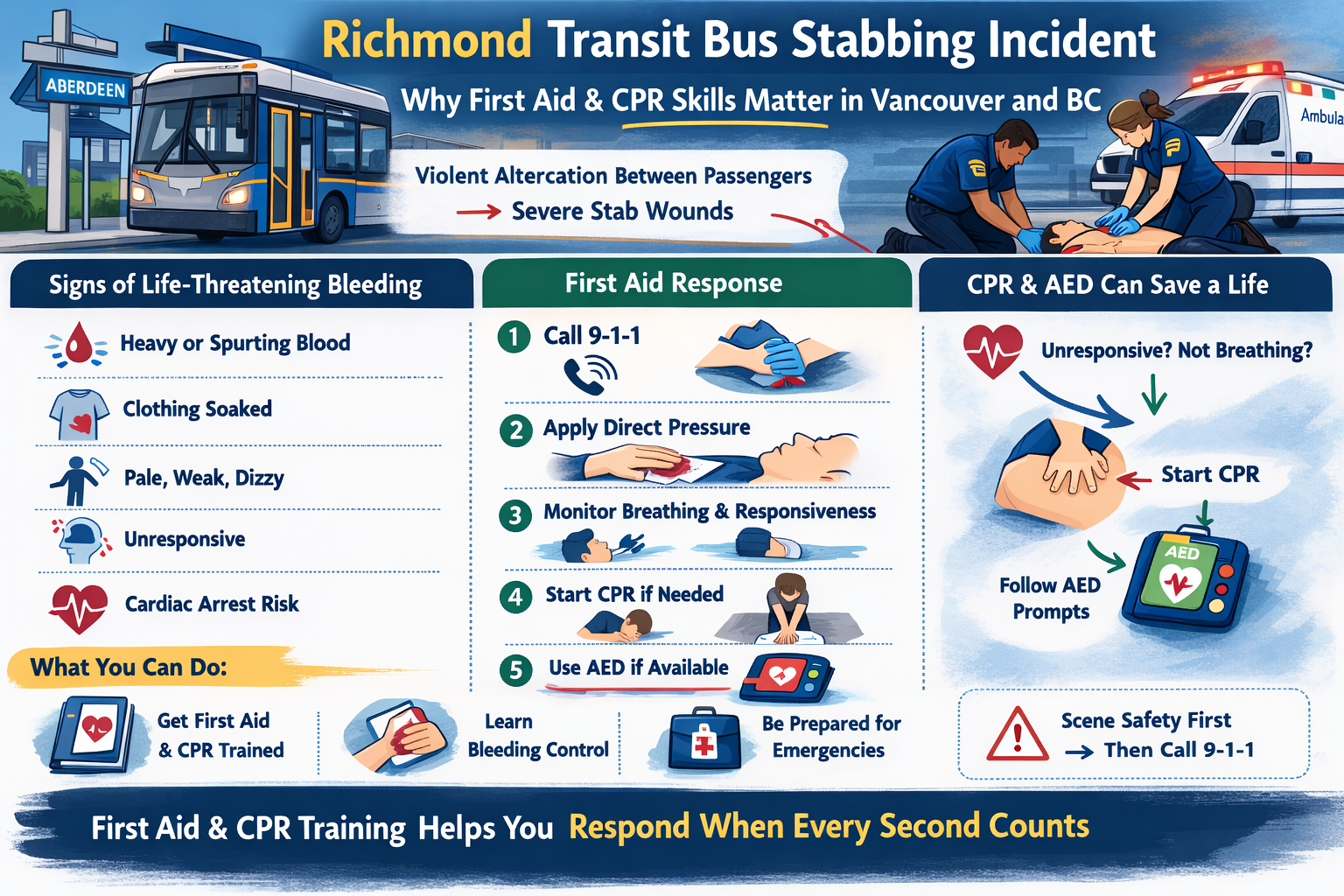 According to reports, the Richmond RCMP responded to multiple 9-1-1 calls involving a violent altercation on a Coast Mountain Bus Company transit bus.
The incident reportedly occurred shortly before 2 PM near the Aberdeen Canada Line Station. Police temporarily closed sections of No. 3 Road while investigating.
A 42-year-old man suffered critical stab wounds and was transported to hospital. A 22-year-old suspect was arrested at the scene. Video circulating online showed paramedics providing CPR in the doorway of the bus as emergency crews worked quickly to stabilize the injured passenger.
While the circumstances remain under investigation, the event underscores how rapidly traumatic injuries can escalate into life-threatening emergencies.
Understanding Traumatic Bleeding
Severe bleeding (also called major external bleeding) can occur when blood vessels are damaged by penetrating injuries such as stab wounds.
Uncontrolled bleeding can lead to:
-
Rapid blood loss
-
Decreased oxygen delivery to organs
-
Loss of consciousness
-
Cardiac arrest in severe cases
In traumatic situations, bystanders may be the first to assist before emergency services arrive.
Recognizing Life-Threatening Bleeding
Signs of serious external bleeding may include:
-
Blood that is flowing steadily or spurting
-
Clothing soaked with blood
-
Pale or cool skin
-
Weakness or dizziness
-
Unresponsiveness
If the person becomes unresponsive and is not breathing normally, CPR may be required.
First Aid Response: Public Education Overview
In any violent or traumatic incident, scene safety comes first. Do not approach if there is ongoing danger.
If the scene is safe:
-
Call 9-1-1 immediately
-
Apply firm, direct pressure to visible bleeding using cloth, clothing, or bandaging material
-
Continue pressure until emergency responders arrive
-
Monitor responsiveness and breathing
-
Begin CPR if the person becomes unresponsive and is not breathing normally
-
Use an AED if available and advised
Applying steady pressure is one of the most effective immediate actions a bystander can take in a severe bleeding situation.
CPR in Traumatic Emergencies
In the Richmond bus incident, paramedics were seen performing CPR. CPR may be necessary if:
-
The person loses consciousness
-
There is no normal breathing
-
The heart has stopped effectively pumping
CPR helps circulate oxygenated blood to vital organs until advanced medical care takes over.
AEDs are commonly available in public transit hubs, shopping centres, and many Vancouver workplaces. The device will analyze heart rhythm and only advise a shock if appropriate.
Workplace and Public Transit Safety in BC
Although this event occurred on public transit, similar risks can arise in many environments, including:
-
Retail centres
-
Construction sites
-
Warehouses
-
Public venues
-
Office buildings
Employers and organizations in Vancouver and across BC should consider:
-
Emergency response plans
-
Staff training in CPR and first aid
-
Clear communication procedures
-
Coordination with emergency services
Preparedness does not prevent all incidents, but it improves response capability.
Emotional Impact and Bystander Response
Violent incidents can be distressing for witnesses. Staying calm, calling emergency services promptly, and providing basic first aid within your level of training can make a meaningful difference.
Even simple actions — like applying direct pressure or guiding paramedics to the scene — contribute to the chain of survival.
Frequently Asked Questions
What should I do first in a violent emergency?
Ensure your own safety before assisting. Call 9-1-1 immediately and follow dispatcher instructions.
How do you control severe bleeding?
Apply firm, direct pressure to the wound using available materials. Continue pressure until help arrives.
When is CPR needed in a trauma situation?
CPR is required if the person is unresponsive and not breathing normally.
Are AEDs useful in traumatic injuries?
If cardiac arrest occurs, an AED can analyze heart rhythm and advise whether defibrillation is needed.
Is first aid training useful even if I don’t work in healthcare?
Yes. First aid and CPR training prepares individuals in any workplace or community setting to respond confidently during unexpected emergencies.
Educational Note
This article is provided for general first aid awareness and workplace safety education in British Columbia. Formal first aid and CPR training helps individuals respond appropriately during emergencies while waiting for professional medical assistance.
About The Author

Mark Kascha
First Aid Instructor Trainer with 30+ years of experience in CPR, emergency response, and safety training across Canada.
👉 [View full credentials]🔗 View LinkedIn Profile
Last reviewed: March 2026
 Support local, Canadian-owned businesses, with no connections to American corporations or partnerships.