
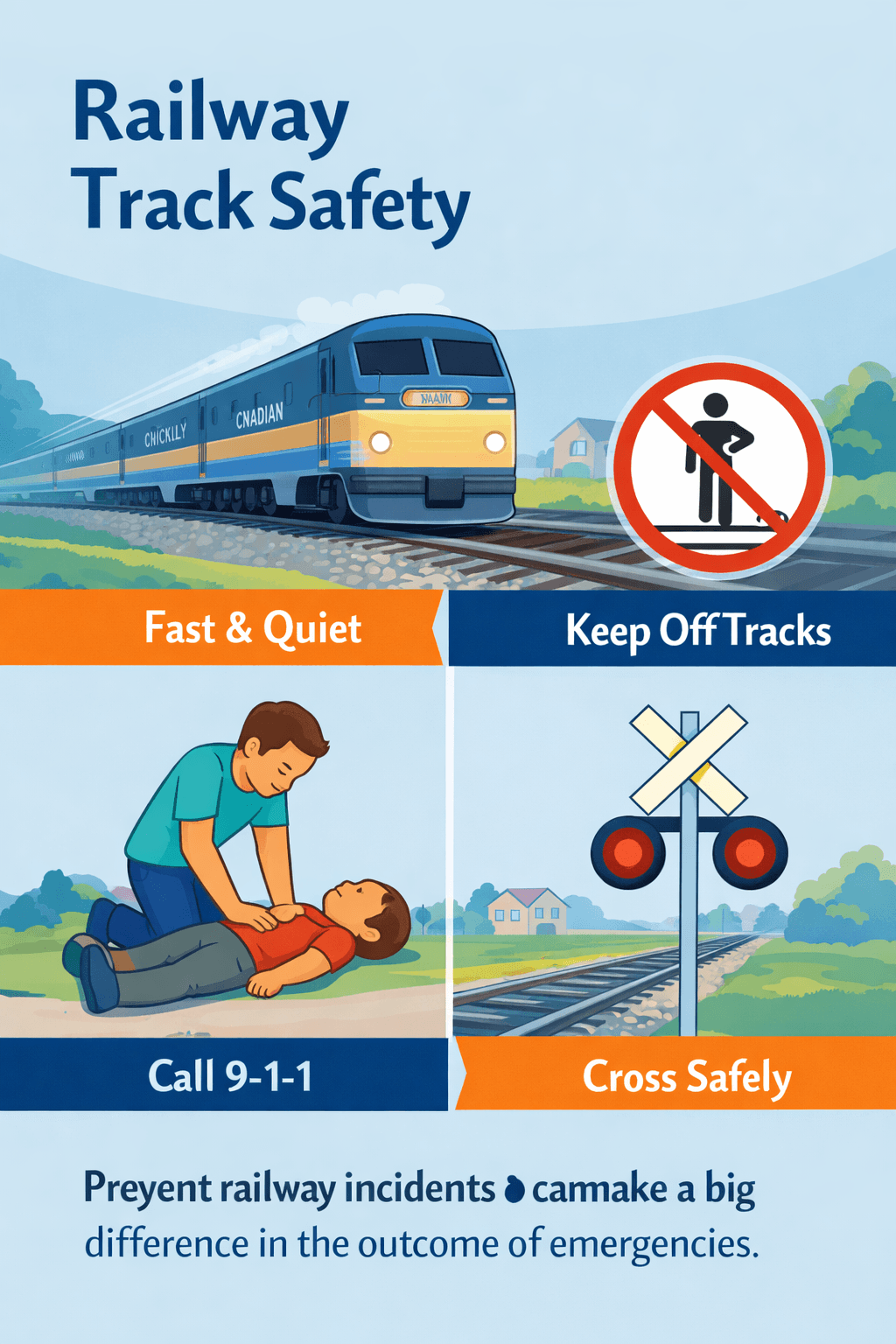
 Railway tracks can appear quiet or inactive, but trains move quickly and cannot stop immediately when obstacles appear on the tracks. Because of their speed and weight, trains require long distances to slow down or stop. This makes railway areas extremely dangerous places for pedestrians, especially when people are unaware of approaching trains.
In Vancouver, Surrey, White Rock, and communities throughout the Lower Mainland of British Columbia, railway lines run through residential areas, waterfront locations, and recreational spaces. For this reason, public safety education—including first aid training and situational awareness around transportation infrastructure—is an important part of community safety.
First Aid and Public Safety in British Columbia
Many schools, workplaces, and community organizations across British Columbia encourage first aid training so people are prepared to respond to emergencies. While professional responders provide advanced medical care, bystanders are often the first people present when an incident occurs.
Learning first aid helps individuals recognize emergencies, provide initial assistance, and support injured individuals while waiting for emergency services.
Scenario: A Tragic Incident Near Crescent Beach
A tragic incident near Crescent Beach in Surrey, British Columbia, brought attention to the importance of railway safety and emergency awareness.
Friends and family later gathered near the Christopherson Steps area to remember a teenager who had recently completed Grade 9 at Elgin Park Secondary School. The student had been active in school athletics and was known among classmates and teammates.
According to reports from witnesses, a large group of young people had gathered near the railway tracks in the evening. Some of the teens were seen walking or standing on the tracks when a northbound passenger train approached.
While several individuals moved away from the tracks, one student was struck by the train. Bystanders immediately attempted to provide first aid while emergency services were contacted. Despite their efforts, the injuries were severe.
Local authorities later confirmed that an emergency call had been received reporting that a person had been struck by a train. The passenger train involved was delayed for several hours while investigators examined the scene. None of the passengers on the train were injured.
Community members placed flowers near the area as a memorial, reflecting the impact the loss had on friends, family, and the broader community.
Why Railway Environments Are Dangerous
Trains operate differently from road vehicles. Several factors contribute to the risks around railways:
-
High speeds, especially on passenger routes
-
Long stopping distances that can extend hundreds of metres
-
Limited ability for engineers to avoid obstacles
-
Reduced noise in some modern trains
-
Tracks that curve or pass through quiet areas
Because trains cannot easily stop or change direction, even a short time spent on the tracks can place someone in danger.
First Aid and Emergency Response in Traumatic Incidents
In situations involving serious injuries, bystanders may be the first to react before professional responders arrive. People trained in first aid may assist by:
-
Calling emergency services immediately
-
Checking responsiveness and breathing
-
Providing care such as CPR if appropriate
-
Helping control visible bleeding
-
Keeping the injured person as still as possible until help arrives
First aid training prepares people to recognize life-threatening conditions and provide support while waiting for emergency medical services.
Even when outcomes cannot be changed, bystander actions demonstrate compassion and a willingness to help during critical moments.
Prevention and Safety Around Railway Tracks
Preventing railway incidents begins with awareness and safe behaviour. Important safety practices include:
-
Never walking, standing, or playing on railway tracks
-
Crossing tracks only at designated railway crossings
-
Staying clear of trains even if they appear far away
-
Understanding that trains may approach quietly and quickly
-
Supervising children and youth near railway areas
Many communities in Surrey, Vancouver, White Rock, and across the Lower Mainland have railway corridors near residential neighbourhoods and recreational areas. Public education helps ensure people understand the risks.
Frequently Asked Questions
Why are railway tracks considered dangerous even when no train is visible?
Trains can travel quickly and may approach more quietly than expected. Because trains take a long distance to stop, engineers may not be able to slow down in time if someone is on the tracks.
Can bystanders provide first aid during serious accidents?
Bystanders who are trained in first aid may provide initial assistance such as calling for help, checking breathing, and helping control bleeding until emergency responders arrive.
Why is first aid training important for students and community members?
First aid training teaches people how to recognize emergencies, stay calm, and assist safely. These skills can be useful in many environments, including schools, workplaces, and public spaces.
What should people do if they witness an emergency near railway tracks?
The most important step is to contact emergency services immediately and ensure personal safety by staying clear of the tracks and trains.
Are trains always loud enough to hear approaching?
Not always. Some trains operate more quietly than expected, especially when travelling at speed or in areas with background noise.
Educational Note
This article is intended for general public education about first aid awareness and community safety. Learning first aid skills and understanding environmental hazards can help individuals respond more confidently during emergencies and support safer communities.
About The Author

Mark Kascha
First Aid Instructor Trainer with 30+ years of experience in CPR, emergency response, and safety training across Canada.
👉 [View full credentials]🔗 View LinkedIn Profile
Last reviewed: March 2026