
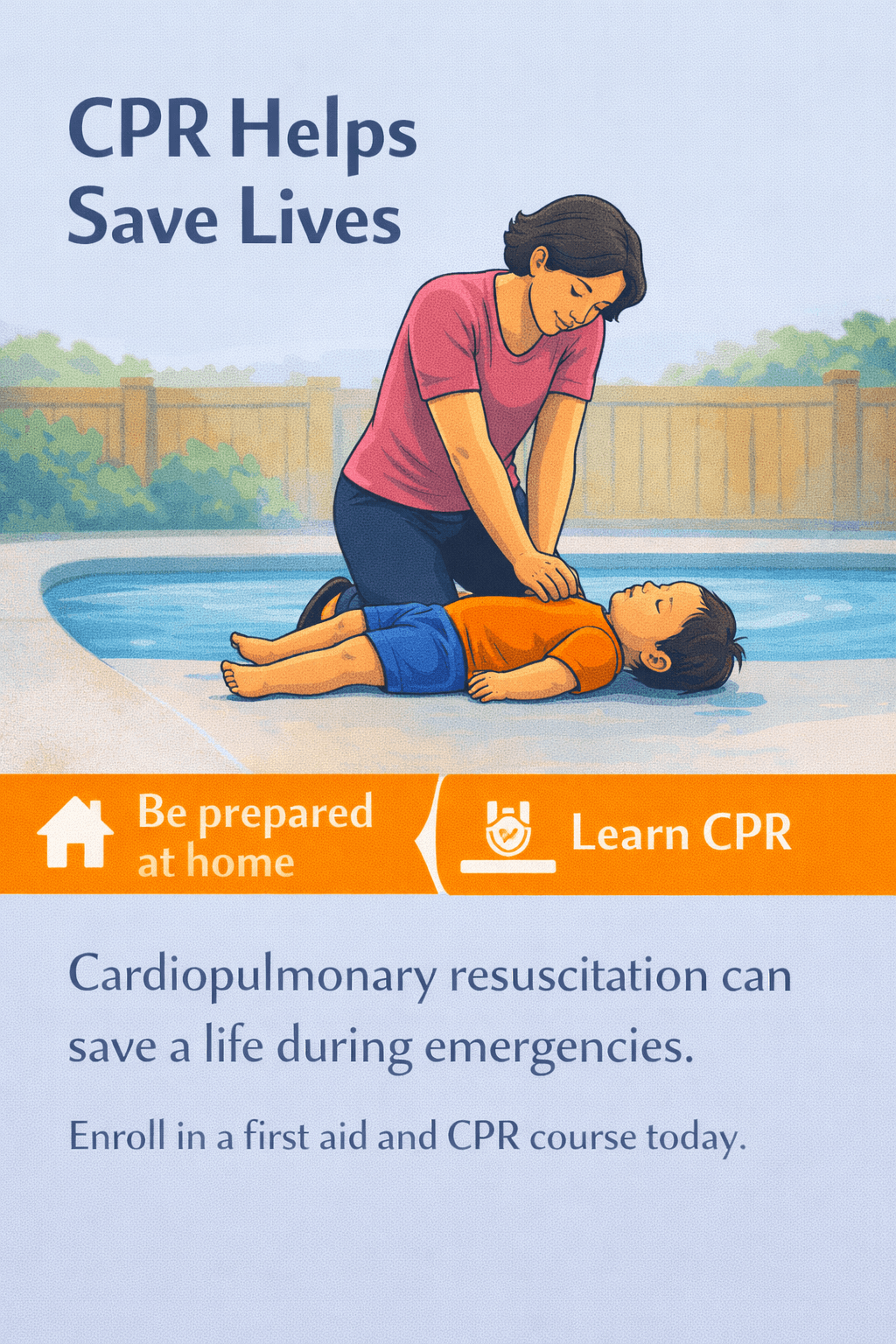
 Drowning emergencies can occur quickly, especially with young children who are naturally curious and may wander toward water without understanding the risks. Even a brief lapse in supervision can allow a toddler to access a pool, hot tub, or other water source.
Across West Vancouver, North Vancouver, Surrey, and the Lower Mainland of British Columbia, many homes have backyard pools or easy access to waterfront areas. Because of this, child CPR training and water safety awareness are strongly encouraged for parents, caregivers, and childcare workers.
When a child stops breathing after a water incident, rapid first aid and CPR can help support breathing and circulation until emergency medical professionals arrive.
First Aid and Caregiver Training in British Columbia
In British Columbia, many childcare providers, nannies, teachers, and workplace staff receive CPR and first aid training as part of their responsibilities. These skills prepare caregivers to respond quickly when a child experiences a medical emergency.
Learning CPR can make a difference in situations involving:
-
Water-related incidents
-
Sudden breathing emergencies
-
Choking events
-
Cardiac arrest
Prepared caregivers help strengthen community safety in Vancouver and surrounding municipalities.
Scenario: Quick CPR Response in Horseshoe Bay
An incident in Horseshoe Bay, West Vancouver, demonstrated how quickly a water emergency can develop—and how rapid action can help save a life.
According to local reports, a 19-month-old child managed to reach a backyard swimming pool after being out of sight for a short period of time. When family members realized the child was missing, they located him in the pool and quickly removed him from the water.
At that point the child was unconscious and not breathing normally.
A nanny who was present immediately began providing cardiopulmonary resuscitation (CPR). She performed chest compressions and rescue breathing while others contacted emergency services.
After a short period of CPR, the child began to sputter and cry, which indicated that breathing was returning.
Emergency responders transported the toddler to a healthcare facility for monitoring and further evaluation. The child remained overnight for observation and was expected to recover.
The quick response by the caregiver highlights how CPR knowledge can support survival during water-related emergencies.
Signs a Child May Need CPR After a Water Incident
After being removed from water, a child may require immediate help if they show signs such as:
-
Unresponsiveness
-
No visible breathing
-
Gasping or irregular breathing
-
Bluish lips or skin
-
Limp body or lack of movement
These signs indicate a serious emergency where immediate first aid and emergency services are required.
How CPR Helps During Drowning Emergencies
When breathing stops, oxygen cannot reach vital organs such as the brain and heart. CPR helps by:
-
Providing chest compressions to support circulation
-
Helping oxygen move through the body
-
Maintaining blood flow until normal breathing returns
-
Supporting the body until advanced medical care arrives
In drowning incidents involving children, early CPR can play an important role in improving outcomes.
First Aid Response During Child Water Emergencies
Individuals trained in CPR may take several steps when responding to a child who has been removed from water:
-
Ensure the child is safely removed from the water
-
Check for responsiveness and breathing
-
Contact emergency services immediately
-
Begin CPR if the child is unresponsive and not breathing normally
-
Continue care until emergency responders arrive
Emergency dispatchers can also provide guidance over the phone while help is on the way.
Prevention and Pool Safety Measures
Water safety precautions can help reduce the risk of incidents involving young children. Safety measures may include:
-
Installing self-closing gates around pools
-
Using secure pool fencing
-
Supervising children closely near water
-
Keeping pool covers secured when not in use
-
Learning CPR and first aid skills
In communities across West Vancouver, Surrey, Burnaby, and the Lower Mainland, education about water safety helps families and caregivers prepare for potential emergencies.
Frequently Asked Questions
Why are toddlers at higher risk of drowning?
Toddlers are curious and mobile but may not understand hazards around water. Even shallow water can be dangerous without constant supervision.
How can CPR help during a drowning emergency?
CPR helps maintain circulation and oxygen flow when breathing has stopped or become ineffective, supporting the body until medical care is available.
Should caregivers and nannies learn CPR?
Many childcare providers are encouraged or required to learn CPR and first aid so they can respond quickly to emergencies involving children.
Why is pool fencing important?
Pool fencing and self-closing gates help prevent young children from accessing water unsupervised, reducing the risk of accidental falls into pools.
Can drowning incidents happen quietly?
Yes. Children may slip into water without making noise, which is why active supervision is important whenever children are near pools or waterfront areas.
Educational Note
This article is intended for general public education about CPR awareness and water safety for children. Participating in recognized first aid and CPR training can help caregivers feel more prepared to respond during emergencies.
About The Author

Mark Kascha
First Aid Instructor Trainer with 30+ years of experience in CPR, emergency response, and safety training across Canada.
👉 [View full credentials]🔗 View LinkedIn Profile
Last reviewed: March 2026