
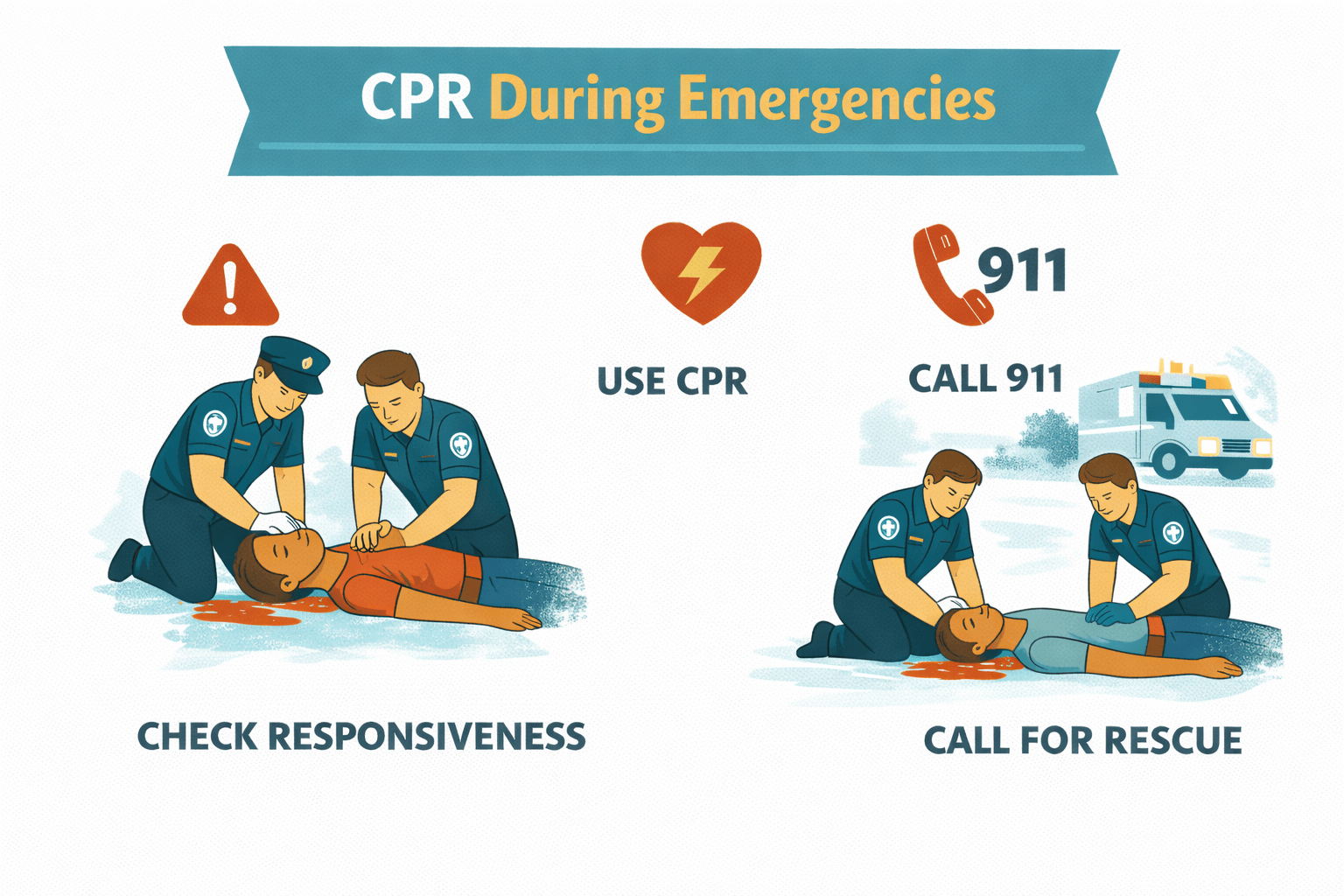
 Cardiopulmonary resuscitation (CPR) is a first aid technique used when a person becomes unresponsive and is not breathing normally. The goal of CPR is to help maintain circulation of oxygenated blood to the brain and vital organs until advanced medical care arrives.
Across Canada, including Vancouver and communities throughout British Columbia, CPR training is commonly included in workplace first aid programs and community safety education. These skills help individuals respond quickly during unexpected emergencies in offices, public buildings, and community facilities.
Emergency responders such as police officers, firefighters, and paramedics are also trained to begin CPR if someone becomes unresponsive during an incident.
Emergency Preparedness in Community Workplaces
Public buildings, community offices, and workplaces often have emergency response plans to help staff and visitors stay safe if an unexpected situation occurs.
First aid and CPR training programs in British Columbia emphasize:
-
Recognizing medical emergencies quickly
-
Activating emergency services
-
Beginning CPR if someone becomes unresponsive
-
Supporting the individual until paramedics arrive
Early intervention can help provide critical support during medical emergencies.
A Serious Incident in the Lillooet Area
A violent incident at the Bridge River Indian Band office near Lillooet, British Columbia, led to injuries and an emergency response from police and medical services.
According to reports, a man moved through the building attacking individuals with a weapon, leaving several people injured. Emergency services were called to the scene, and responding officers located the suspect restrained inside the building.
When police reached the suspect, they found that he was not breathing. Officers began performing CPR while waiting for paramedics to arrive.
Despite these efforts, the man could not be revived and was later identified by the coroner as 22-year-old David James.
In total, 11 people were reported injured during the incident.
The Independent Investigations Office of British Columbia reviewed the circumstances surrounding the event. Officials later stated that the death was not linked to the actions of police officers, and the watchdog agency concluded its involvement in the case.
Recognizing When CPR May Be Needed
CPR may be required when a person:
-
Is unresponsive
-
Is not breathing normally
-
Shows no signs of circulation
In emergency situations, trained individuals may begin CPR immediately while emergency services are contacted.
Recognizing these signs quickly is an important skill taught in first aid and CPR training courses.
Why Immediate CPR Can Matter
When breathing or circulation stops, oxygen supply to the brain and organs can quickly decrease. CPR helps support circulation during this critical period.
Emergency response training across Canada highlights that early CPR combined with professional medical care can improve survival outcomes in some emergencies.
Police officers, workplace first aid attendants, and trained members of the public may all provide initial assistance until paramedics arrive.
Prevention and Workplace Safety Awareness
While not all emergencies can be predicted, workplaces and community organizations often take steps to improve safety and preparedness.
Examples include:
-
Providing employees with CPR and first aid training
-
Establishing emergency response procedures
-
Ensuring clear communication during emergencies
-
Encouraging awareness of safety practices in public spaces
Preparedness and training can help people respond more effectively when unexpected incidents occur.
Frequently Asked Questions
What is cardiopulmonary resuscitation (CPR)?
CPR is a first aid technique used when a person becomes unresponsive and is not breathing normally. It helps maintain circulation of oxygenated blood until emergency medical care arrives.
Who can perform CPR during an emergency?
Anyone trained in CPR can assist during an emergency. Police officers, firefighters, workplace first aid attendants, and bystanders may all begin CPR if someone becomes unresponsive.
Why is CPR taught in workplace training programs?
Workplace CPR training helps employees recognize medical emergencies and provide early assistance while waiting for emergency responders.
Does CPR always revive someone?
CPR is designed to support circulation during an emergency. Outcomes can vary depending on the person’s condition and how quickly advanced medical care becomes available.
Where can people learn CPR in British Columbia?
CPR training is commonly available through workplace safety programs, community organizations, and certified first aid training providers across British Columbia.
Educational Note
This article is intended for general first aid awareness and workplace safety education. Learning CPR and first aid can help individuals better understand how to respond during emergencies while waiting for trained emergency medical services.
About The Author

Mark Kascha
First Aid Instructor Trainer with 30+ years of experience in CPR, emergency response, and safety training across Canada.
👉 [View full credentials]🔗 View LinkedIn Profile
Last reviewed: March 2026