Understanding Cold Water Exposure and Hypothermia
 Hypothermia occurs when the body loses heat faster than it can produce it, causing the body’s core temperature to drop. Cold water exposure can increase the risk of hypothermia because water removes body heat much faster than cold air.
Across Canada, including British Columbia and the Vancouver region, outdoor recreation such as boating, fishing, and waterfront activities are common. Even during spring and early summer, lakes and coastal waters can remain very cold. Knowing how to recognize hypothermia and provide basic first aid can help prevent serious complications.
First Aid and Workplace Relevance in Vancouver and British Columbia
Many workplaces in British Columbia—including marine industries, tourism, construction, and outdoor recreation—encourage first aid training and emergency preparedness. Individuals who work near water or participate in recreational boating often learn how to recognize signs of cold exposure and respond safely.
Community members and bystanders can also play an important role in helping someone who has fallen into cold water until professional medical assistance arrives.
Scenario: Teen Responds to Emergency at Dock
A 15-year-old teenager named Travis was planning to spend the Victoria Day weekend fishing with his father on Georgian Bay.
On a cold and windy Sunday afternoon at a marina near Port Severn and Hidden Glen Trailer Park, Travis walked down a dock near the water. As he approached the dock, he heard a man calling for help.
At first, he could not see where the voice was coming from. Looking closer, he noticed a man in the water holding onto the edge of the dock.
Travis immediately ran back to the nearby trailer and called for help. Several people quickly followed him back to the dock.
Working together, they pulled the man out of the cold water. Witnesses later reported that the man had fallen in while trying to secure his boat and was not wearing a life jacket.
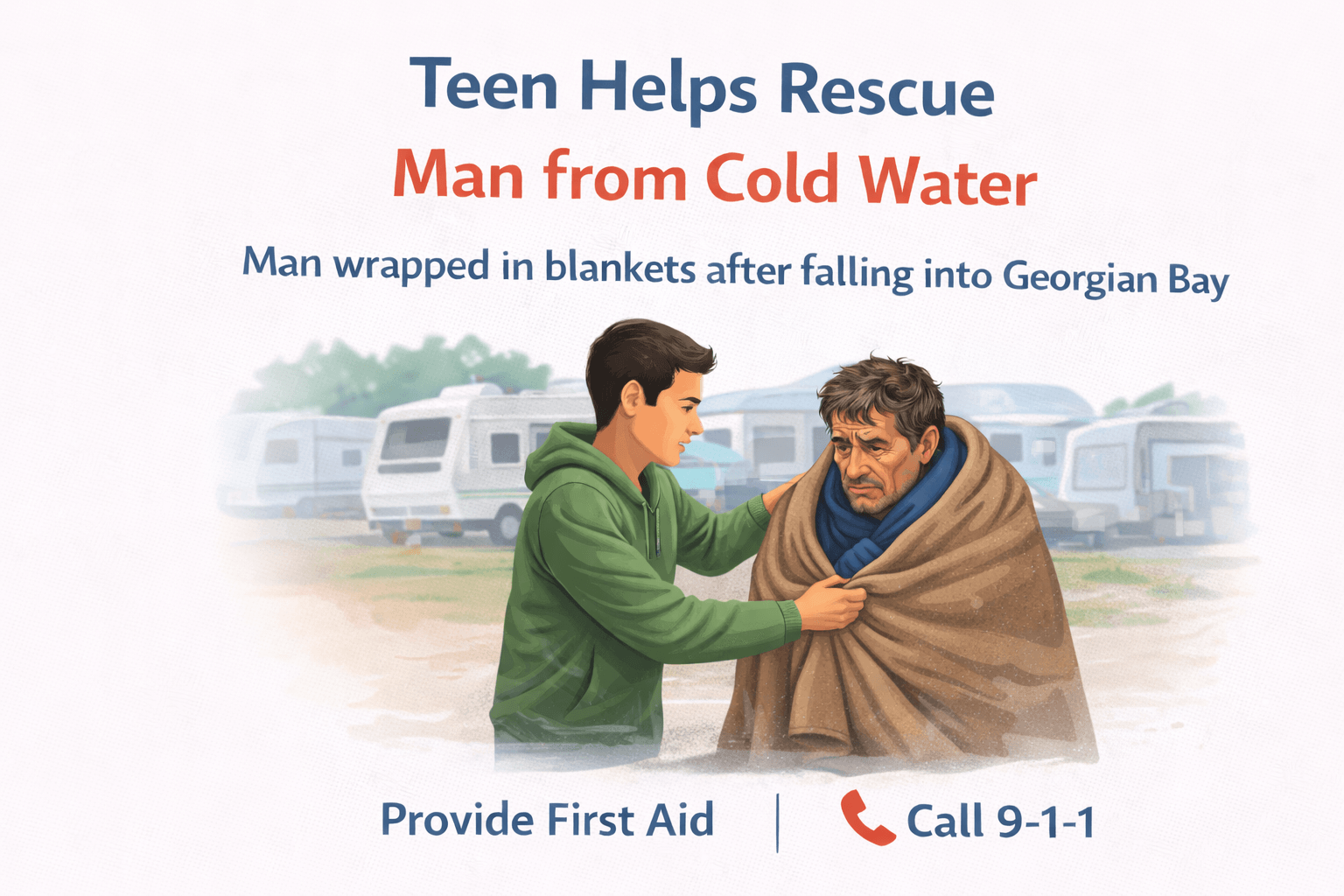
After being rescued, the man appeared weak and extremely cold. Bystanders wrapped him in blankets and helped him warm up while monitoring his condition.
Local trailer park manager Bob McInnes confirmed that people nearby quickly responded to help the man after Travis alerted them. Police later noted that emergency services had not been contacted at the time, although individuals exposed to cold water may benefit from medical evaluation.
The quick actions of Travis and the people nearby helped remove the man from the water before his condition worsened.
Signs of Hypothermia
People exposed to cold water or cold environments may develop hypothermia. Signs may include:
-
Shivering or intense cold sensation
-
Weakness or fatigue
-
Slurred speech or confusion
-
Pale or cold skin
-
Slow or shallow breathing
-
Difficulty moving or loss of coordination
These symptoms can worsen if the person remains in the cold.
How Cold Water Affects the Body
Cold water can lower body temperature rapidly. Several factors influence how quickly hypothermia develops, including:
-
Water temperature
-
Wind exposure
-
Length of time in the water
-
Clothing and protective gear
-
Physical condition of the individual
Even when ice has melted in lakes or bays, water temperatures may remain dangerously cold for extended periods.
First Aid and Emergency Response
When someone is pulled from cold water, early first aid can help reduce the risk of worsening hypothermia.
General first aid steps may include:
-
Moving the person to a warm, sheltered area
-
Removing wet clothing if possible
-
Wrapping the person in dry blankets or warm clothing
-
Monitoring breathing and responsiveness
-
Contacting emergency services if the person shows signs of severe hypothermia or medical distress
Emergency responders can provide further assessment and medical care if needed.
Prevention and Water Safety Tips
People participating in boating or waterfront activities can reduce risks by following several safety practices:
-
Wearing a properly fitted life jacket when near or on the water
-
Avoiding slippery or unstable docks during cold weather
-
Ensuring boats are secured safely before approaching the edge
-
Participating in swimming and water safety training
-
Learning basic first aid and hypothermia awareness
Prepared individuals and safe practices can help reduce risks during outdoor activities.
Frequently Asked Questions
Why is cold water dangerous even in spring or early summer?
Water temperatures can remain very cold long after ice melts. Cold water removes body heat quickly, increasing the risk of hypothermia.
What is hypothermia?
Hypothermia occurs when the body’s core temperature drops due to prolonged exposure to cold conditions or cold water.
Why should someone wear a life jacket near docks or boats?
Life jackets help keep a person afloat and reduce the risk of drowning if they fall into the water unexpectedly.
Should emergency services be contacted after someone is pulled from cold water?
Individuals exposed to cold water may benefit from medical evaluation, especially if they show signs of hypothermia or breathing problems.
How can first aid training help during water emergencies?
First aid training helps individuals recognize cold exposure symptoms and respond safely while waiting for professional medical help.
Educational Note
This article is intended for general education about hypothermia awareness and water safety. Learning first aid and emergency preparedness skills can help individuals respond more confidently during outdoor and recreational activities.
About The Author

Mark Kascha
First Aid Instructor Trainer with 30+ years of experience in CPR, emergency response, and safety training across Canada.
Last reviewed: March 2026
 Support local, Canadian-owned businesses, with no connections to American corporations or partnerships.