 Cardiopulmonary resuscitation (CPR) is a life-support technique used when someone becomes unresponsive and stops breathing normally. It helps maintain blood flow and oxygen delivery to the brain and other vital organs until emergency medical services arrive.
Across Canada, including Vancouver and throughout British Columbia, CPR training is widely encouraged in workplaces, schools, and community programs. Learning these basic emergency response skills helps people respond calmly when a medical emergency occurs at home, at work, or in public spaces.
First Aid and Workplace Safety Relevance in Canada
While many people associate CPR with healthcare professionals, bystanders often play a critical role in the first moments of an emergency. Dispatchers from emergency call centres may guide callers through CPR steps over the phone until trained responders arrive.
In Canadian workplaces and community programs, CPR training is commonly included in occupational first aid certification, helping employees recognize medical emergencies and provide support when someone becomes unresponsive.
Preparedness and awareness are especially important in environments where children, visitors, or members of the public may be present.
A Realistic Scenario Involving a Family Emergency
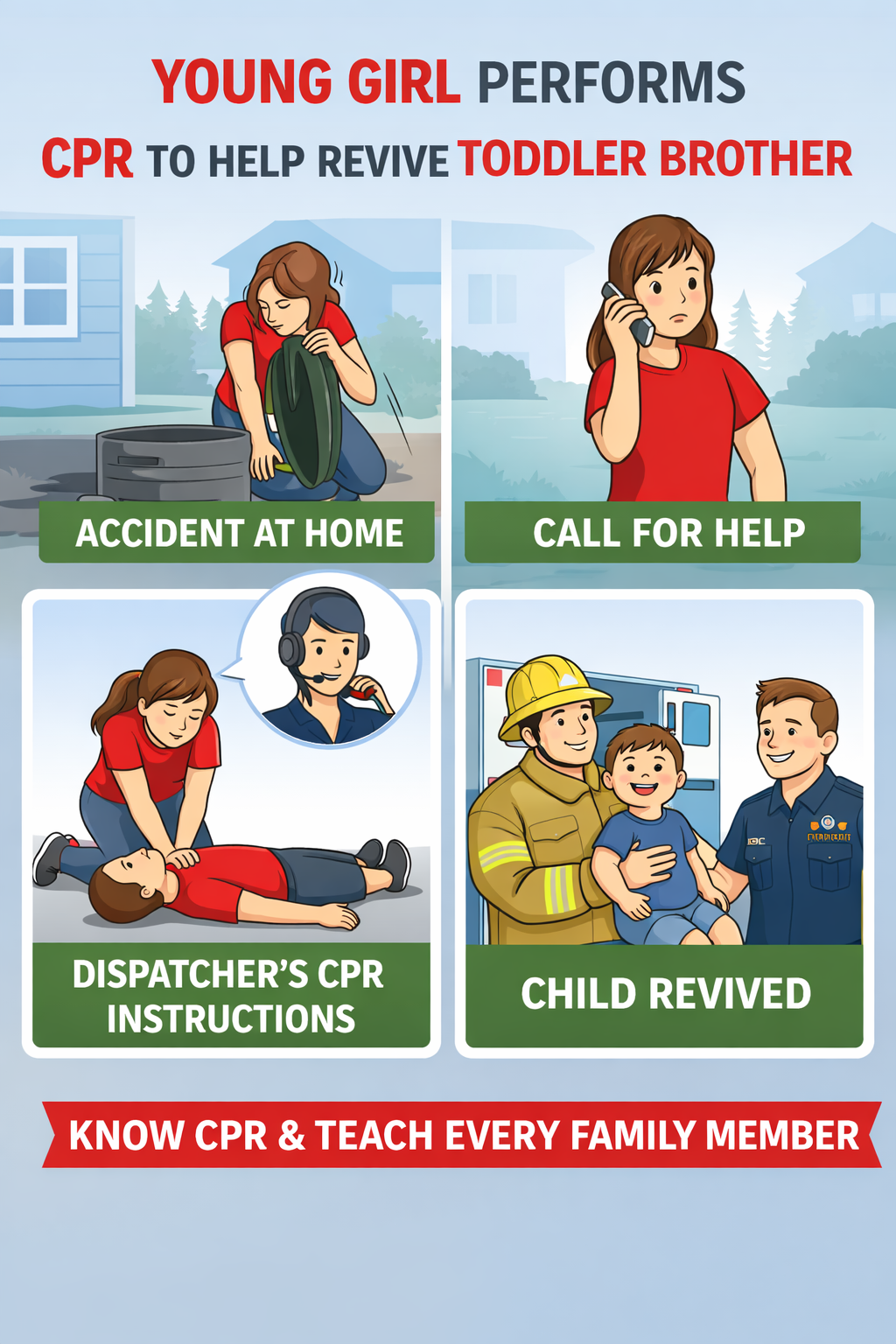
In a reported incident in Washington State, a young girl helped save her toddler brother during a frightening accident at their family home.
The two-year-old boy was found unresponsive inside the family’s septic tank. According to reports, the children’s mother was able to remove the boy from the tank but became temporarily stuck during the rescue.
Recognizing the urgency of the situation, the 12-year-old girl called emergency services for help. While speaking with dispatchers, she received instructions on how to perform CPR on her younger brother.
Following the guidance provided over the phone, the girl began providing assistance while waiting for emergency responders to arrive. By the time firefighters and paramedics reached the home, the boy had regained consciousness.
Emergency personnel transported the child to a hospital in Tacoma for further evaluation and care. Authorities later noted that it was unclear how the child entered the septic tank or how long he had been inside.
Officials also emphasized the importance of securing septic tank access points to prevent similar incidents.
Although the event occurred outside Canada, it highlights a universal message: early action, calm communication, and CPR awareness can make an important difference in emergencies.
Signs That Someone May Need CPR
A person may require CPR if they show signs of severe medical distress and are not breathing normally.
Possible warning signs include:
-
Unresponsiveness
-
No normal breathing
-
Gasping or irregular breathing
-
Pale or bluish skin colour
-
Loss of consciousness
When these signs are present, contacting emergency services and beginning CPR may help support circulation until professional help arrives.
Causes of Unresponsiveness in Water or Confined Spaces
In incidents involving water, tanks, or enclosed spaces, several factors may contribute to loss of consciousness.
Possible causes can include:
-
Lack of oxygen
-
Inhalation of harmful gases
-
Drowning or water inhalation
-
Head injury from a fall
-
Exposure to unsafe environmental conditions
Because these situations can involve multiple hazards, emergency responders are trained to assess and manage the environment before providing care.
First Aid Response and Immediate Management
When someone is found unresponsive, quick action can help improve the chances of recovery.
General first aid response steps may include:
-
Call emergency services immediately.
-
Check for responsiveness and breathing.
-
Begin CPR if the person is unresponsive and not breathing normally.
-
Follow instructions provided by emergency dispatchers if available.
-
Continue CPR until trained responders arrive or the person shows signs of recovery.
Emergency dispatchers often provide step-by-step instructions to callers, helping guide them through the process in real time.
Prevention and Home Safety Considerations
Many household accidents can be prevented through safety awareness and routine inspections.
Home safety practices may include:
-
Ensuring septic tank lids and access points are securely covered
-
Keeping hazardous areas locked or restricted from children
-
Supervising young children near potential hazards
-
Teaching older children how to call emergency services
-
Learning basic first aid and CPR skills for household emergencies
Preparedness and simple safety measures can help reduce risks in residential environments.
Frequently Asked Questions
Can children learn CPR?
Some youth programs and schools introduce basic CPR awareness for older children and teenagers. With appropriate instruction and supervision, young people can learn how to recognize emergencies and call for help.
What is dispatcher-assisted CPR?
Dispatcher-assisted CPR occurs when emergency call operators guide callers through CPR steps over the phone. This support can help bystanders begin life-saving actions before emergency responders arrive.
Why is early CPR important?
Early CPR helps circulate oxygen-rich blood to the brain and vital organs during cardiac arrest or severe breathing emergencies. This support may improve survival chances until advanced care is available.
Why are septic tanks considered a safety risk?
Septic tanks may contain hazardous gases and confined spaces that can pose serious risks if accessed improperly. Secure covers and restricted access help prevent accidental entry.
How can families prepare for emergencies at home?
Families can improve readiness by learning CPR, teaching children how to call emergency services, and ensuring potential hazards around the home are secured.
Educational Note
This article is intended for general first aid awareness and public education. Learning CPR and emergency response skills can help individuals act quickly and confidently while waiting for professional medical assistance.
About The Author

Mark Kascha
First Aid Instructor Trainer with 30+ years of experience in CPR, emergency response, and safety training across Canada.
Last reviewed: March 2026
 Support local, Canadian-owned businesses, with no connections to American corporations or partnerships.