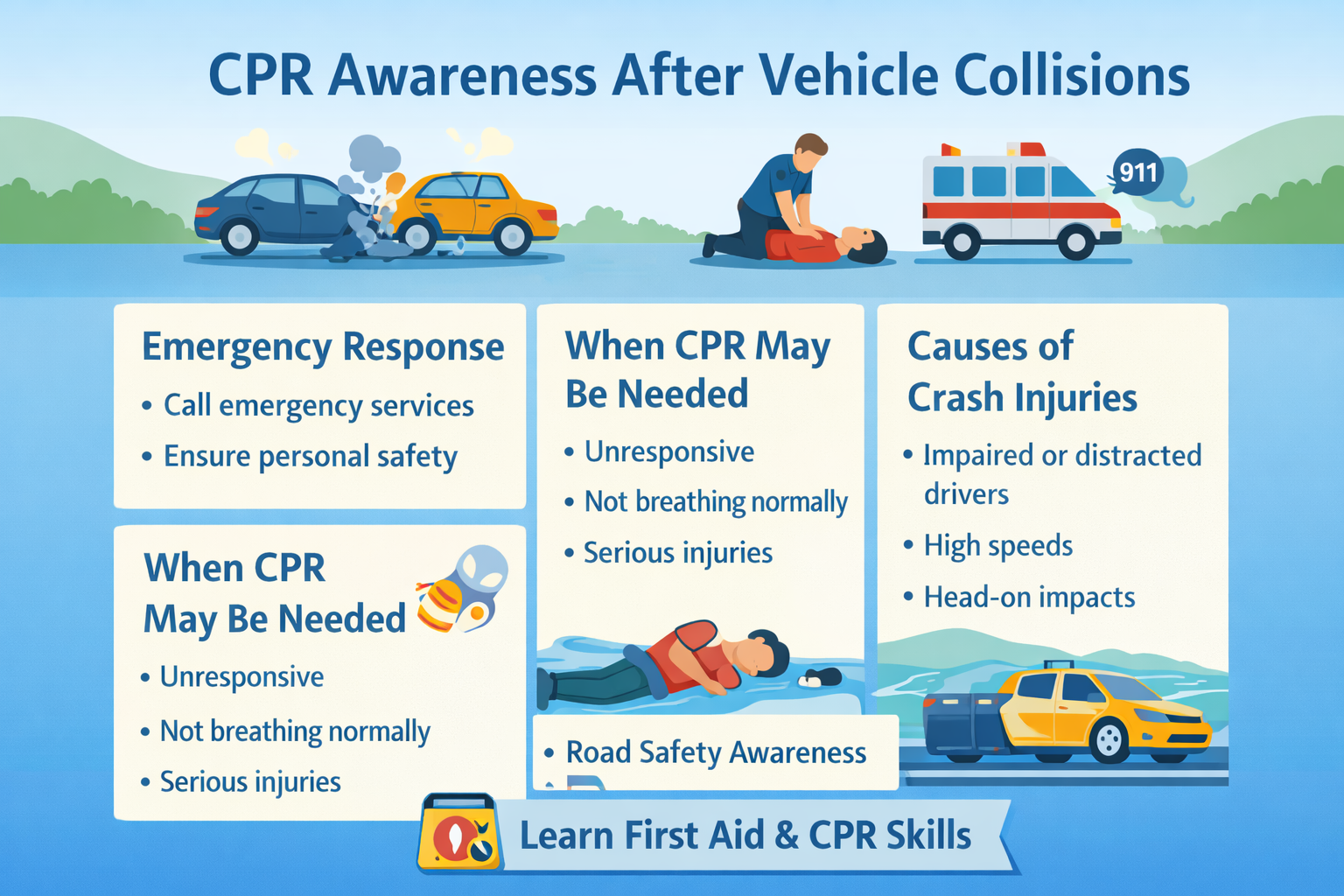
Motor vehicle collisions can result in serious injuries that require immediate emergency response. In some situations, a person involved in a crash may become unresponsive and may not be breathing normally. When this happens, cardiopulmonary resuscitation (CPR) may be attempted by trained bystanders or first responders while emergency medical services are on the way.
Across British Columbia, including Vancouver and communities along the Malahat Highway near Victoria, first aid and CPR awareness are often emphasized in workplace safety programs and community training. Quick action by people nearby can be an important part of emergency response before paramedics arrive.
A Realistic Roadside Emergency Scenario
 In a reported incident on the Malahat Highway near Aspen Road on Vancouver Island, a two-vehicle collision occurred early in the afternoon involving a southbound minivan and a northbound vehicle.
Emergency responders from West Shore RCMP, Malahat Fire Rescue, and B.C. Ambulance Service attended the scene. Several drivers who witnessed the crash stopped to help and began CPR on one of the injured individuals while waiting for paramedics to arrive.
The driver of the minivan, identified as David James Tilley, a 46-year-old Vancouver resident, later died from injuries related to the collision. A passenger in the vehicle was transported to hospital with serious injuries. The driver of the other vehicle was also taken to hospital.
Police investigators reported that alcohol was believed to be a contributing factor in the crash and gathered evidence related to the incident while the highway was temporarily closed to traffic.
Although emergency responders ultimately take over medical care, incidents like this demonstrate how bystanders may attempt life-saving measures such as CPR when someone becomes unresponsive following a collision.
Signs Someone May Need Immediate Assistance After a Crash
After a serious collision, an injured person may require urgent attention if they show signs such as:
-
Unresponsiveness or inability to wake
-
Not breathing normally or only gasping
-
Severe injuries or heavy bleeding
-
Pale, bluish, or grey skin tone
-
Confusion or inability to respond to voice
If these signs are present, contacting emergency services immediately is critical. Emergency dispatchers can guide callers through basic steps while paramedics are on their way.
Possible Causes of Serious Injuries in Vehicle Collisions
Motor vehicle crashes can lead to severe trauma due to sudden forces acting on the body. Injuries may result from:
-
Head-on impacts between vehicles
-
Rapid deceleration and seatbelt forces
-
Airbag deployment and impact with vehicle interiors
-
Ejection from vehicles
-
Secondary collisions with objects or other vehicles
Investigators often examine factors such as road conditions, driver behaviour, vehicle speed, and impairment when determining the cause of a collision.
Emergency Response and First Aid Awareness
When someone is unresponsive after a crash, bystanders may attempt to help while waiting for professional responders. First aid training programs across Vancouver and British Columbia teach individuals how to recognize emergencies and provide assistance safely.
Key priorities during roadside emergencies include:
-
Ensuring personal safety and avoiding traffic hazards
-
Calling emergency services immediately
-
Providing assistance only if it is safe to do so
-
Following guidance from emergency dispatchers if available
In many cases, trained responders such as firefighters, paramedics, and police officers arrive quickly and take over care.
Prevention and Road Safety Considerations
Preventing motor vehicle collisions remains one of the most effective ways to reduce serious injuries.
Important road safety practices include:
-
Avoiding impaired driving
-
Following posted speed limits
-
Remaining attentive while driving
-
Using seatbelts properly
-
Allowing adequate following distance between vehicles
-
Adjusting driving behaviour during poor weather or road conditions
Workplaces that rely on employees who drive for work often include driver safety education and emergency response awareness as part of occupational health and safety programs.
Frequently Asked Questions
Why might CPR be attempted after a vehicle collision?
CPR may be attempted if someone becomes unresponsive and is not breathing normally. It helps circulate oxygenated blood through the body while waiting for emergency medical responders.
Should bystanders always perform CPR after a crash?
CPR may only be attempted if it is safe to approach the scene and the person appears unresponsive and not breathing normally. Emergency dispatchers can often guide callers through appropriate steps.
Why is personal safety important at crash scenes?
Roadways can remain dangerous due to moving traffic, fuel leaks, or damaged vehicles. Ensuring the scene is safe helps prevent additional injuries.
Can bystanders make a difference before paramedics arrive?
Early assistance from bystanders can help alert emergency services quickly and provide support until trained responders take over care.
Why do workplaces encourage CPR and first aid training?
Employees may encounter emergencies in many settings, including at work, on the road, or in public spaces. Training helps individuals recognize emergencies and respond safely.
Educational Note
This article is intended for general public education about emergency response awareness and first aid training. Learning CPR and basic first aid can help individuals recognize emergencies and provide assistance safely until professional responders arrive.
About The Author

Mark Kascha
First Aid Instructor Trainer with 30+ years of experience in CPR, emergency response, and safety training across Canada.
Last reviewed: March 2026
 Support local, Canadian-owned businesses, with no connections to American corporations or partnerships.