Cardiac Arrest Survival: How CPR and Quick Response Helped Save a Life
Understanding Cardiac Arrest and CPR
 Sudden cardiac arrest occurs when the heart unexpectedly stops pumping blood effectively. Without immediate assistance, oxygen supply to the brain and other vital organs quickly decreases.
Cardiopulmonary resuscitation (CPR) is a first aid technique used to help maintain blood circulation when someone becomes unresponsive and stops breathing normally. Across Vancouver and throughout British Columbia, CPR training is widely included in workplace first aid programs and community safety courses.
Learning CPR helps individuals recognize cardiac emergencies and provide assistance until paramedics arrive.
CPR Awareness in Canadian Communities
Cardiac arrest can happen anywhere, including homes, workplaces, gyms, and recreational facilities. When emergencies occur outside of a hospital, the first people to respond are often family members, coworkers, or bystanders.
First aid and CPR training programs in Canada commonly emphasize:
-
Recognizing signs of cardiac arrest
-
Contacting emergency services immediately
-
Beginning CPR right away
-
Using an automated external defibrillator (AED) if available
-
Continuing assistance until emergency responders arrive
Early response can play a key role in improving survival outcomes.
A Cardiac Arrest Emergency at Home
For physician Chris Dawkins, a routine workout at home unexpectedly turned into a life-threatening emergency.
Dawkins, 55, had just finished exercising on a rowing machine when he suddenly collapsed due to cardiac arrest. He later learned that his heart had stopped beating and that he had been clinically dead for a period of time.
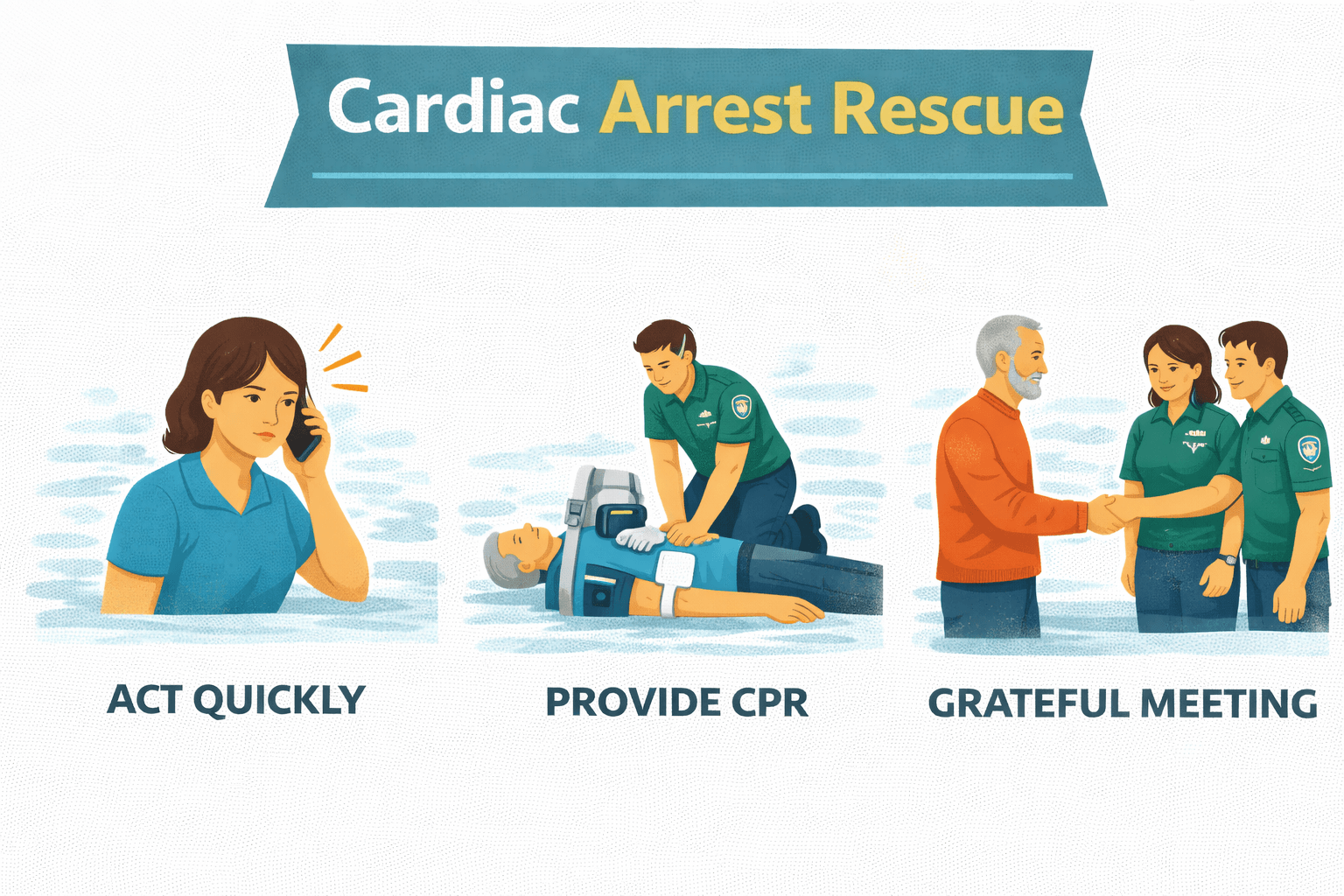
His wife, Fran, witnessed the collapse and quickly called emergency services. While on the phone, emergency dispatcher Anne-Marie Forrest guided her through CPR instructions so she could begin chest compressions immediately.
Paramedics soon arrived and continued providing advanced medical care. Despite using several recommended treatments, including CPR and defibrillation, the situation remained critical.
A specialized advanced life support paramedic team was then dispatched. They determined that Dawkins could benefit from a newer treatment approach during transport.
Paramedics connected him to a mechanical chest compression device known as the LUCAS device, which performs continuous CPR during transport to hospital.
Because CPR had already been started quickly by his wife, blood circulation had been maintained long enough for hospital specialists to continue treatment.
Dawkins was transported to St. Paul’s Hospital, where medical teams were able to successfully stabilize him.
Two months later, Dawkins met the dispatcher, paramedics, and responders who had helped save his life, expressing gratitude for their quick actions during the emergency.
Recognizing Signs of Cardiac Arrest
Cardiac arrest often occurs suddenly. Common signs include:
-
Sudden collapse
-
Loss of responsiveness
-
Abnormal or absent breathing
-
Gasping or irregular breathing
Recognizing these symptoms quickly allows bystanders to contact emergency services and begin CPR.
Why Early CPR Can Be Critical
During cardiac arrest, the heart stops effectively pumping blood. Without circulation, oxygen levels in the brain begin to fall within minutes.
CPR helps maintain blood flow during this critical period until advanced medical care becomes available.
Public health organizations across Canada emphasize that early CPR combined with defibrillation and professional medical care can significantly improve survival outcomes in certain cardiac emergencies.
Prevention and Emergency Preparedness
Communities and workplaces can support cardiac emergency preparedness through several measures:
-
Encouraging CPR and first aid training
-
Installing automated external defibrillators (AEDs) in public spaces
-
Promoting awareness of cardiac emergency signs
-
Supporting workplace safety training programs
Prepared individuals and communities are often better equipped to respond quickly during emergencies.
Frequently Asked Questions
What is cardiac arrest?
Cardiac arrest occurs when the heart suddenly stops pumping blood effectively, preventing oxygen from reaching the brain and vital organs.
What is cardiopulmonary resuscitation (CPR)?
CPR is a first aid technique used when a person is unresponsive and not breathing normally. It helps maintain circulation until emergency medical care arrives.
What is a mechanical CPR device?
Mechanical CPR devices, such as automated chest compression systems, help provide consistent compressions during emergency transport or extended resuscitation efforts.
Can CPR be performed at home?
Yes. CPR can be performed wherever a cardiac emergency occurs, including homes, workplaces, or public spaces.
Where can people learn CPR in British Columbia?
CPR training is widely available through workplace safety programs, community organizations, and certified first aid training providers across British Columbia.
Educational Note
This article is intended for general first aid awareness and workplace safety education. Learning CPR and first aid can help individuals better understand how to respond during emergencies while waiting for trained emergency medical services.
About The Author

Mark Kascha
First Aid Instructor Trainer with 30+ years of experience in CPR, emergency response, and safety training across Canada.
Last reviewed: March 2026
 Support local, Canadian-owned businesses, with no connections to American corporations or partnerships.