 Serious injuries can occur suddenly during incidents involving violence, accidents, or other unexpected events. In these situations, emergency medical services and trained responders work quickly to stabilize individuals and provide life-support measures.
One of the most important early interventions in life-threatening emergencies is cardiopulmonary resuscitation (CPR). CPR may be used when a person becomes unresponsive and is not breathing normally, helping maintain circulation and oxygen flow to vital organs until advanced medical care is available.
Across Canada—including communities throughout British Columbia and the Vancouver region—first aid and CPR training are widely promoted in workplaces and public safety programs to help people respond effectively in emergencies.
First Aid and Workplace Safety Relevance in British Columbia
Workplace safety programs in British Columbia frequently include occupational first aid training, which teaches employees how to respond to serious medical incidents before paramedics arrive.
Police officers, firefighters, security staff, and many workplace first aid attendants are trained to provide CPR and basic life-support measures. In critical incidents, these skills help support individuals experiencing medical distress while professional medical teams take over care.
Emergency preparedness and first aid training are essential components of community safety planning.
A Realistic Scenario from Abbotsford
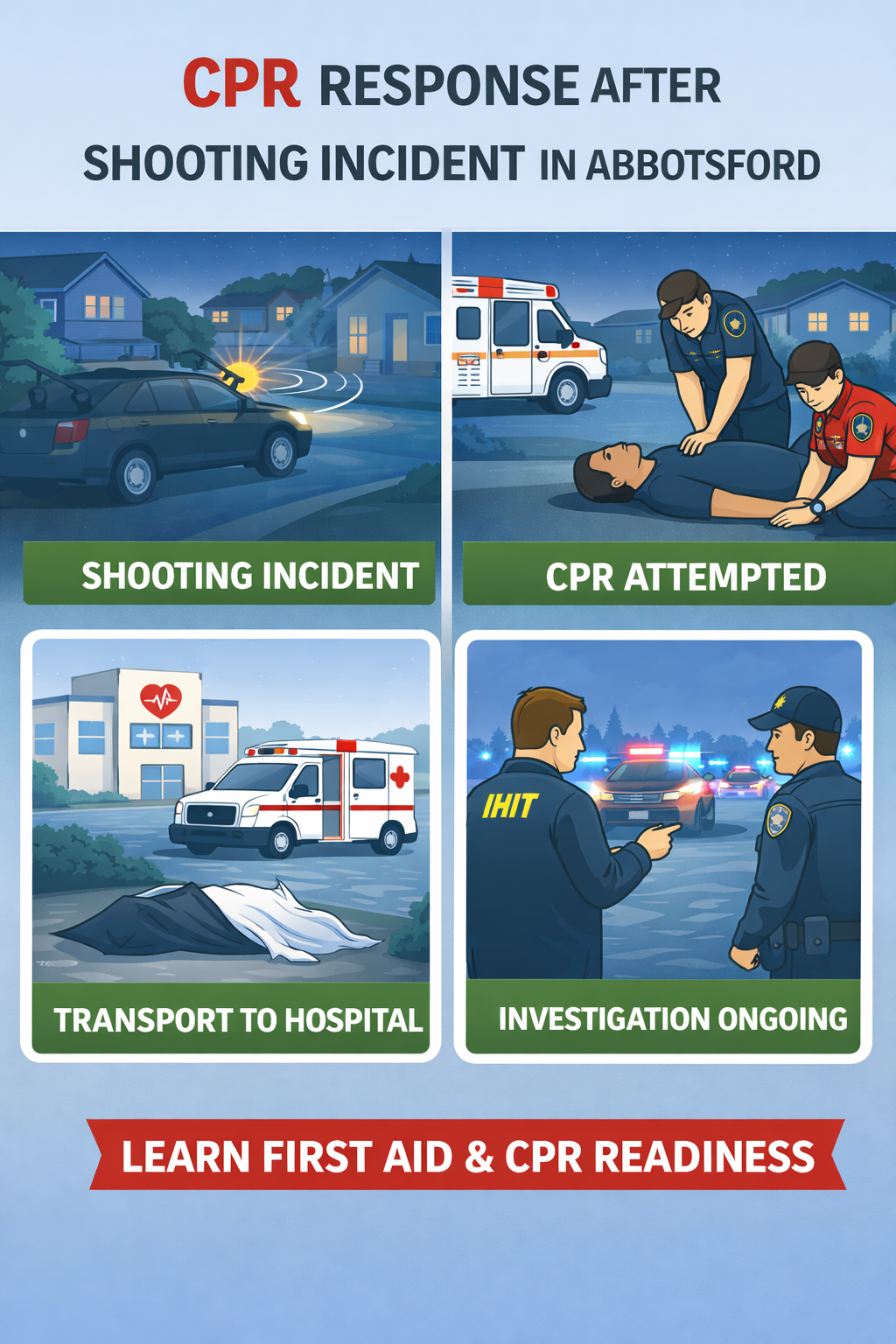
A serious incident occurred in Abbotsford during the evening hours on Crown Court, a residential cul-de-sac located north of Charlotte Avenue and west of Clearbrook Road.
Witnesses in the area reported hearing several loud sounds followed by vehicles leaving the scene quickly. Emergency services were contacted and first responders arrived shortly afterward.
Paramedics began providing emergency care to a man who had sustained severe injuries. CPR was administered at the scene in an attempt to restore breathing and circulation.
The individual was transported to a healthcare facility for further treatment. Later that evening, authorities confirmed that the victim had died from his injuries.
The investigation was taken over by the Integrated Homicide Investigation Team (IHIT), which works with local police agencies across British Columbia when serious violent incidents occur. Officials continued gathering information to determine the circumstances surrounding the event.
Although this case involved criminal activity, it also illustrates the role of emergency responders and the use of life-support measures such as CPR in critical medical situations.
Signs That Someone May Require Immediate Emergency Assistance
During serious injuries or medical distress, bystanders may notice several warning signs that indicate the need for urgent medical attention.
Possible signs include:
-
Unresponsiveness
-
No normal breathing
-
Severe bleeding or visible injury
-
Loss of consciousness
-
Weak or absent pulse
-
Pale or bluish skin colour
When these signs appear, contacting emergency services immediately is essential.
Causes of Sudden Medical Collapse
A person may become unresponsive during traumatic incidents for several reasons. These can include:
-
Severe physical injury
-
Significant blood loss
-
Cardiac arrest triggered by trauma
-
Breathing failure
-
Shock or other life-threatening medical complications
Emergency responders assess these situations quickly and provide supportive care while transporting the individual to a healthcare facility.
First Aid Response and Immediate Management
When a person is seriously injured and becomes unresponsive, early assistance can help support vital functions while waiting for emergency services.
General first aid actions may include:
-
Call emergency services immediately.
-
Ensure the scene is safe before approaching.
-
Check responsiveness and breathing.
-
Begin CPR if the person is unresponsive and not breathing normally.
-
Follow instructions provided by emergency dispatchers.
-
Continue care until professional responders arrive.
These actions help maintain circulation and oxygen delivery during critical moments.
Prevention and Community Safety Considerations
While not all emergencies can be prevented, communities and workplaces can improve preparedness through education and safety awareness.
Helpful measures may include:
-
Encouraging first aid and CPR training in workplaces and community groups
-
Supporting public access to emergency medical services
-
Promoting community safety programs
-
Developing clear emergency response procedures in workplaces
Prepared individuals and trained responders can make a significant difference when emergencies occur.
Frequently Asked Questions
Why do paramedics perform CPR during severe emergencies?
CPR helps maintain blood flow and oxygen delivery to vital organs when a person is not breathing normally or has no detectable pulse. It is often used until advanced medical care becomes available.
Who is trained to perform CPR in Canada?
Many professionals receive CPR training, including paramedics, police officers, firefighters, workplace first aid attendants, and lifeguards. Members of the public can also learn CPR through community training programs.
What happens when emergency services arrive at a critical incident?
Emergency responders assess the situation, provide immediate medical care, stabilize the individual, and transport them to a healthcare facility if necessary.
Can bystanders help during serious emergencies?
Yes. Bystanders may assist by calling emergency services, following dispatcher instructions, and providing first aid or CPR if they are trained and it is safe to do so.
Why is first aid training encouraged in workplaces?
First aid training prepares employees to recognize emergencies and provide early assistance until professional medical responders arrive.
Educational Note
This article is intended for general first aid awareness and public education. Learning CPR and basic emergency response skills can help individuals respond more confidently during unexpected emergencies while waiting for professional medical assistance.
About The Author

Mark Kascha
First Aid Instructor Trainer with 30+ years of experience in CPR, emergency response, and safety training across Canada.
Last reviewed: March 2026
 Support local, Canadian-owned businesses, with no connections to American corporations or partnerships.