
Traumatic injuries such as gunshot wounds can cause significant bleeding and tissue damage. In these situations, rapid medical attention is essential. While emergency responders provide advanced treatment, basic first aid awareness can help bystanders support an injured person until paramedics arrive.
Across Canada, including Vancouver and British Columbia, workplaces and public safety programs often promote first aid training so individuals know how to respond to injuries involving bleeding, trauma, or sudden medical emergencies.
Understanding how to recognize serious injuries and contact emergency services quickly can help improve outcomes during unexpected incidents.
A Real-World Scenario
 An emergency response was triggered after a shooting incident occurred in Calgary, Alberta, in the northeast area of the city.
Emergency crews were called to the 100 block of Falton Close N.E. shortly after 7:30 p.m. When responders arrived, they located a man in his 30s with a gunshot wound to his leg.
According to Calgary police, paramedics provided medical care at the scene and then transported the man to Foothills Medical Centre. Authorities reported that his injuries were considered serious but not life-threatening.
Police officers secured the area while members of the Calgary Police Tactical Unit assisted in searching for a suspect connected to the incident. At the time of the report, the investigation was ongoing.
Situations like this highlight how quickly emergency services must respond to traumatic injuries and how early assistance from bystanders may help support an injured person until professional medical care is available.
Recognizing Serious Bleeding Injuries
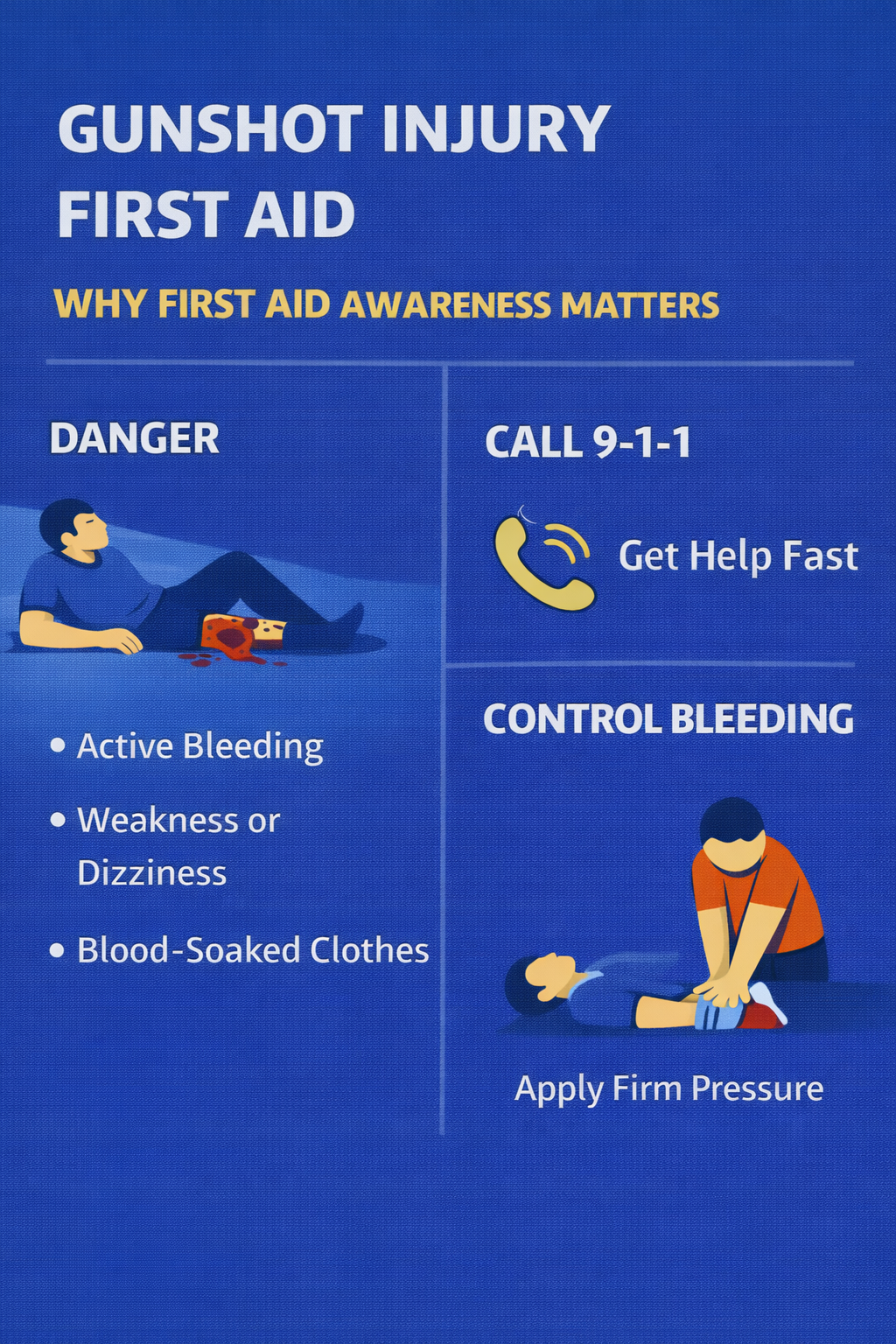
Gunshot wounds and other traumatic injuries may cause significant bleeding that requires urgent medical attention.
Possible warning signs include:
-
Visible wounds with active bleeding
-
Blood soaking clothing or pooling on the ground
-
Weakness, dizziness, or confusion
-
Pale or clammy skin
-
Difficulty standing or remaining alert
Even injuries that appear localized, such as wounds to the leg, can involve substantial blood loss.
Causes of Traumatic Bleeding Injuries
Severe bleeding injuries may occur in a variety of situations, including:
-
Violence or criminal incidents
-
Workplace accidents
-
Vehicle collisions
-
Falls involving sharp objects
-
Injuries involving tools or machinery
In many cases, bystanders are the first people to notice that someone is injured.
First Aid Awareness for Severe Bleeding
First aid training teaches general steps that may help support a person who is bleeding while waiting for emergency responders.
Typical response steps include:
-
Call emergency services (9-1-1 in Canada).
-
Ensure the scene is safe before approaching the injured person.
-
If possible, apply firm pressure to the bleeding area using clean cloth or bandaging material.
-
Encourage the injured person to remain still and calm while waiting for help.
-
Continue applying pressure until paramedics arrive.
These basic first aid actions may help reduce blood loss until trained medical personnel take over.
Prevention and Public Safety Awareness
While some emergencies cannot be prevented, general safety awareness can help reduce the risk of injuries in communities and workplaces.
Safety considerations include:
-
Awareness of surroundings in public spaces
-
Well-lit parking areas and neighbourhoods
-
Workplace safety procedures and training
-
Reporting suspicious or unsafe activity
-
Learning first aid and CPR skills
Across Vancouver and British Columbia, many employers encourage workers to complete first aid training so they can respond to injuries that occur at work or in public areas.
FAQ
Why is controlling bleeding important during first aid?
Severe bleeding can lead to significant blood loss. Applying pressure to a wound may help slow bleeding until emergency responders arrive.
What should someone do if they find an injured person with a serious wound?
Emergency services should be contacted immediately. If the area is safe, basic first aid such as applying pressure to bleeding wounds may help support the injured person.
Are gunshot wounds always life-threatening?
Some injuries may be less severe depending on the location and extent of the damage, but all gunshot wounds require immediate medical evaluation.
Why do workplaces encourage first aid training?
Training helps employees recognize injuries and understand how to respond safely during emergencies until professional responders arrive.
Can bystanders help during traumatic injury situations?
Yes. Calling emergency services quickly and providing basic first aid may help support an injured person while waiting for paramedics.
Educational Note
This article is intended for general first aid awareness and public safety education. Learning first aid and CPR through certified training programs can help individuals recognize injuries and respond safely until professional emergency services arrive.
About The Author

Mark Kascha
First Aid Instructor Trainer with 30+ years of experience in CPR, emergency response, and safety training across Canada.
👉 [View full credentials]🔗 View LinkedIn Profile
Last reviewed: March 2026