
Understanding Water-Related Cardiac Emergencies
Water-related incidents, including near-drowning, can quickly lead to cardiac arrest if a person is deprived of oxygen. When someone is pulled from the water unresponsive and not breathing normally, immediate CPR is critical to support oxygen circulation and improve survival chances.
These emergencies can develop within minutes, making early action essential.
First Aid & Workplace Relevance in Vancouver and the Lower Mainland
Across Vancouver, Burnaby, Surrey, and the Lower Mainland, public pools, lakes, and waterfront areas are common recreational spaces. Incidents like this highlight the importance of:
-
Lifeguard presence and supervision
-
CPR and first aid training for staff and the public
-
Awareness of water safety risks in community and workplace environments
Many workplaces and community centres include water safety planning as part of their emergency preparedness.
Real Incident Overview
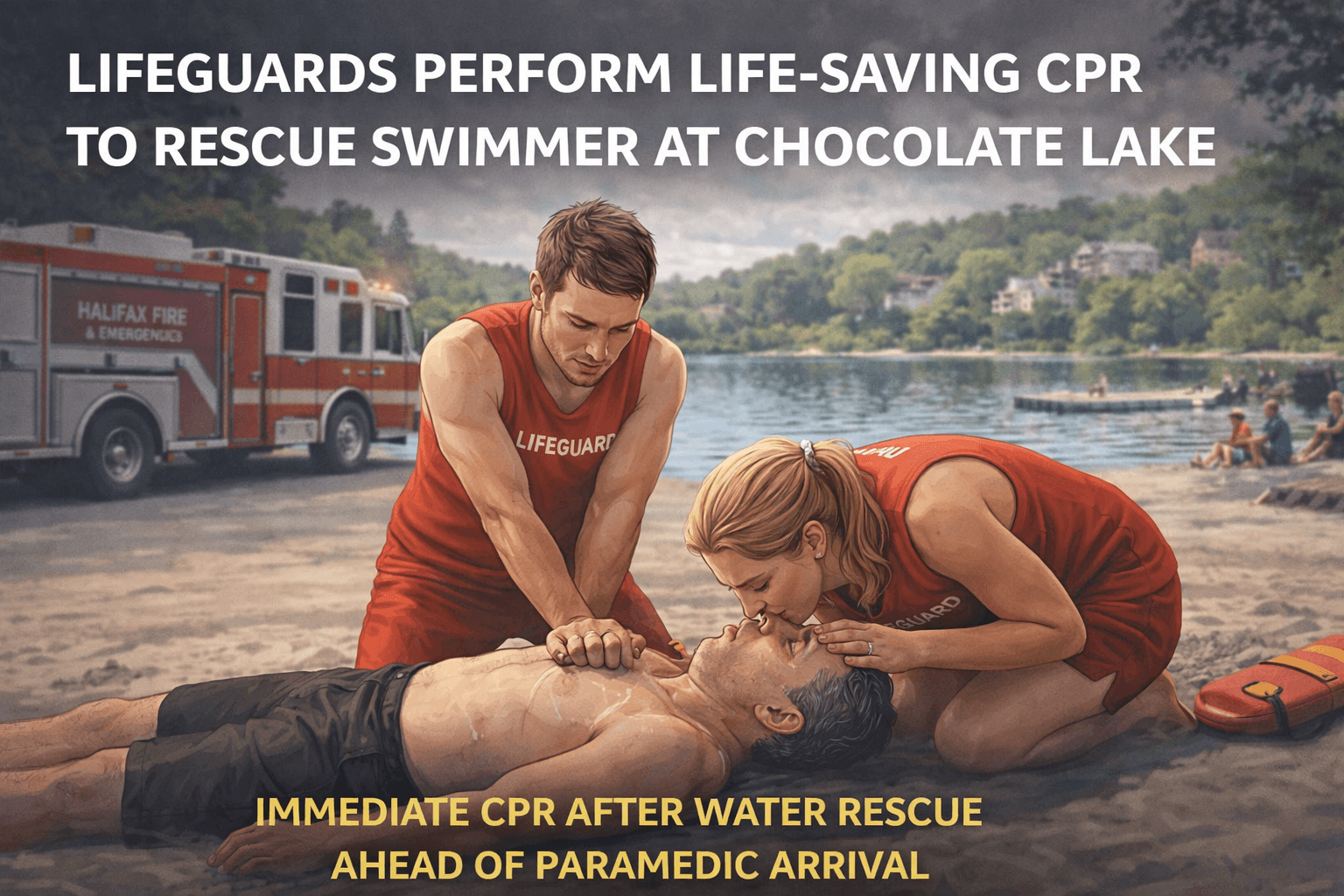 A serious water emergency occurred at Chocolate Lake in Halifax when a man swimming and diving in the lake did not resurface.
The incident took place shortly after lifeguards had gone off duty for the day.
When the situation was noticed, lifeguards who were no longer officially on shift responded quickly. They entered the water, retrieved the man, and brought him to shore.
Once on land, they immediately began CPR while waiting for emergency medical services to arrive.
Halifax firefighters responded to assist emergency health services at approximately 5 PM, as the situation involved cardiac arrest following the water incident.
The man was transported to a hospital in severe condition.
The Role of Immediate CPR
In water-related emergencies:
-
Oxygen deprivation can occur quickly
-
Cardiac arrest may follow if breathing does not resume
-
Early CPR helps circulate oxygen to vital organs
In this case, bystander CPR provided critical support before paramedics arrived.
Signs of a Water Emergency
A person in distress in the water or after rescue may:
-
Fail to resurface
-
Be unresponsive
-
Not breathe normally
-
Appear limp or unconscious
Recognizing these signs quickly allows for faster rescue and response.
First Aid Response: After Removing Someone from Water
If someone is pulled from the water and is unresponsive:
-
Call 911 immediately
-
Check breathing and responsiveness
-
Begin CPR if needed
-
Continue until emergency services arrive
Prompt and continuous care is important in these situations.
Prevention and Water Safety Considerations
This incident highlights key safety reminders:
-
Swim only in supervised areas when lifeguards are on duty
-
Stay within personal swimming ability
-
Avoid risky diving behaviours
-
Ensure supervision in recreational water settings
-
Learn CPR and basic rescue awareness
Preparedness and caution can help reduce risks.
Frequently Asked Questions
Why is CPR important after a water incident?
It helps restore oxygen circulation when breathing has stopped.
Should you swim when no lifeguard is present?
Swimming without supervision increases risk, especially in unfamiliar areas.
What should you do if someone does not resurface?
Call for help immediately and begin search and rescue if safe to do so.
Can bystanders perform CPR effectively?
Yes. Training improves confidence and response.
Is water safety training important for workplaces?
Yes, especially for roles involving public or recreational environments.
Educational Note
This article is intended for general first aid awareness and workplace safety education in Canada. CPR and water safety training help individuals respond effectively during emergencies.
About The Author

Mark Kascha
First Aid Instructor Trainer with 30+ years of experience in CPR, emergency response, and safety training across Canada.
👉 [View full credentials]🔗 View LinkedIn Profile
Last reviewed: March 2026