
CPR in Public Places: How a Bystander Helped Save a Life in a Grocery Store
Understanding Sudden Medical Emergencies in Public Spaces
Medical emergencies can occur anywhere, including everyday locations such as grocery stores, workplaces, or community centres. When a person collapses or stops breathing, immediate assistance from bystanders can be critical while emergency services are on the way.
One of the most important emergency responses in these situations is cardiopulmonary resuscitation (CPR). CPR helps circulate oxygenated blood to the brain and vital organs when the heart stops beating effectively or when breathing stops.
Across Canada, including Vancouver and British Columbia, CPR awareness and first aid training are commonly encouraged in workplaces and public education programs. These skills help individuals recognize emergencies and respond safely until professional medical responders arrive.
A Real-World Scenario
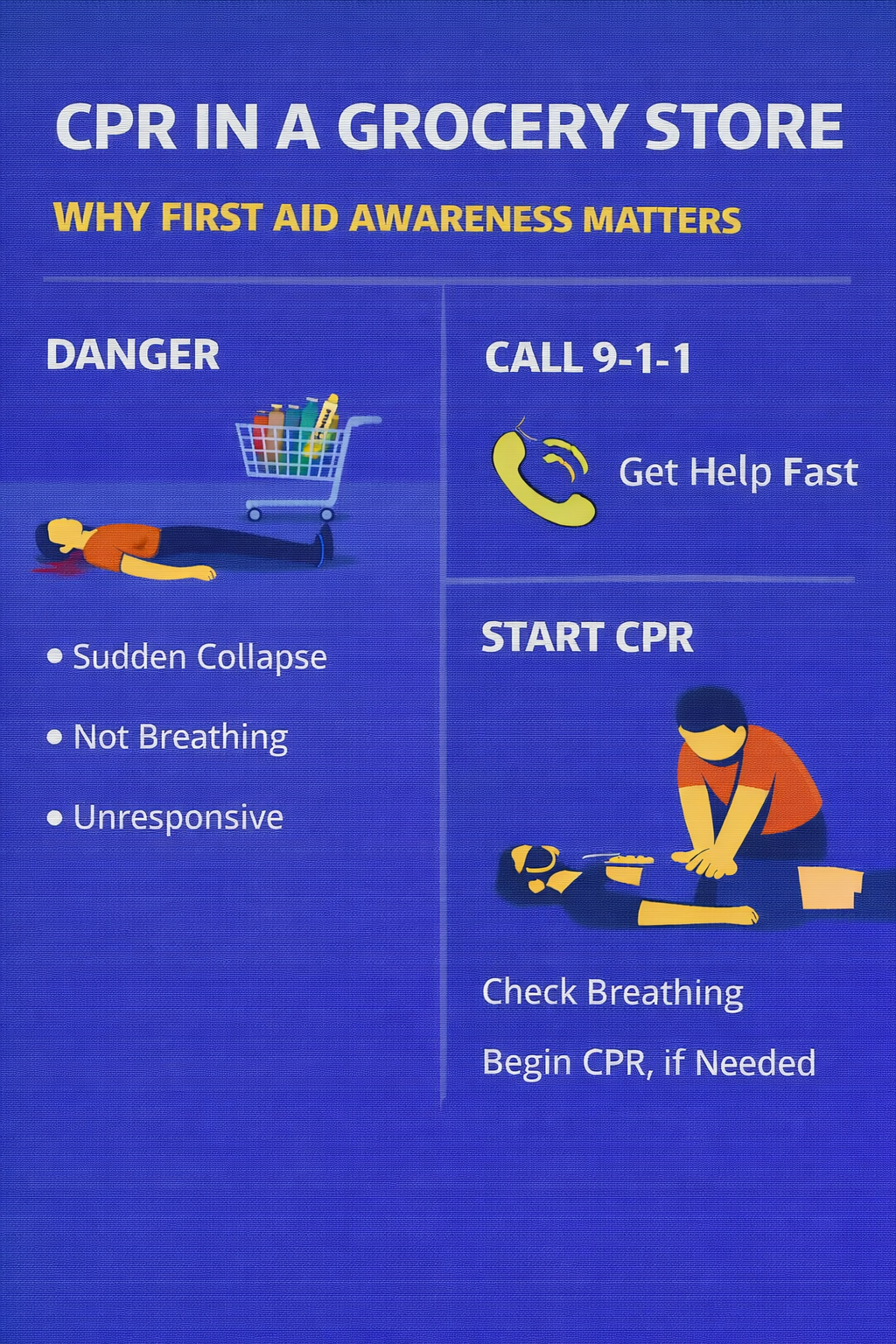 A life-saving act took place inside a grocery store when a bystander stepped in to help someone experiencing a sudden medical emergency.
Marianne LaPlante was shopping with her mother at an Aldi grocery store in Howell, New Jersey, when she suddenly began feeling unwell. Moments later, she collapsed and fell to the floor.
Nearby shopper Lisa Manoy, who had previously worked as a nurse, noticed the situation and quickly approached to help. When she reached LaPlante, she observed that the woman appeared to be convulsing and moving in and out of consciousness.
There was also blood visible near LaPlante’s head from the fall.
Manoy checked for vital signs and monitored the situation as LaPlante’s condition changed. When LaPlante stopped breathing, Manoy immediately began CPR.
During the emergency, Manoy’s daughter helped comfort LaPlante’s mother while emergency services were contacted.
Paramedics soon arrived and transported LaPlante to a healthcare facility for further treatment.
Following the incident, LaPlante later expressed gratitude by sharing a message online thanking the stranger who had helped her during the emergency. The two eventually connected and began speaking regularly.
This story highlights how quick action from a trained bystander can make a meaningful difference during unexpected medical emergencies.
Signs of a Sudden Medical Emergency
When someone collapses in a public place, certain signs may indicate that immediate medical attention is needed.
Possible warning signs include:
-
Sudden collapse
-
Unresponsiveness
-
Abnormal or absent breathing
-
Convulsions or uncontrolled movements
-
Loss of consciousness
When these symptoms appear, emergency services should be contacted immediately.
Why CPR Is Important During Emergencies
CPR helps maintain blood circulation when the heart stops pumping effectively or when breathing stops.
CPR may help:
-
Deliver oxygen to the brain and vital organs
-
Maintain circulation until emergency responders arrive
-
Improve the chances of survival during cardiac emergencies
Many communities encourage CPR training so that more people feel confident responding during unexpected incidents.
First Aid Awareness in Public Settings
First aid training teaches general steps that may help when someone collapses in a public place.
Typical response steps include:
-
Call emergency services (9-1-1 in Canada).
-
Check responsiveness and breathing.
-
If the person is not breathing normally, begin CPR if trained and if it is safe to do so.
-
Ask someone nearby to retrieve an AED if one is available.
-
Continue CPR until emergency responders arrive.
Quick response during the first minutes of a medical emergency can provide critical support.
Preparedness in Public Places and Workplaces
Many workplaces and public locations are improving emergency preparedness by promoting first aid training and installing AED devices.
Preparedness measures may include:
-
CPR and first aid training for staff
-
Accessible AED devices in public buildings
-
Emergency response plans for employees
-
Staff awareness of medical emergency signs
Throughout Vancouver and British Columbia, many workplaces encourage employees to complete CPR training as part of workplace safety programs.
FAQ
What is CPR used for?
CPR is used when a person stops breathing or when the heart stops pumping effectively. It helps circulate oxygenated blood to vital organs.
Can bystanders perform CPR during emergencies?
Yes. Many CPR courses teach simple steps that allow bystanders to assist someone until emergency responders arrive.
Why do medical emergencies sometimes happen in public places?
Medical emergencies can occur anywhere and often happen without warning.
What should someone do if a person collapses in a store or workplace?
Emergency services should be contacted immediately. If the person is not breathing normally, CPR may be started if it is safe to do so.
Why is CPR training recommended for the public?
Training helps individuals recognize emergencies and understand how to respond safely while waiting for professional responders.
Educational Note
This article is intended for general first aid awareness and public safety education. Learning CPR and AED use through certified training programs can help individuals recognize emergencies and respond safely until emergency services arrive.
About The Author

Mark Kascha
First Aid Instructor Trainer with 30+ years of experience in CPR, emergency response, and safety training across Canada.
👉 [View full credentials]🔗 View LinkedIn Profile
Last reviewed: March 2026
 Support local, Canadian-owned businesses, with no connections to American corporations or partnerships.