 Severe bleeding and traumatic injuries can quickly become life-threatening if not addressed promptly. In some situations, a person may also go into medical distress, where breathing or circulation becomes impaired. In these cases, cardiopulmonary resuscitation (CPR) may be required alongside other first aid measures.
Across Coquitlam, Vancouver, Burnaby, and the Lower Mainland of British Columbia, emergency responders are trained to manage complex situations involving both injury and medical distress. Early intervention with first aid can help support a person’s condition until advanced medical care is available.
First Aid and Emergency Response in British Columbia
Police officers, firefighters, and paramedics in British Columbia are often trained in both bleeding control and CPR. When they arrive at an emergency scene, they may need to manage injuries while also monitoring breathing and circulation.
In many cases, bystanders or first responders provide the first level of care, making first aid training valuable for workplaces and communities throughout the region.
Scenario: Emergency Response in Coquitlam
An incident in Coquitlam, British Columbia, prompted an investigation following a confrontation involving police and an injured individual.
According to reports, police received multiple calls about a man behaving erratically and attempting to enter homes in a residential area. Witnesses reported that the individual appeared agitated and was carrying an object.
Officers responded to the area and located the man inside a home. He was described as severely injured and bleeding, and responders attempted to manage the situation while ensuring safety.
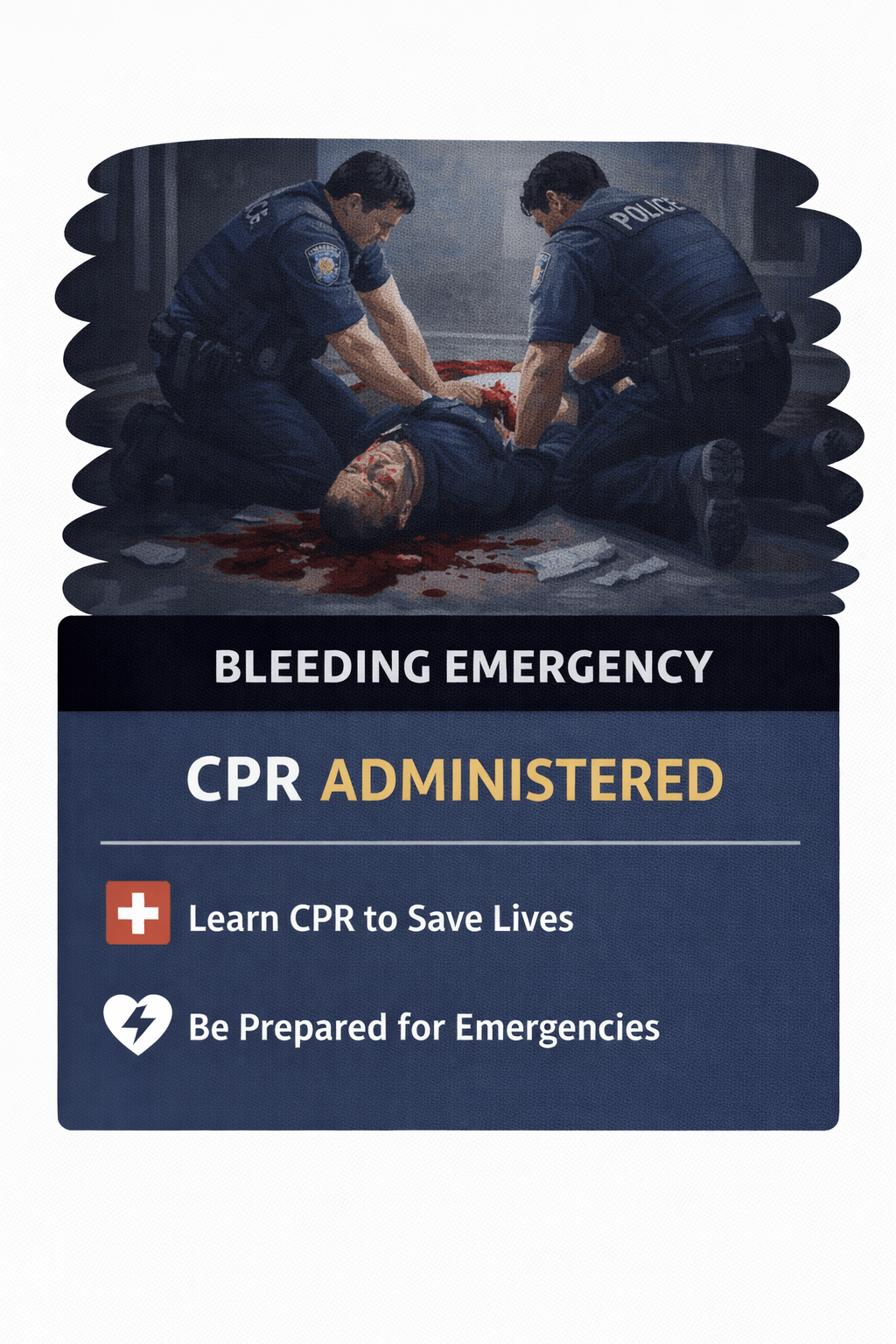
During the interaction, police used a conducted energy device (CEW) and eventually restrained the individual after a physical struggle. Following this, the man went into medical distress.
Emergency responders immediately began CPR while arranging transport to a healthcare facility. Despite these efforts, the individual later died.
As part of standard procedure in British Columbia, the Independent Investigations Office (IIO) reviewed the incident to examine the circumstances surrounding the response.
The situation highlights how emergency responders may need to provide both injury management and life-saving CPR during complex incidents.
Recognizing Signs of Severe Bleeding
Severe bleeding requires immediate attention. Signs that someone may be experiencing a serious bleeding emergency include:
-
Continuous or heavy blood flow
-
Blood soaking through clothing or bandages
-
Pale, cool, or clammy skin
-
Weakness or confusion
-
Rapid breathing or pulse
Prompt recognition helps ensure faster emergency response.
Recognizing When CPR May Be Needed
CPR may be required if a person becomes unresponsive and stops breathing normally. Warning signs can include:
-
Loss of consciousness
-
No visible breathing or only gasping
-
No detectable pulse
-
Sudden collapse
-
Bluish or pale skin tone
In these situations, emergency services should be contacted immediately and CPR may be started by trained responders.
How CPR Helps During Critical Emergencies
When the heart stops pumping effectively, oxygen cannot circulate to vital organs. CPR helps support the body by:
-
Providing chest compressions to circulate blood
-
Helping oxygen reach the brain and organs
-
Maintaining circulation until advanced care arrives
-
Supporting survival during cardiac arrest
Early CPR is a key component of the chain of survival.
First Aid Response in Complex Emergencies
In situations involving both injury and medical distress, trained responders may:
-
Call emergency services immediately
-
Ensure the scene is safe before providing assistance
-
Apply basic bleeding control techniques if possible
-
Check for responsiveness and breathing
-
Begin CPR if the person is unresponsive and not breathing normally
-
Continue care until paramedics arrive
These steps help stabilize the person during critical moments.
Community Safety and Preparedness
Prepared communities are better able to respond to emergencies. Safety awareness may include:
-
Encouraging first aid and CPR training
-
Promoting awareness of bleeding control techniques
-
Supporting access to emergency services
-
Providing training in workplaces and public settings
Across Coquitlam and the Lower Mainland, first aid education helps individuals feel more confident responding to emergencies.
Frequently Asked Questions
Why is CPR important during medical emergencies?
CPR helps maintain blood circulation and oxygen delivery when a person’s heart stops or breathing becomes ineffective.
Can someone have both severe bleeding and need CPR?
Yes. In some situations, a person may have serious injuries and also experience cardiac arrest, requiring multiple first aid responses.
Should bystanders help during emergencies?
If it is safe to do so, bystanders can assist by calling emergency services and providing first aid while waiting for responders.
Why is bleeding control important?
Managing bleeding helps reduce blood loss and supports the person’s condition until medical professionals take over.
Should people learn CPR and first aid?
Many safety organizations encourage training because emergencies can occur in homes, workplaces, and public environments.
Educational Note
This article is intended for general public education about first aid awareness and emergency preparedness. Learning recognized first aid and CPR skills can help individuals respond more confidently during unexpected emergencies.
About The Author

Mark Kascha
First Aid Instructor Trainer with 30+ years of experience in CPR, emergency response, and safety training across Canada.
Last reviewed: March 2026
 Support local, Canadian-owned businesses, with no connections to American corporations or partnerships.