 Water-related emergencies can occur quickly, especially in busy recreational areas such as pools and water parks. When someone is removed from the water and is unresponsive or not breathing normally, cardiopulmonary resuscitation (CPR) may be performed while emergency medical services are contacted.
Across Canada, including Vancouver and British Columbia, CPR and first aid training are commonly taught in workplace safety programs, aquatic facilities, and community training centres. These programs help individuals recognize emergencies and respond while waiting for professional medical care.
Early intervention by trained lifeguards or nearby adults can play an important role during water-related emergencies.
Water Safety and Lifeguard Preparedness
Public aquatic facilities typically require trained lifeguards who monitor swimmers and respond to emergencies when needed. These professionals are trained in:
-
Water rescue techniques
-
CPR and first aid
-
Communication with emergency services
Their quick recognition and response can help ensure that assistance begins as soon as possible.
Near Drowning Incident at Kinsmen Water Park
A water-related emergency occurred at Kinsmen Water Park in Prince Albert when aquatic staff responded to an unconscious nine-year-old child in the main outdoor swimming pool.
The incident took place at approximately 3:30 PM while the facility was open to the public.
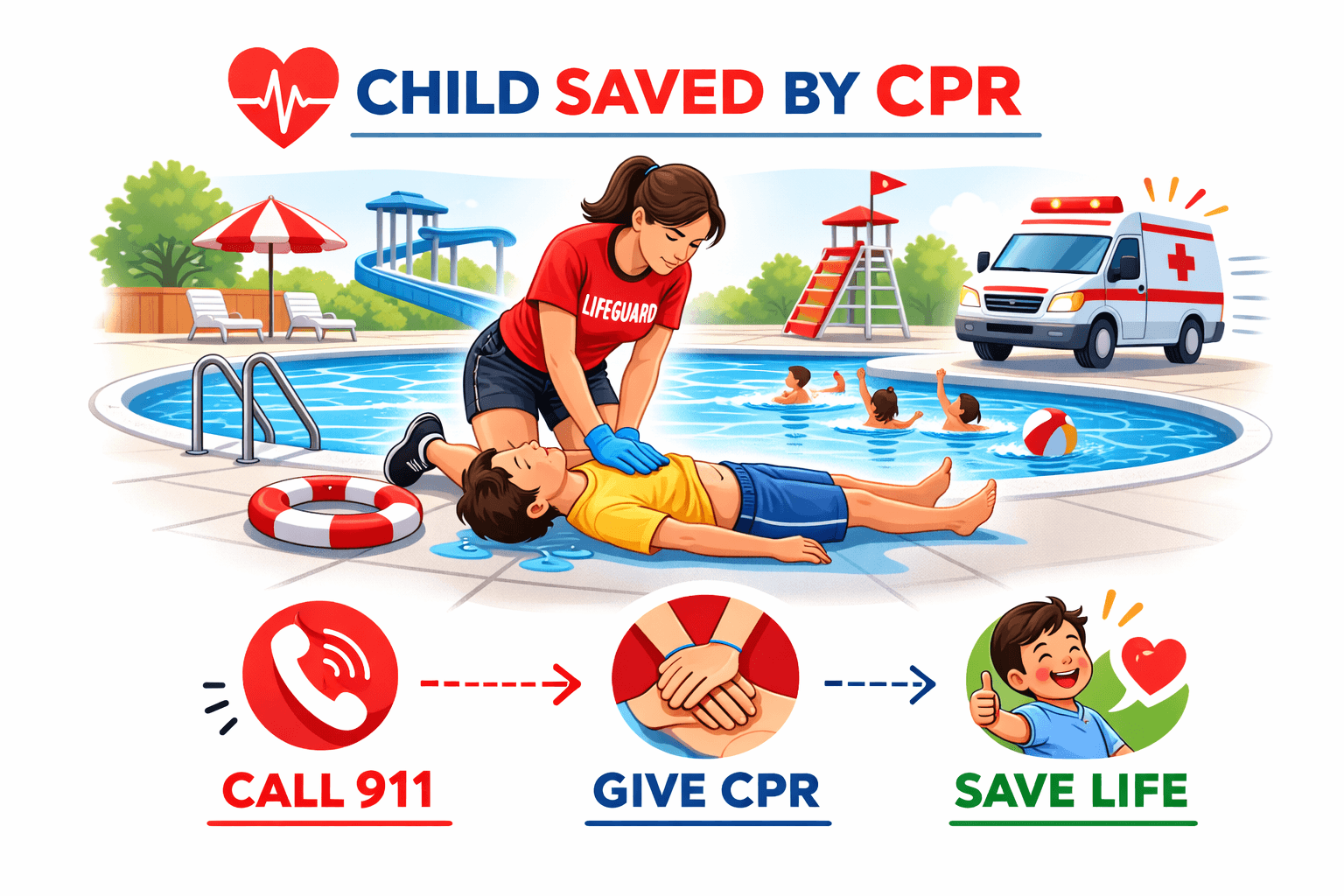
Lifeguards quickly entered the water and assisted the child before beginning CPR. According to officials from Parkland Ambulance, the prompt response by aquatic staff played an important role in the emergency response.
After CPR was performed, the child regained alertness and was transported to Victoria Hospital for further medical evaluation following the near drowning incident.
Following the emergency, the water park was temporarily closed so staff could complete an internal review and debrief the situation.
Supervision and Water Safety Policies
Public aquatic facilities often maintain supervision policies to help protect children.
At Kinsmen Water Park, the city reminds visitors of its policy requiring that children aged 8 to 10 must be accompanied by an adult while at the facility.
Supervision policies help ensure that adults remain nearby in case children require assistance while swimming.
Recognizing Signs of Water Distress
People experiencing difficulty in the water may show subtle signs rather than dramatic splashing. Warning signs may include:
-
Struggling to stay above the water
-
Weak or silent movements
-
Sudden disappearance below the surface
-
Unresponsiveness after being removed from the water
Recognizing these signs quickly allows lifeguards or bystanders to respond and contact emergency services.
Why CPR May Be Used After Water Rescue
If a person rescued from the water is unresponsive and not breathing normally, CPR may be performed while waiting for paramedics.
CPR helps maintain circulation of oxygen-rich blood to the brain and other vital organs during the critical early minutes of an emergency.
Emergency response organizations across Canada emphasize that early CPR combined with rapid emergency response can improve survival outcomes in certain drowning emergencies.
Prevention and Pool Safety Awareness
Several steps can help reduce drowning risks in aquatic settings:
-
Following pool supervision rules
-
Ensuring children swim with responsible adults nearby
-
Paying attention to lifeguard instructions
-
Avoiding distractions while supervising swimmers
-
Learning CPR and first aid skills
Prepared individuals may be able to respond more quickly if emergencies occur.
Frequently Asked Questions
What is cardiopulmonary resuscitation (CPR)?
CPR is a first aid technique used when a person becomes unresponsive and stops breathing normally. It helps maintain circulation until emergency medical services arrive.
Why are lifeguards trained in CPR?
Lifeguards are trained in CPR and water rescue techniques so they can respond quickly during aquatic emergencies.
What is a near drowning incident?
A near drowning incident refers to a water-related emergency where a person survives after experiencing breathing difficulties while submerged or in distress in water.
Why are supervision rules important at water parks?
Supervision policies help ensure that children are monitored by responsible adults while swimming.
Where can people learn CPR in Canada?
CPR and first aid training programs are widely available through workplace safety providers, community organizations, and certified first aid training centres across Canada.
Educational Note
This article is intended for general first aid awareness and water safety education. Learning CPR and first aid can help individuals better understand how to respond during emergencies while waiting for trained emergency medical services.
About The Author

Mark Kascha
First Aid Instructor Trainer with 30+ years of experience in CPR, emergency response, and safety training across Canada.
Last reviewed: March 2026
 Support local, Canadian-owned businesses, with no connections to American corporations or partnerships.