
 Sudden cardiac arrest can occur without warning in everyday environments such as workplaces, recreation centres, or entertainment venues. When the heart stops pumping effectively, blood flow to the brain and other vital organs is interrupted.
Cardiopulmonary resuscitation (CPR) and automated external defibrillators (AEDs) are key emergency response tools used to support circulation and restore heart rhythm during cardiac arrest. Immediate action by trained responders can make a critical difference before paramedics arrive.
Across Canada—including Vancouver and communities throughout British Columbia—many workplaces now include CPR and AED training as part of safety preparedness programs.
First Aid and Workplace Relevance in Canada
Public venues such as casinos, arenas, hotels, and shopping centres often have trained staff members who are prepared to respond to medical emergencies.
In many Canadian workplaces, employees receive regular first aid and CPR recertification, helping ensure that staff can respond quickly when someone collapses or experiences a serious medical emergency.
Access to AEDs in public facilities also improves emergency readiness, allowing trained personnel to deliver life-saving care during cardiac arrest.
A Realistic Scenario from a Casino Emergency
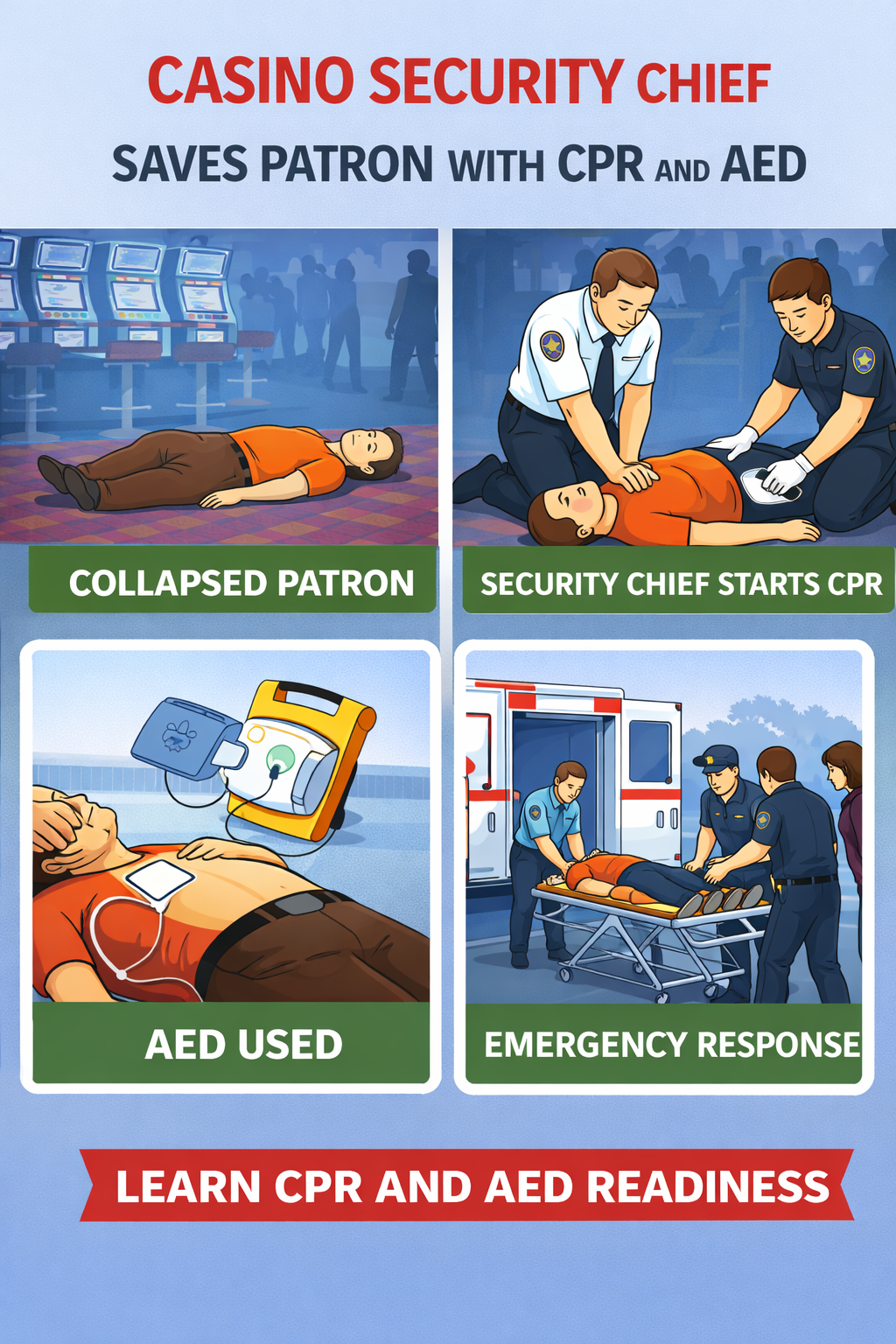
A casino security chief was recognized after helping save the life of a patron who collapsed while visiting Casino Nova Scotia.
The incident occurred when a guest, Bill Jamael, stood up from a gaming table and took a few steps before suddenly collapsing.
A nearby slots attendant quickly noticed the fall and alerted security staff using a radio. Within about a minute, Ian Flynn—head of security and the casino’s CPR training instructor—arrived at the scene along with other members of the security team.
When they assessed the situation, the patron had no pulse and was not breathing normally.
Flynn immediately began CPR while another staff member assisted by providing rescue breaths. At the same time, another employee retrieved an automated external defibrillator (AED).
The team worked together to provide continuous care until emergency medical services arrived. The patron was later transported by ambulance for further medical treatment.
Although Flynn had been teaching CPR for more than three decades, this was the first time he had personally used the skills to help save someone’s life. The staff’s regular training and recent refresher course helped them respond quickly and confidently during the emergency.
Signs of Sudden Cardiac Arrest
Sudden cardiac arrest often occurs without warning. However, several signs may indicate that immediate emergency care is needed.
Possible signs include:
-
Sudden collapse
-
Unresponsiveness
-
No normal breathing
-
Gasping or irregular breathing
-
No detectable pulse
-
Pale or bluish skin colour
When these signs appear, emergency services should be contacted immediately.
Causes of Sudden Cardiac Arrest
Cardiac arrest occurs when the heart’s electrical system malfunctions, preventing the heart from pumping blood effectively.
Possible causes can include:
-
Heart rhythm disturbances (arrhythmias)
-
Coronary artery disease
-
Heart attack
-
Structural heart conditions
-
Severe medical stress or underlying heart disease
Because cardiac arrest can occur suddenly, rapid recognition and response are essential.
First Aid Response and Immediate Management
When someone collapses and is unresponsive, early action can help maintain vital circulation until professional medical care arrives.
General first aid response steps may include:
-
Call emergency services immediately.
-
Check responsiveness and breathing.
-
Begin CPR if the person is unresponsive and not breathing normally.
-
Use an AED as soon as one becomes available.
-
Continue CPR until professional responders arrive.
AED devices are designed with voice prompts that guide responders through each step.
Prevention and Workplace Safety Considerations
Organizations can improve emergency preparedness through training and equipment availability.
Helpful workplace safety measures may include:
-
Providing regular CPR and AED training for staff
-
Installing AEDs in accessible public locations
-
Practicing emergency response procedures
-
Encouraging employees to refresh first aid skills regularly
Prepared staff members and accessible equipment can help improve response during cardiac emergencies.
Frequently Asked Questions
What is an automated external defibrillator (AED)?
An AED is a portable medical device designed to analyze heart rhythm and deliver an electrical shock when certain life-threatening arrhythmias are detected.
Why is CPR important during cardiac arrest?
CPR helps circulate oxygenated blood to the brain and vital organs when the heart is no longer pumping effectively.
Why do workplaces train employees in CPR?
Training employees in CPR helps ensure someone nearby can provide immediate assistance during medical emergencies before paramedics arrive.
How often should CPR training be refreshed?
Many organizations recommend periodic recertification and refresher training to ensure individuals remain familiar with emergency response procedures.
Can cardiac arrest happen in public places?
Yes. Sudden cardiac arrest can occur anywhere, including workplaces, recreation facilities, and public venues.
Educational Note
This article is intended for general first aid awareness and public education. Learning CPR and how to use an AED can help individuals respond more confidently during emergencies while waiting for professional medical assistance.
About The Author

Mark Kascha
First Aid Instructor Trainer with 30+ years of experience in CPR, emergency response, and safety training across Canada.
👉 [View full credentials]🔗 View LinkedIn Profile
Last reviewed: March 2026