
Sudden cardiac arrest can occur when the heart suddenly stops pumping blood effectively. Although it is often associated with adults, cardiac arrest can also occur in teenagers and young athletes during physical activity.
When this happens, immediate action is critical. Cardiopulmonary resuscitation (CPR) helps maintain circulation, while an automated external defibrillator (AED) can analyze the heart rhythm and deliver a controlled electrical shock if needed.
Across Canada, including Vancouver and British Columbia, many schools, sports facilities, and workplaces now keep AED devices on site. Training staff and community members in CPR and AED use helps improve emergency preparedness in places where large groups gather.
A Real-World Scenario
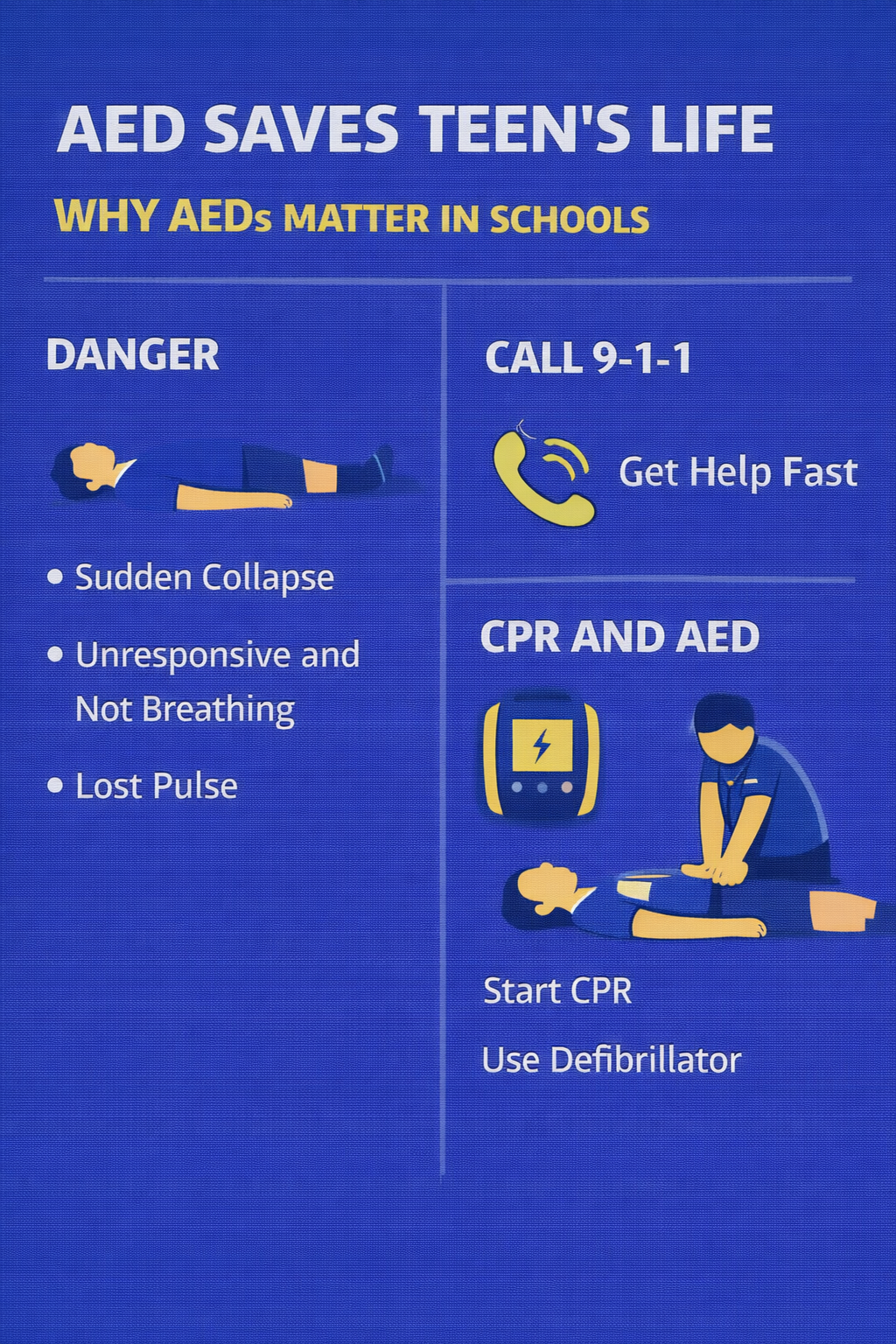 A serious medical emergency occurred during a sports event at Sir Robert Borden High School in Ottawa, Ontario, when a teenager collapsed while playing futsal.
The 15-year-old student was participating in a futsal tournament when he suddenly fell to the ground. Futsal is a fast-paced version of indoor soccer played with a smaller ball and typically played on a hard court.
Fortunately, a cardiologist who was present at the event quickly recognized the emergency and began CPR while other bystanders located the school’s AED.
The automated external defibrillator was brought to the scene and one shock was delivered before paramedics arrived.
When emergency medical responders reached the school, they continued resuscitation efforts and administered additional defibrillation using advanced equipment. The teen’s pulse was eventually restored.
During the ambulance ride to the hospital, the student regained consciousness. He was transported to the Children’s Hospital of Eastern Ontario, where he was reported to be in serious but stable condition.
This incident highlights the importance of having AEDs available in schools and sports facilities, as well as the role of trained bystanders who respond quickly during cardiac emergencies.
Signs of Sudden Cardiac Arrest
Sudden cardiac arrest may occur with little warning, particularly during physical activity.
Possible signs include:
-
Sudden collapse
-
Unresponsiveness
-
No normal breathing or gasping
-
Loss of pulse
These symptoms require immediate emergency response.
Why AEDs Are Important in Public Spaces
AEDs are portable devices designed to help treat sudden cardiac arrest. They are commonly placed in locations where large groups of people gather.
AEDs help by:
-
Analyzing the heart’s rhythm
-
Delivering an electrical shock if needed
-
Providing voice instructions to guide rescuers
Many AEDs are designed for public use, meaning bystanders can follow simple prompts even without advanced medical training.
First Aid Awareness During Cardiac Emergencies
First aid training often includes CPR and AED awareness so individuals can respond during cardiac emergencies.
Typical response steps may include:
-
Call emergency services (9-1-1 in Canada).
-
Check responsiveness and breathing.
-
If the person is not breathing normally, begin CPR if it is safe to do so.
-
Retrieve and use an AED if one is available.
-
Continue CPR until emergency responders arrive.
Quick action during the first minutes of cardiac arrest can be critical.
Prevention and Preparedness in Schools and Sports Facilities
Schools and recreation centres often implement safety measures to improve emergency preparedness.
These may include:
-
Installing AED devices in accessible areas
-
Training staff and coaches in CPR and first aid
-
Emergency action plans for sports events
-
Clear procedures for contacting emergency services
Across British Columbia and Vancouver, many schools and community recreation centres include CPR and AED awareness as part of safety planning.
FAQ
Can cardiac arrest occur in teenagers?
Yes. Although less common, sudden cardiac arrest can occur in young people, particularly during intense physical activity.
What does an AED do during a cardiac emergency?
An AED analyzes the heart rhythm and may deliver an electrical shock to help restore a normal heartbeat.
Why are AEDs placed in schools and sports facilities?
These locations often host large groups of people and physical activities, making quick access to emergency equipment important.
What should someone do if a person collapses during sports?
Emergency services should be contacted immediately. If the person is not breathing normally, CPR may be started and an AED used if available.
Why is CPR training encouraged for the public?
Training helps individuals recognize emergencies and understand how to respond safely until professional responders arrive.
Educational Note
This article is intended for general first aid awareness and public safety education. Learning CPR and AED use through certified training programs can help individuals recognize cardiac emergencies and respond safely until emergency services arrive.
About The Author

Mark Kascha
First Aid Instructor Trainer with 30+ years of experience in CPR, emergency response, and safety training across Canada.
👉 [View full credentials]🔗 View LinkedIn Profile
Last reviewed: March 2026