
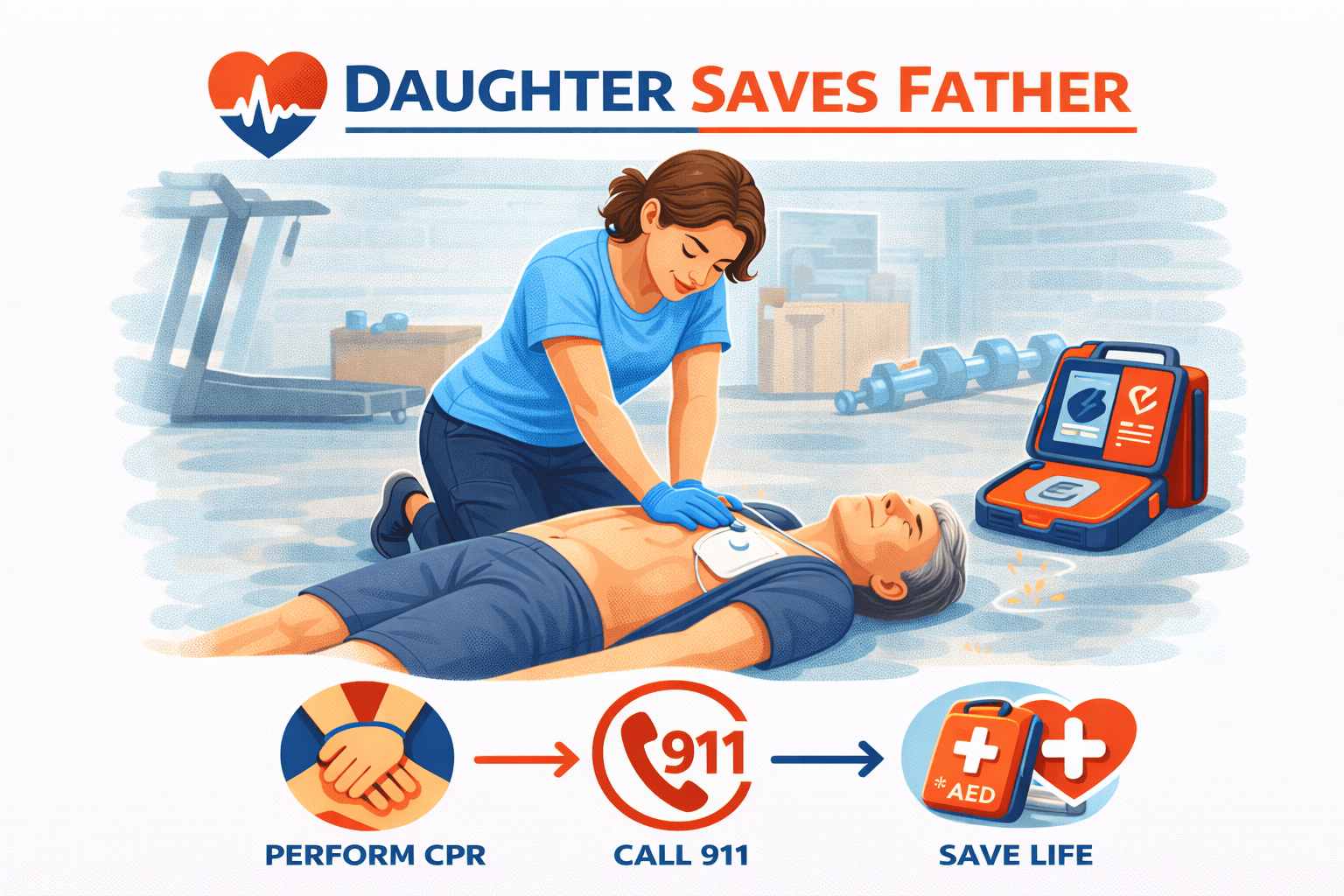
 Sudden cardiac arrest can occur without warning and requires immediate response. When the heart stops pumping effectively, oxygen-rich blood can no longer circulate to the brain and vital organs.
Cardiopulmonary resuscitation (CPR) is a first aid technique used when a person becomes unresponsive and is not breathing normally. Across Canada, including Vancouver and British Columbia, CPR and automated external defibrillator (AED) training are commonly included in workplace safety programs and community first aid courses.
Learning these skills helps individuals recognize cardiac emergencies and respond while waiting for emergency medical services.
The Role of Bystanders in Cardiac Emergencies
When cardiac arrest occurs outside a hospital, nearby people are often the first to respond. Early CPR can help maintain circulation until professional responders arrive.
Public health organizations often describe emergency response using the “Chain of Survival,” which includes:
-
Starting CPR quickly
-
Using an AED when available
-
Advanced medical care from paramedics and hospital teams
Each step in this chain helps improve the chances of survival during cardiac emergencies.
A Medical Emergency in Leduc County
Maslyn Dansereau, a student from Leduc County, Alberta, was studying at home when she suddenly heard a loud noise coming from the basement.
Her father, Martin Dansereau, had been exercising when he collapsed.
The 20-year-old ran downstairs and found him lying face down on the floor. When she checked for signs of breathing and circulation, she realized he did not have a pulse.
Dansereau immediately asked her mother to call 911 while she began performing CPR.
She continued delivering chest compressions for approximately 20 minutes while waiting for paramedics to arrive.
When emergency responders reached the home, they used an automated external defibrillator (AED) to help restore Martin’s heart rhythm.
Paramedics transported him to University of Alberta Hospital, where he later underwent surgery.
Martin spent time in the hospital’s critical care unit before eventually making a full recovery.
Training Prepared Her for the Emergency
Dansereau had previously taken CPR courses as part of her studies in psychiatric nursing at MacEwan University.
Although she had practiced CPR during training scenarios, this was the first time she had performed the life-saving technique during a real emergency.
Her quick response and persistence helped maintain circulation until paramedics arrived with advanced equipment.
Cardiac Arrest and Survival Awareness
Cardiac arrest can occur at home, in public spaces, or during physical activity. Health organizations report that many cardiac arrest incidents occur outside medical facilities.
Because of this, bystanders and family members often play an important role in early emergency response.
Emergency response organizations frequently emphasize that early CPR combined with rapid defibrillation can significantly improve survival outcomes in certain cardiac emergencies.
Learning CPR and AED Skills
Community awareness of CPR and AED use continues to grow across Canada. Training programs help people recognize emergencies and understand how to respond safely.
Learning these skills can help individuals feel more prepared to assist during emergencies involving family members, coworkers, or members of the public.
Frequently Asked Questions
What is cardiopulmonary resuscitation (CPR)?
CPR is a first aid technique used when a person becomes unresponsive and stops breathing normally. It helps maintain circulation until emergency medical services arrive.
Why is early CPR important during cardiac arrest?
Early CPR helps maintain blood circulation to the brain and vital organs until advanced medical care becomes available.
What is an automated external defibrillator (AED)?
An AED is a portable device that analyzes heart rhythms and may deliver an electrical shock to help restore a normal heartbeat.
Can family members perform CPR during emergencies?
Yes. People who have CPR training may provide assistance while waiting for emergency responders.
Where can Canadians learn CPR and AED skills?
Training programs are widely available through workplace safety providers, certified first aid training centres, and community organizations across Canada.
Educational Note
This article is intended for general first aid awareness and community safety education. Learning CPR and AED use can help individuals better understand how to respond during emergencies while waiting for trained emergency medical services.
About The Author

Mark Kascha
First Aid Instructor Trainer with 30+ years of experience in CPR, emergency response, and safety training across Canada.
👉 [View full credentials]🔗 View LinkedIn Profile
Last reviewed: March 2026