
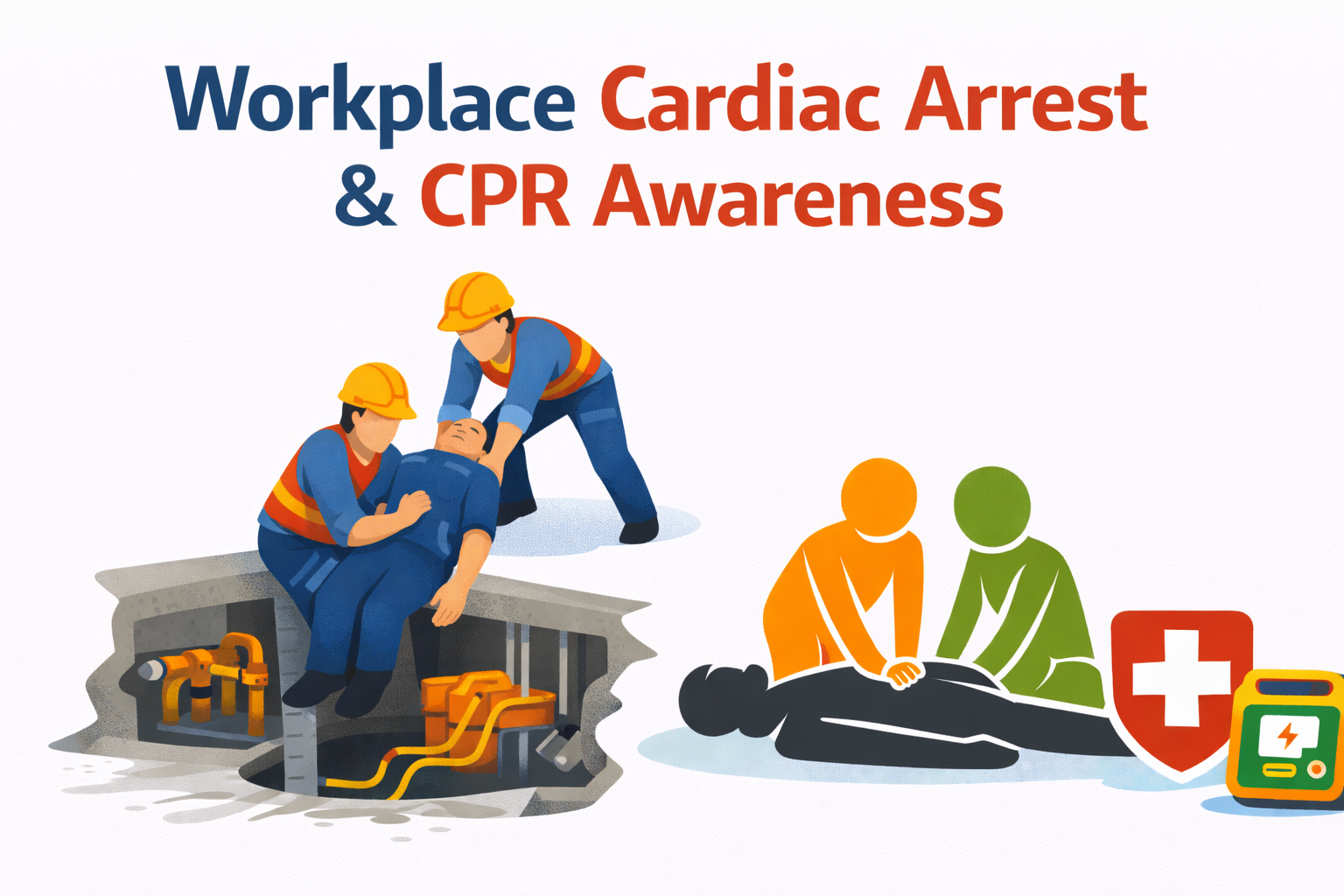
 Electrical injuries can occur in many workplaces where equipment, machinery, or electrical systems are used. In severe cases, an electrical shock can disrupt the heart’s normal rhythm and lead to cardiac arrest, a condition where the heart stops pumping blood effectively.
Across Vancouver and throughout British Columbia, many industries—including construction, fuel systems, utilities, and industrial maintenance—require workers to interact with electrical equipment. Because of these risks, CPR (cardiopulmonary resuscitation) and AED awareness are important workplace safety skills that can help support someone experiencing cardiac arrest until emergency responders arrive.
Immediate action from nearby co-workers or bystanders can make a significant difference during these emergencies.
A Realistic Scenario: Quick Action at a Worksite
In one reported workplace incident, a man in his 50s experienced an electrical shock while working on underground fuel pumping equipment. The electrical exposure caused him to go into cardiac arrest.
His co-workers quickly recognized the seriousness of the situation and brought him to the surface. They immediately began CPR while waiting for emergency responders to arrive.
Firefighters and paramedics reached the scene within minutes and continued resuscitation efforts using specialized medical equipment, including a defibrillator. According to emergency services reports, the coordinated response was successful and spontaneous circulation was restored.
The rapid actions taken by the man’s co-workers played a key role in supporting him during the critical early moments of the emergency.
Signs of Cardiac Arrest in the Workplace
Cardiac arrest can occur suddenly and may be triggered by electrical shock, medical conditions, or trauma. Recognizing the warning signs quickly allows responders to begin life-saving actions sooner.
Common signs may include:
-
Sudden collapse
-
Unresponsiveness
-
Absence of normal breathing or irregular gasping
-
No detectable pulse
-
Pale or bluish skin tone
When these symptoms appear, immediate emergency response is essential.
How Electrical Shock Can Affect the Heart
Electricity passing through the body can interfere with the heart’s electrical signals. Even relatively brief contact with a strong electrical source can disrupt normal heart rhythm.
Potential effects of electrical shock include:
-
Irregular heart rhythms (arrhythmias)
-
Cardiac arrest
-
Burns or internal tissue injury
-
Muscle contractions or loss of control
-
Loss of consciousness
Because the heart relies on precise electrical signals to function normally, disruption of these signals can lead to life-threatening conditions.
First Aid Response: CPR and AED Use
When cardiac arrest occurs outside a hospital, bystander response plays an important role in improving survival chances.
First aid training generally teaches individuals to respond by:
-
Ensuring the scene is safe before approaching
-
Calling emergency services immediately
-
Checking responsiveness and breathing
-
Beginning CPR if the person is unresponsive and not breathing normally
-
Using an automated external defibrillator (AED) if one is available
-
Continuing care until trained emergency responders take over
AEDs are designed for use by trained responders and can provide voice prompts that guide users through the process of delivering a defibrillation shock if needed.
Early CPR helps maintain circulation to the brain and vital organs, while early defibrillation can help restore a normal heart rhythm.
Workplace Prevention and Safety Considerations
Electrical hazards are carefully managed in many workplaces through safety policies and training. Prevention strategies may include:
-
Lockout and tagout procedures when servicing equipment
-
Proper electrical equipment maintenance
-
Use of protective equipment and insulated tools
-
Clear safety procedures when working near electrical systems
-
First aid and CPR training for employees
In British Columbia, many workplaces include first aid training and emergency preparedness plans so workers are ready to respond quickly during unexpected incidents.
FAQ
What is cardiac arrest?
Cardiac arrest occurs when the heart suddenly stops pumping blood effectively. Without immediate treatment, it can quickly become life-threatening because oxygen is no longer circulating to the brain and other vital organs.
Why is CPR important during cardiac arrest?
CPR helps maintain blood circulation and oxygen delivery to vital organs when the heart is not functioning normally. This support can help sustain the body until advanced medical care arrives.
What does an AED do?
An automated external defibrillator analyzes the heart’s rhythm and can deliver a controlled electrical shock if a life-threatening rhythm is detected. The device provides step-by-step prompts to guide responders.
Why are co-workers often the first responders during workplace emergencies?
Many incidents occur suddenly during routine tasks. Nearby workers may be the first to recognize the emergency and begin assistance before emergency services arrive.
Why is CPR training recommended in workplaces?
CPR training helps workers recognize cardiac arrest and respond quickly using life-saving techniques while waiting for emergency responders.
Educational Note:
This article is intended for general first aid awareness and public safety education. Learning CPR and AED use can help individuals recognize emergencies and provide supportive care until trained emergency services arrive.
About The Author

Mark Kascha
First Aid Instructor Trainer with 30+ years of experience in CPR, emergency response, and safety training across Canada.
👉 [View full credentials]🔗 View LinkedIn Profile
Last reviewed: March 2026