
Understanding First Medical Response in Rural Communities
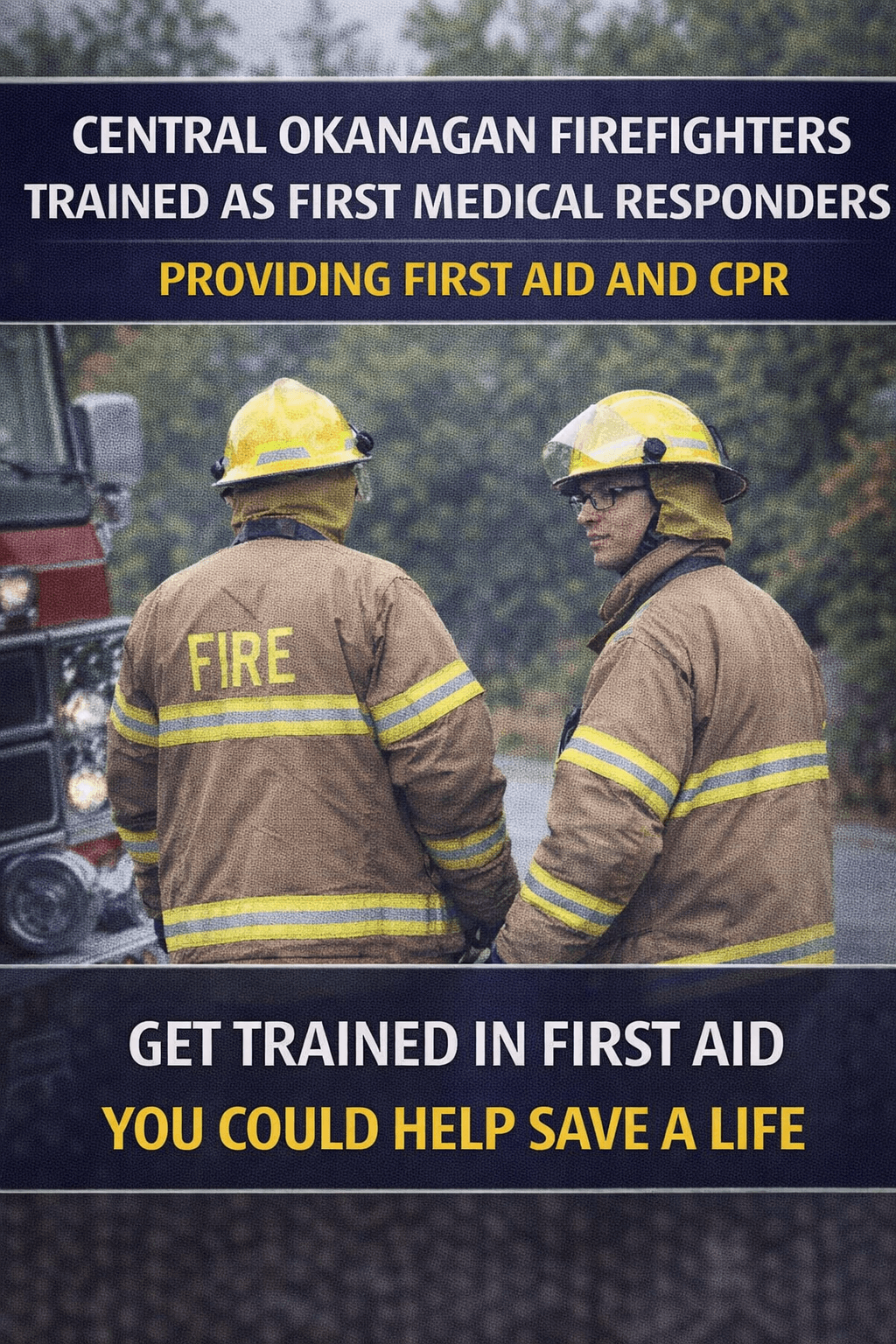 In many rural areas of British Columbia, emergency medical services may take longer to reach a scene due to distance, terrain, or limited access routes. Because of this, some local fire departments train firefighters to act as first medical responders, providing immediate first aid and CPR until paramedics arrive.
Across British Columbia and the Lower Mainland—including Kelowna, West Kelowna, and communities surrounding Okanagan Lake—first aid training plays an important role in emergency preparedness. Quick assistance from trained local responders can help stabilize patients while waiting for ambulance services.
First Aid Preparedness in the Central Okanagan
The Wilson’s Landing Fire Department, located along the west shore of Okanagan Lake, serves communities along Westside Road from Trader’s Cove to Shelter Cove. Because the area includes remote locations and winding rural roads, emergency responders sometimes need to reach patients before ambulances arrive.
To help improve response times, many firefighters in the department have completed first medical responder training, allowing them to provide immediate care in emergencies.
Training Firefighters as First Medical Responders
According to fire officials, roughly half of the department’s firefighters have completed specialized medical response training. This training prepares them to assist with a range of emergency situations, including injuries, medical distress, and cardiac emergencies.
Fire Chief Don Bennison explained that the department has always focused on protecting residents through fire prevention and emergency response. Expanding the role of firefighters to include medical assistance was a natural step for improving community safety.
The training program took approximately one and a half years to complete and included instruction in:
-
First aid and emergency patient care
-
CPR (cardiopulmonary resuscitation)
-
AED (automated external defibrillator) operation
-
Basic triage procedures for prioritizing care
These skills help firefighters assess situations quickly and provide assistance until advanced medical teams arrive.
Carrying AEDs During Emergencies
Firefighters responding to emergencies in the area also carry automated external defibrillators (AEDs). These portable devices can analyze a person’s heart rhythm and provide instructions that guide responders during cardiac emergencies.
Having AEDs available allows first responders to assist people experiencing sudden cardiac arrest while waiting for BC Emergency Health Services.
Working With Paramedics
While firefighters can provide initial care, paramedics from BC Emergency Health Services remain responsible for advanced medical treatment and patient transport.
Firefighters may assist by:
-
Stabilizing patients with first aid
-
Performing CPR when required
-
Helping coordinate emergency scenes
-
Supporting paramedics once they arrive
According to Robert Baker of the Wilson’s Landing Fire Department, firefighters work closely with paramedics to ensure patients receive appropriate care before transport to hospital.
Why Early First Aid Matters
During medical emergencies, the first few minutes can be critical. Immediate assistance from trained responders can help support breathing, circulation, and injury management until professional medical teams arrive.
First aid training programs often emphasize the importance of:
-
Recognizing medical emergencies quickly
-
Calling emergency services immediately
-
Providing CPR if a person is unresponsive and not breathing normally
-
Using an AED when available
-
Continuing assistance until paramedics arrive
In rural communities, these early actions can be especially important because emergency transport may take longer.
Emergency Preparedness in Rural Communities
Communities in Kelowna, West Kelowna, and the Central Okanagan often rely on a combination of firefighters, paramedics, and volunteers to respond to emergencies.
Preparedness strategies may include:
-
First medical responder training for firefighters
-
CPR and first aid training for community members
-
Accessible emergency equipment such as AEDs
-
Coordination between local emergency services
These programs help improve emergency response in areas where immediate medical resources may be farther away.
Frequently Asked Questions
What is a first medical responder?
A first medical responder is a trained individual—often a firefighter or emergency worker—who provides basic medical care before paramedics arrive.
Why do rural fire departments provide medical response?
In rural areas, ambulances may take longer to reach an emergency. Trained firefighters can provide immediate first aid while waiting for paramedics.
What does an AED do during a cardiac emergency?
An automated external defibrillator (AED) analyzes the heart’s rhythm and may deliver a controlled electrical shock to help restore a normal heartbeat.
What is triage in emergency response?
Triage is a process used by emergency responders to determine which patients require the most urgent medical attention based on the severity of their condition.
Can community members learn CPR and first aid?
Yes. CPR and first aid training courses are widely available across British Columbia for workplaces and community members.
Educational Note
This article is intended for general public education about first aid awareness and emergency preparedness. Certified CPR and first aid training programs provide practical instruction that helps individuals recognize emergencies and respond safely.
About The Author

Mark Kascha
First Aid Instructor Trainer with 30+ years of experience in CPR, emergency response, and safety training across Canada.
👉 [View full credentials]🔗 View LinkedIn Profile
Last reviewed: March 2026