 Cycling is a common activity for children across Canada, including Vancouver and communities throughout British Columbia. Riding a bicycle supports physical activity, independence, and outdoor recreation. However, roads and residential streets also present safety risks when bicycles and motor vehicles share the same space.
Because of these risks, communities and schools across BC emphasize road safety awareness and first aid preparedness. When collisions occur, trained bystanders and emergency responders may provide immediate assistance until medical care is available.
First Aid and Workplace Safety Relevance in Vancouver and British Columbia
In Vancouver and across British Columbia, first aid education is widely promoted in workplaces, schools, and community organizations. Recreation programs, youth sports groups, and childcare providers often encourage staff and volunteers to complete first aid and CPR training.
Road incidents can happen in neighbourhood areas, school zones, or public streets. Knowing how to recognize injuries and contact emergency services quickly is an important part of community safety awareness.
Scenario: Bicycle Collision in Nanaimo
In a reported incident in Nanaimo, British Columbia, an eight-year-old boy named Linden Baglo was seriously injured in a bicycle collision.
According to information released by Nanaimo RCMP, the incident occurred around 11:40 a.m. in the 1000 block of Nelson Street.
Emergency crews from Nanaimo Fire Rescue, Nanaimo RCMP, and B.C. Ambulance Service responded to the scene. Several Good Samaritans and first responders began providing emergency first aid while paramedics prepared for transport.
The child was taken to Nanaimo Regional General Hospital, where medical teams attempted emergency treatment. Despite these efforts, the child later died from injuries sustained in the collision.
Investigators spoke with witnesses and the driver involved, who remained at the scene and cooperated with authorities. Police determined that the child had been wearing a helmet and riding with a sibling when he rode out from a driveway and collided with a pickup truck.
Investigators indicated that speed, alcohol, and drugs were not contributing factors. The vehicle involved was taken for mechanical inspection as part of the investigation.
During the response, Nanaimo RCMP Victim Services also assisted the family and others affected by the incident.
Recognizing Signs of Serious Injury After a Collision
Traffic collisions involving cyclists may result in injuries that require immediate medical attention. Signs that someone may need urgent assistance can include:
-
Loss of consciousness or confusion
-
Difficulty breathing
-
Severe pain or inability to move
-
Visible bleeding or swelling
-
Dizziness or unusual behaviour after impact
Emergency responders are trained to assess these symptoms and provide appropriate medical care.
First Aid Awareness at the Scene of a Bicycle Accident
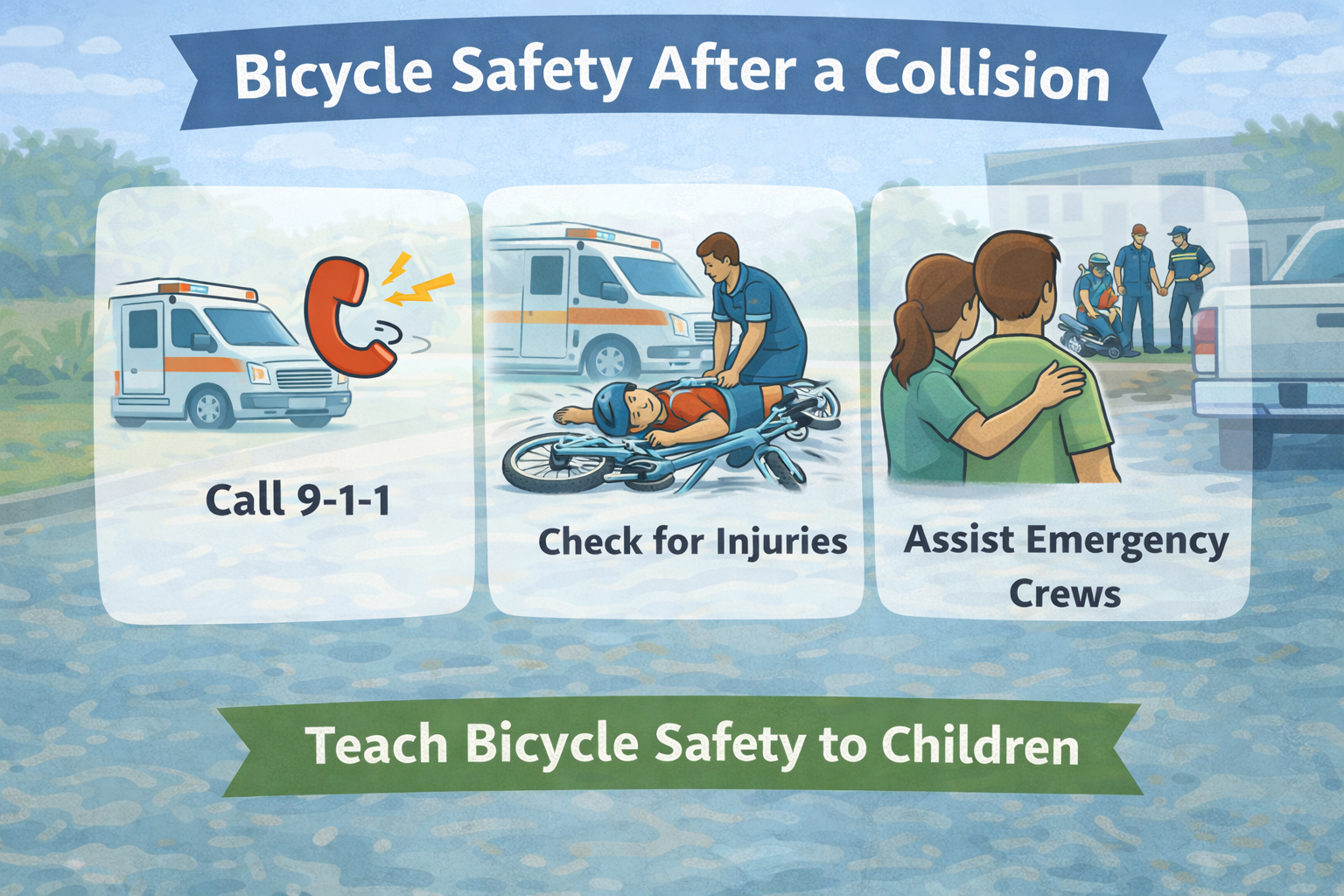
When a road collision occurs, bystanders may help support emergency response while waiting for trained responders.
General first aid awareness may include:
-
Calling emergency services immediately
-
Ensuring the scene is safe before approaching
-
Avoiding unnecessary movement of injured individuals
-
Providing reassurance until responders arrive
-
Helping guide emergency crews to the exact location
These steps can assist emergency responders and help ensure injured individuals receive care as quickly as possible.
Prevention and Bicycle Safety Considerations
Communities across British Columbia encourage several safety practices to help reduce the risk of bicycle-related collisions.
Common bicycle safety measures include:
-
Wearing a properly fitted bicycle helmet
-
Riding with adult supervision for younger children
-
Teaching children to check for traffic before entering roadways
-
Using sidewalks, bike lanes, or safe riding areas when available
-
Practising road awareness and communication with drivers
Local safety programs often focus on helping children understand how to navigate roads safely while cycling.
Frequently Asked Questions
Why is helmet use important for children riding bicycles?
Helmets help reduce the risk of serious head injury during falls or collisions. Properly fitted helmets are recommended for riders of all ages.
Why are driveways considered potential risk areas for cyclists?
Vehicles travelling on roads may not expect a cyclist to enter suddenly from a driveway. Visibility can be limited for both drivers and riders.
What should bystanders do if a bicycle collision occurs?
The safest action is to contact emergency services and avoid moving injured individuals unless there is immediate danger.
Why do investigators examine vehicles after collisions?
Mechanical inspections help determine whether any equipment issues contributed to the incident.
How can families improve bicycle safety for children?
Teaching road awareness, supervising younger riders, and encouraging safe riding habits can help reduce the risk of collisions.
Educational Note
This article is intended for general safety and first aid awareness education. Road traffic incidents can involve complex situations, and trained emergency responders are equipped to manage these emergencies. Learning first aid and road safety principles can help communities respond more effectively when unexpected events occur.
About The Author

Mark Kascha
First Aid Instructor Trainer with 30+ years of experience in CPR, emergency response, and safety training across Canada.
Last reviewed: March 2026
 Support local, Canadian-owned businesses, with no connections to American corporations or partnerships.